
Blueberries make the perfect container plant. They like acidic, well-draining soil, which is hard to find in most yards but really easy to create in a pot. They'll grow happily and healthily in containers, which makes them ideal for smaller yards, patios, balconies, or even just a sunny corner of a deck.
The other thing I love about them is they look great even when they're not fruiting. In spring the leaves come through bright green, followed by delicate white bell-shaped flowers. Then you get the berries, which is the best part obviously. And once the harvest is done, the leaves turn a beautiful fiery red as fall sets in. So you're getting a hard-working plant that earns its space three or four times over.
If you've ever looked at the price of fresh blueberries at the grocery store and winced, this one's for you. A few well-cared-for plants will keep you in berries for weeks every summer, and once you've got them set up they're really not much work.
How To Grow Blueberries In Pots
Blueberries do need a little bit of special attention compared to other fruit, so it's worth following these steps carefully. Get the basics right at the start and they'll reward you for years.
Pot Size
You'll need a reasonably substantial pot to grow blueberries well, but you don't need to start in a huge one if you've bought a small plant. You can pot them on gradually over a few years until they reach their forever pot.
I like to use large terracotta pots, around 16 inches in diameter or bigger. Terracotta looks great and isn't ridiculously expensive like glazed ceramic can be. The downside is terracotta is porous, which means soil dries out faster, so be ready to water more often.
I'm also trialing some plants in air pots, which are fancy plastic pots designed to air-prune the roots as they grow. The theory is the roots hit the air through the holes, stop growing in that direction, and branch out instead. So far they seem to be working really well and the plants have great root systems.
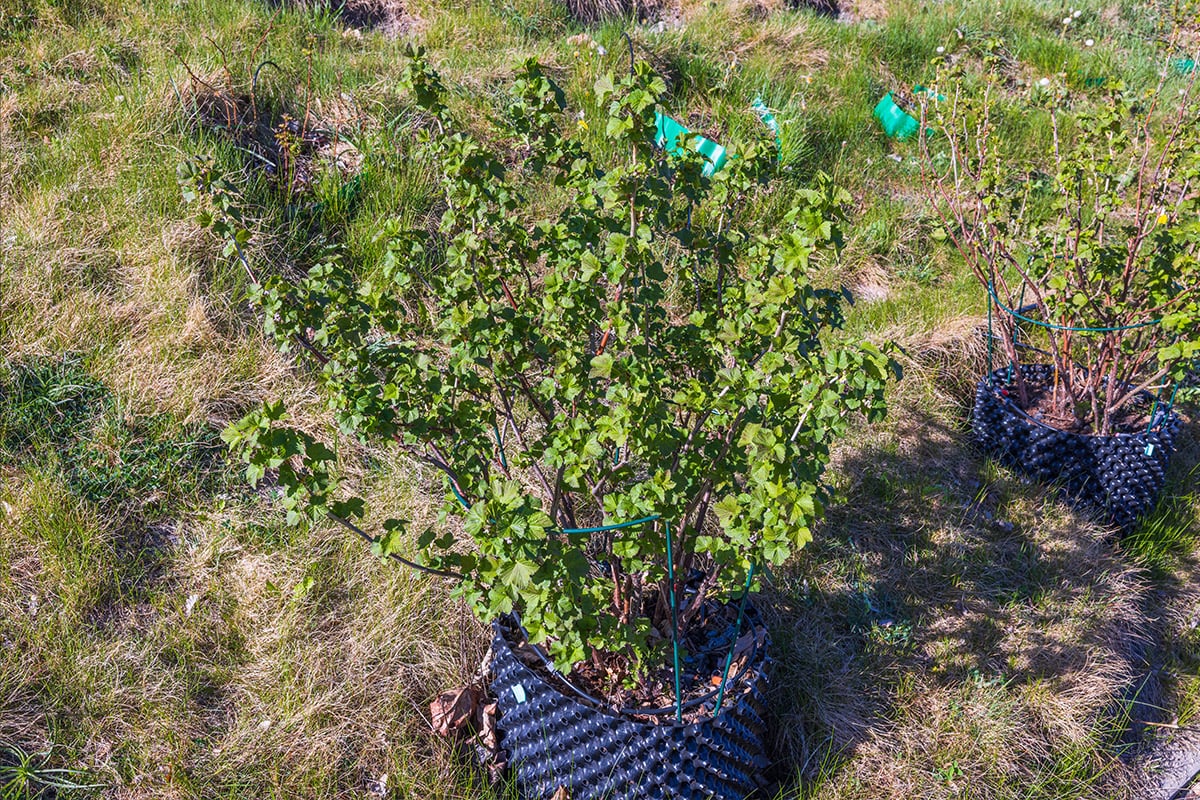
For your final size pot, aim for at least 18-20 inches in diameter and similar depth. Blueberries have shallow but wide-spreading roots, so width matters more than depth. A half whiskey barrel is perfect if you can get hold of one.
Position
Blueberries like a sunny, sheltered spot. They'll produce the best fruit when they get at least 6 hours of direct sun a day, ideally more.
If you've got a wall or fence that catches a lot of sun, placing them against that is ideal. They'll get extra warmth radiating off the wall and a bit of shelter from wind. If not, anywhere out in the open will be fine, as long as they're not constantly battered by strong winds.
Birds can be a real problem when fruiting time comes around. Just when your berries are at their plumpest and most delicious, the birds will arrive and clean you out in a single afternoon. So when you're picking a position, think about whether you'll be able to throw a net over them when needed. Easy access makes a big difference when you've got 5 minutes to protect your harvest before a flock moves in.
How Many Plants?
Some blueberry varieties are self-fertile and will produce fruit grown as a single bush. "Bluecrop" is a popular self-fertile variety that does well in most regions. But most blueberries aren't self-fertile and need a partner of a different variety to cross-pollinate.
Ideally you want at least three plants, ideally of different varieties that flower around the same time. Even self-fertile types will produce a bigger harvest when grown alongside other varieties, so having more than one plant is always a good idea. More plants, more berries. Win-win.
A nice trick is to pick varieties that fruit at different times. Get an early, mid-season, and late variety and you can stretch your harvest from June well into August or September depending on your zone. There's nothing better than walking out to grab a handful of fresh berries for breakfast for weeks on end.
Choosing Varieties
There are three main types of blueberry to be aware of, and which one you pick depends on where you live.
Highbush are the classic blueberries you see in stores. They grow 4-6 feet tall and need decent winter chill. These are the best choice for most of the northern US.
Lowbush are smaller, hardier plants that handle very cold winters well. Good for northern zones where highbush might struggle.
Rabbiteye varieties are more heat-tolerant and do well in the South where winters aren't cold enough for highbush types. They get tall (up to 10 feet) so go for compact varieties if growing in pots.
Half-high are crosses between highbush and lowbush, designed for cold climates. Compact and great for containers.
Talk to your local nursery or extension service about what does well in your area. They'll know which varieties suit your climate, and that's half the battle won.
Potting Up
As with anything growing in a container, start by adding some drainage to the bottom of the pot. Broken up bits of old terracotta pots work well, or large rocks, or even just a layer of coarse gravel. This stops the drainage holes from getting blocked and lets water flow out without taking all your potting mix with it.
Use ericaceous potting mix or any soil specifically labeled for acid-loving plants like azaleas, rhododendrons, or blueberries. This is the most important step. Blueberries need acidic soil to thrive, and regular potting soil just won't cut it. They want a pH around 4.5 to 5.5, which is much more acidic than most plants prefer.
If you can't find ericaceous mix, you can amend regular potting soil with elemental sulfur or peat moss to lower the pH. But honestly, it's easier to just buy the right mix from the start.
Pot your plant up with the crown (where the stems meet the roots) just a little below the surface of the soil. Don't bury it deep. Then give it a good drink.
If you have rainwater stored anywhere, use that rather than tap water. Tap water is alkaline in most areas, and over time it'll raise the pH of your potting mix and undo all your hard work. A simple rain barrel under a downspout will give you all the water you need for your blueberries.
If you don't have rainwater, you can use distilled water or filtered water. Or you can periodically apply a soil acidifier to keep the pH where it should be. It's an extra step but worth it.

Top Tips
- Mulch the top of the pot with pine needles, wood chips, or pine bark. This helps preserve soil moisture, suppresses weeds, and as it breaks down it adds to the acidity of the soil. Pine needles are especially good for this.
- Use rainwater whenever you can. Tap water is alkaline and will gradually raise the soil pH over time. Even a small rain barrel makes a big difference.
- Use a fertilizer specifically formulated for acid-loving plants. Look for ones designed for blueberries, azaleas, or rhododendrons. Never use a fertilizer that contains lime, as this will reduce soil acidity. Many blueberry fertilizers include a soil acidifier as part of the mix, which is a nice bonus.
- Feed in spring as new growth begins, then again after flowering. Stop feeding by midsummer so the plant can prepare for winter dormancy.
- Don't let the pot dry out completely, especially during fruit development. Inconsistent watering leads to small, dry berries.
- Repot every 2-3 years with fresh ericaceous mix. The acidity in the soil naturally depletes over time even with the best watering practices.
Pruning Your Blueberries
Pruning is one of those jobs that sounds intimidating but really isn't. For the first 2-3 years you don't need to do much at all. Just remove any dead, damaged, or crossing branches.
Once your plant is established (year 4 onwards), you want to prune in late winter while the plant is dormant. The goal is to remove about a third of the oldest wood each year. Old wood (3+ years) produces fewer and smaller berries, while younger wood is much more productive.
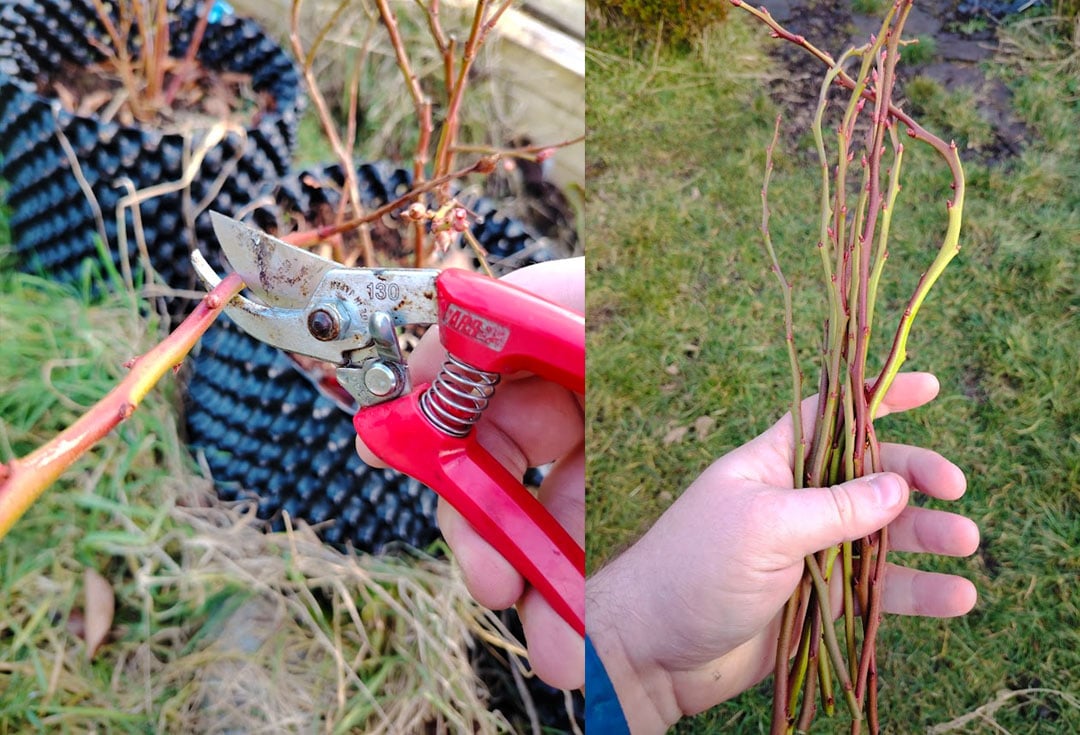
Cut the oldest stems right back to the base of the plant. This encourages new shoots to come up which will fruit beautifully in a year or two. It feels harsh but the plant responds with much better harvests.
Also remove any thin, weedy growth or branches that are crowding the center of the plant. You want good airflow through the bush to prevent disease.
Pots Buried In The Ground
I came across a really clever idea from a commercial blueberry grower a while back. They were growing their plants in pots, but the pots were sunk into the ground.
I'm fairly sure the bottoms of these pots had been removed, or had really large drainage holes. The clever bit is that you can fill the pot with proper acidic soil that blueberries love, while also letting the roots grow out into the ground if they choose.
This is a great trick if you have alkaline soil in your yard. Rather than trying to acidify a huge planting area (which is honestly a losing battle long term), you just have to get the soil right inside the pot. The plant gets the acidic conditions it needs in the root zone, but can also access extra moisture and nutrients from the surrounding ground when it wants to.
It's a nice middle ground between full container growing and planting in the ground, and you get the best of both. Worth considering if you've got space but don't have the right soil.
Common Problems
A few things to watch out for once you've got your blueberries growing.
Yellowing leaves usually mean the soil pH is creeping up. The plant can't access iron properly when the soil isn't acidic enough. Apply a soil acidifier or chelated iron, and check your watering routine.
Small, dry berries are usually a watering issue. Blueberries need consistent moisture, especially during fruit development. Mulching helps a lot.
No fruit despite flowers points to a pollination problem. Make sure you've got at least two different varieties for cross-pollination, and check that you're not spraying anything that might harm the bees doing the pollinating.
Birds eating everything is the classic problem. Bird netting is the only real solution. Get it on before the berries start to ripen, not after.
That's pretty much everything you need to know to grow blueberries in pots. Get the soil right, water with rainwater where you can, plant a few different varieties, and you'll be picking handfuls of berries every summer. There's not much that beats fresh, sun-warmed blueberries straight off the bush.

Leave a Reply