
We are at that time of year when seedlings are starting to sprout and grow. It is a time filled with excitement and anticipation of the season to come. But there is one job that many people get wrong, and getting it wrong can lead to disaster—that job is translating your young seedlings into bigger pots. Keep reading to find out when and how you need to do this important job.
When to transplant seedlings Into Bigger Pots
The first important step to transplant success is doing it at the correct time. But what is the right time?
You need to look for two crucial markers to know your seedlings are ready to transplant. The development of true leaves and roots going out of the bottom of the existing module or pot.
True Leaves
So, what does true leaves actually mean? When seedlings first emerge, they have seed leaves or cotyledons to give them their correct name. These leaves are formed within the seed before sprouting. They are often very similar looking across different plants. Some can have one seed leaf or sometimes even none, but the vast majority have two long, thin seed leaves like the tomato plant below.

The leaves that follow after these are the "true leaves." They will be shaped like a regular leaf on that particular plant. In the example above, you can see that they look like a standard tomato leaf, whereas the seed leaf is very different.
A set of developed true leaves is a good sign that your seedlings are ready to be transplanted. But look for the next sign below before moving your seedling.
Roots appearing from the bottom
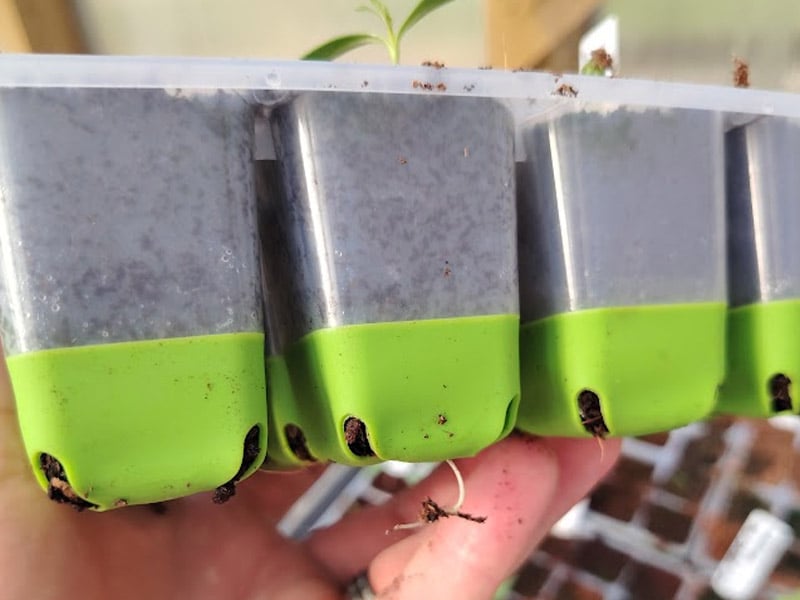
The next clear sign that your seedlings are ready to move on to bigger and better things is the appearance of roots from the bottom of their existing container.
This means they are outgrowing their pots and could be in something bigger. The longer you leave them like this, the more chance there is of these roots matting and becoming damaged when you do transplant them, so the sooner the better.
How to transplant seedlings
When moving seedlings, remember to be gentle; they are very delicate and easily damaged.
If possible, don't handle the seedling itself at all. Tray and hold onto the soil rather than the plant so you don't cause any damage.
The first step is to remove the seedling from its pot. This is one reason I love these flexible-bottomed trays - they make this step so easy. Just push up from the bottom and out the plug pops.


This can be more difficult depending on your seed tray or module. If they won't push up simply like this, then try to lever the seedling out rather than pull.
I like to use an old seed label and slide it down the side of the tray, and then lever up, trying to get under the plant and lever it out.
Planting On
Now, we need to plant the seedling in its next container. Don't jump on too many all at once, as this can cause issues with some seedlings. Try to find a nice middle ground where it has room to grow but isn't going into a vast pot too early.
Also remember that some seedlings will grow a lot quicker than other. Vigrous growers like any member of the cucurbit family (cucumbers, squash, pumpkins etc) will grow very quickly and can therefore go into a bigger pot straight away.
I use regular multi-purpose compost and make a large hole in the middle where I can slide the existing plug into.
If your seedlings are a little long and leggy, then you can often plant them deeper than they were in their last pot.

I then slide the seedling in and firm it in well. Again be careful to avoid touching the selling and just press the soil in.
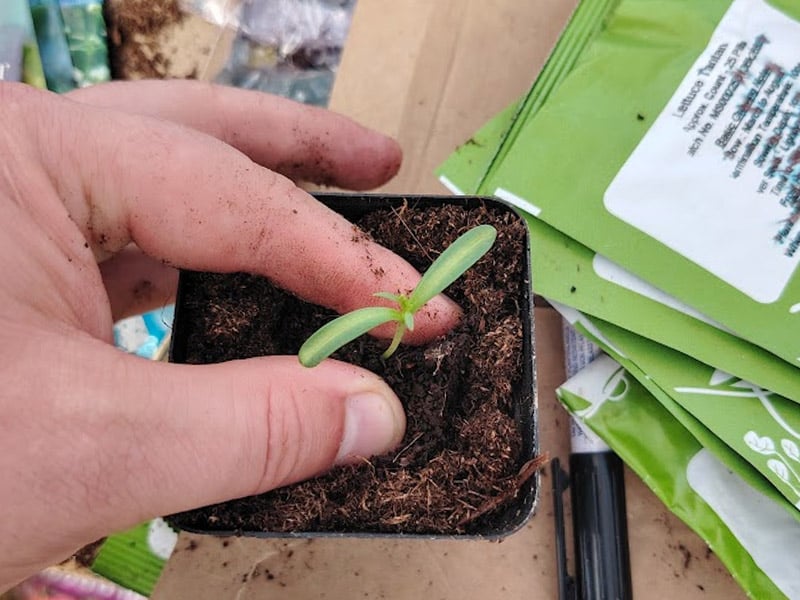
Cover the top with fresh compost and water well, and you are done!

When To Transplant Seedlings Outside
With this, there is no one-size-fits-all answer, and it all depends on the plant in question. If the plant isn't frost hardy, then never plant it outside until all risk of frost has passed.
If it is something that is particularly tasty to pests such as lettuce and slugs, then I tend to wait a while and let the seedling beef up, so if it does get nibbled on, then it has more chance of surviving.
You also need to harden your seedlings off before moving them outside. This is done by gradually acclimatizing them to outdoor conditions by moving them out bit by bit. Making the amount of time they are outdoors longer and longer over a period of a week or two.
Leave a Reply