
Your best tomato plant doesn’t have to vanish because the forecast says 31°F. The rescue method matters, though. More than most gardeners want to admit.
Maybe it’s the Cherokee Purple you finally liked. Maybe the Sungold that made everything else look lazy. Maybe some odd seed-swap heirloom you’ll never track down again. You can carry that plant into spring if you manage cold, light, water, and pests properly. The safest route is probably the one fewer people try first, but one basic fact comes first.
Tomatoes are tropical enough to survive more than one season
If you’ve always treated tomatoes as annuals, fall looks different once you learn this.
Tomatoes aren’t annuals by nature. Climate makes them annuals.
In warm, frost-free places, a tomato plant keeps growing because its biology doesn’t come with a built-in “one summer crop and die” switch. Gardeners on r/gardening say it plainly enough: tomatoes keep growing as long as they have water, nutrients, warmth, and light.
Cold is the problem. A big one.
Tomatoes are extremely frost-sensitive. Below 55°F, growth slows sharply. Below about 45°F, chilling stress can damage leaves, flowers, and fruit set. At 32°F, water inside plant cells freezes and expands.
That’s cell damage, not ordinary wilting.
Peer-reviewed research on tomato cold stress says the same thing in drier language: tomato is a cold-sensitive crop, and below-freezing field exposure can wipe plants out rather than “toughen them up” (PMC).
If you garden in USDA zones 10 or 11, you may be able to keep indeterminate tomatoes alive outdoors with light protection. A frost cloth, a warm wall, or a greenhouse bench can do the job in the right microclimate.
If you garden in zone 9 or colder, plan on protection.
That could mean:
- a heated greenhouse
- a polytunnel with backup heat
- a basement grow-light shelf
- a spare room
- a bright indoor plant station
Northern California gardeners sometimes get away with outdoor overwintering. Montegatta Farm tested three tomato plants outdoors in a mild Zone 9 climate and found the overwintered Gold Medal tomato was “light years ahead of the rest of the crop in terms of height and flower production” by early June (Montegatta Farm).
That’s the temptation. You’re saving time. A plant that survives winter starts spring with living stems and roots instead of starting over in a seed tray.
First, though, choose the right tomato. Some aren’t worth the trouble.
Pick the tomato worth the trouble
You can waste a whole winter babysitting the wrong plant. Decide before a pot ever crosses the doorway.
Don’t save every tomato plant in the garden.
Harsh? Good. Indoor space is expensive, even if the currency is shelf room and patience.
Start by sorting your plants into two groups: determinate and indeterminate.
Determinate tomatoes are the bush types. Many paste tomatoes, compact patio plants, and one-time harvest varieties belong here. They grow to a set size, set a concentrated crop, then decline.
They’re built for one season.
Indeterminate tomatoes keep making new growing tips and flower clusters as long as conditions allow. These are the classic vining tomatoes: Brandywine, Cherokee Purple, Black Krim, Sungold, Gold Medal, and many heirloom beefsteaks.
Those are the ones worth saving.
Micro-dwarf tomatoes get a little side note here. Varieties like Tiny Tim-style plants stay small enough to fit under a modest grow light. They won’t give you the drama of a six-foot heirloom vine, but they’re far easier to keep alive indoors.
For a first winter experiment, a micro-dwarf can save your sanity.
Choose plants that proved themselves
Your winter growing space is too valuable for a tomato that was merely fine.
Skip the “pretty good” plants.
Save the ones that did something useful:
- produced early in your climate
- tasted better than the rest
- resisted disease longer than nearby plants
- handled heat, drought, or weird weather
- came from seed you can’t easily replace
That’s where overwintering becomes practical instead of just interesting. You’re preserving a known performer.
A seed packet gives you a promise. A cutting gives you proof.
That matters once you see what an old garden plant can drag into the house with it.
Check what they might bring inside
A tomato that looked healthy in September can still carry problems you don’t want multiplying indoors by January.
A mother plant that’s been outside since May has history.
Some of it helps. Thick stems. A larger root system. Proven productivity.
Some of it is gross.
By September, outdoor tomato plants may carry pests or diseases even when they look decent. Soil can harbor Fusarium and Verticillium problems. Root balls can carry fungus gnat larvae. Leaves can hide spider mites or aphid eggs.
That baggage is why experienced growers don’t automatically dig up the whole plant.
There’s a cleaner option, and it usually gives home gardeners better odds. You just have to do it before winter has already won.
The two ways worth trying
This is where overwintering either gets manageable or turns into a damp, buggy indoor argument.
You have two practical choices.
You can clone the plant with cuttings.
Or you can bring the mother plant indoors after a hard prune.
Both work. One is cleaner. One gives you a bigger plant if it survives.
If you have space, do both. Take cuttings first as insurance, then try the mother plant if you’re feeling ambitious.
Winter is long. Backups help.
Take cuttings from your best tomato
If you try one method, start here.
A tomato cutting is a piece of stem from your favorite plant. Root it, pot it, and you’ve got a genetically identical copy.
Same variety. Same plant traits. Far less baggage.
Sage’s Acre recommends taking tomato cuttings in autumn for an early start on spring, and that’s the sweet spot for most gardeners (Sage’s Acre). Late August through September is ideal in many parts of the U.S.
Don’t wait until the night before frost.
A cutting needs time to root before the darkest stretch of the year.
Here’s the basic process:
- Choose a healthy growing tip or sucker from an indeterminate plant.
- Cut a 4-6 inch piece of stem.
- Remove the lower leaves.
- Keep 2 or 3 small leaves at the top.
- Put the stem in water or sterile seed-starting mix.
- Keep it warm and bright, away from scorching light.
- Pot it once roots are 1-2 inches long.
Tomatoes root easily because their stems can form roots along buried or moist sections. Same trick as planting leggy seedlings deep. Same plant habit.
Water rooting is easy because you can watch roots form. Sterile mix is cleaner because the cutting adjusts to soil right away.
Either method works.
The big advantage is size. A rooted cutting fits in a small pot under a light. A dug-up mother plant may need a 5-gallon bucket and, depending on your household, a little diplomacy.
Cuttings are easier to inspect, too. Fewer leaves. No garden soil. Fewer pest hiding places.
That matters.
One infested plant can turn a quiet houseplant shelf into a spider mite nursery by January. I hate spider mites more than nearly any garden pest because by the time you notice the stippling, they’ve usually invited relatives.
Still, maybe the plant you want to save is too impressive to reduce to one little cutting. That’s when the harder method comes in.
Cut the mother plant back hard
If you want to save the actual mother plant, be more ruthless than feels natural.
Maybe it was huge. Maybe it pumped out fruit all summer. Maybe it has a thick lower stem and you want that spring head start without waiting for a clone to bulk up.
Fine.
But don’t dig it up, shove it into a pot, and park it beside a sliding glass door.
That’s how people fail.
A mature tomato has a large canopy matched to a large root system. When you dig it up, you cut away lots of roots, especially the fine feeder roots that take up water. If you leave all the top growth, the leaves keep losing moisture faster than the damaged roots can replace it.
The plant collapses.
The fix is brutal pruning.
Cut back about 70% of the canopy. You want a skeleton, not an indoor jungle. Remove weak branches, diseased leaves, flowers, fruit, and long vines that won’t fit indoors anyway.
Yes, it feels wrong.
Do it anyway.
Then handle the roots.
Outdoor garden soil is poor indoor potting mix. It carries pests, larvae, spores, and weed seeds. If you bring that root ball indoors untouched, you may spend winter swatting fungus gnats over your coffee.
Rinse the root ball as thoroughly as you can. Shake off loose soil. Use a gentle hose spray. Remove as much native garden soil as possible without shredding every root.
Then repot into fresh, sterile, soilless potting mix.
Skip garden soil.
Skip compost-heavy mud.
Use a light mix that drains well. The plant will drink slowly all winter, and soggy soil causes trouble fast.
This is where the “bigger plant” advantage can vanish. Bigger also means more stress, more hiding places, and more chances for something to go wrong indoors.
How to choose the method
If space is tight, choose the cleanest plant rather than the biggest one.
If you only have room for one plant indoors, take cuttings.
If you have space, try both.
Here’s the honest comparison:
| Method | Best For | Main Advantage | Main Risk |
|---|---|---|---|
| Cuttings | Most home gardeners | Clean, small, easy to light | Needs time to root before winter |
| Hard-pruned mother plant | Experienced growers with space | Bigger spring plant if it survives | Pests, root shock, soil disease |
| Outdoor protection | Zones 10-11, mild Zone 9 pockets | No indoor mess | One hard freeze can end it |
A mother plant doesn’t automatically give you better odds.
A small clean clone under a good light often beats a stressed old plant full of mystery soil.
Getting the plant indoors is only the first step. Once it’s inside, the rules change.
Once the tomato moves indoors
The plant you saved outside can still die indoors if you keep treating it like July.
Outside, tomatoes get sun, wind, rain, soil life, and natural pest predators. Indoors, they get dry furnace air, weak light, stale corners, and whatever watering mood you happen to be in.
That’s December.
A window usually won’t cut it
Your south-facing window may look bright to you. To a tomato, it can still be starvation with curtains.
Tomatoes need strong light. In active growth, they can need a high daily amount of usable light. The knowledge brief’s practical target is roughly 20-30 moles per square meter per day for strong growth.
Most winter windows don’t come close, especially in northern states.
That’s when etiolation starts.
Etiolation is the sad stretch: pale stems, long gaps between leaves, weak growth reaching toward light. It’s ugly, and it also creates soft tissue that pests and disease love.
A grow light fixes most of this.
You don’t need a commercial greenhouse setup. A decent full-spectrum LED panel or bright LED shop light can keep a small plant alive if it sits close enough to the leaves.
Basic light setup:
- Run lights 12-16 hours per day.
- Keep LEDs close, often 6-12 inches from the canopy depending on strength.
- Raise the light as the plant grows.
- Use a timer so you don’t forget.
- Keep leaves from touching hot fixtures.
Gardening in Canada’s overwintering video focuses on the big split between window survival and grow-light growing, especially for cold-climate gardeners trying to get a spring head start (YouTube).
That split is real.
For simple survival, moderate light plus cool temperatures can work.
For winter growth and fruit, you need serious light.
This is where gardeners accidentally create the worst combination: warm rooms, weak light, and a plant that keeps trying to grow.
Let the plant slow down
If the goal is spring survival, your tomato doesn’t need to act like a greenhouse crop in December.
Aim for a low-metabolic stasis zone around 60-65°F. At that temperature, the plant slows down. It’s warm enough to avoid cold damage and cool enough to stop pretending July is still happening.
That’s the indoor overwintering sweet spot.
A basement, cool spare room, enclosed porch that stays above 55°F, or utility room can work. Add a grow light, and the plant can sit quietly through winter.
It may look unimpressive.
Alive is enough.
If you keep the room at 75°F and give the plant weak window light, the plant gets mixed signals. Warmth pushes growth. Light limits it.
You get leggy junk growth.
Cooler temperatures give you more room for error.
This same stasis idea also explains the winter mistake that kills more plants than frost ever gets the chance to touch.
Water like it’s January
This is the mistake even experienced gardeners make because every summer instinct says to do the opposite.
In July, a container tomato may need water every day. It’s hot, bright, windy, and loaded with leaves. Water moves through the plant fast.
In January, that same plant barely moves water.
Lower light means less photosynthesis. Cooler air means slower metabolism. Indoor air may be dry, but the plant still transpires far less than it did outside in summer.
So the pot stays wet.
Then roots suffocate.
Then leaves yellow.
Then the gardener panics and waters again.
You see where this goes.
Water only when the top inch or two of mix is dry. For a plant in the 60-65°F stasis zone, that may mean watering every 10-14 days, sometimes less.
Use your finger. Lift the pot. Practice restraint.
If the soil is damp, leave it alone.
Overwatering is the classic winter killer, though it isn’t the only way people push tomatoes into weak, pest-prone growth.
Quit feeding it like a summer crop
If your tomato is barely growing, feeding it like a crop plant can make things worse.
Fertilizer advice gets muddy because people mix up two different goals.
A tomato growing hard in a warm greenhouse needs feeding. A tomato sitting in winter stasis doesn’t.
Commercial tomato fertility guides focus on crop production, not keeping one backyard plant alive indoors. UF/IFAS tomato recommendations, for example, are built around field crop nutrient needs and soil testing for a growing season (UF/IFAS). Useful context, lousy January windowsill schedule.
For overwintering, use the conservative plan:
- Stop nitrogen-heavy feeding in fall.
- Don’t feed a plant that isn’t actively growing.
- If you feed, use a very dilute, low-nitrogen fertilizer.
- Restart more regular feeding only when strong new growth returns in late winter or spring.
Some guidance suggests stopping routine fertilization in late summer to fall, then feeding only sparingly during winter if the plant is actively growing (Lifetips).
That matches what the plant is doing.
Nitrogen pushes soft leaves and stems. Soft winter growth under weak light turns into pest food.
A lush tomato in December is asking for trouble. A tough little survivor is the better target.
And when lush, soft indoor growth appears, something tiny usually notices before you do.
The three pests that wreck indoor tomatoes
Cuttings are safer for more than space.
Pests are the real reason.
Indoor tomato pests are sneaky and miserable. The big three are spider mites, whiteflies, and aphids. Together, they earn the name Indoor Triangle of Death.
Dramatic? Sure.
Fair? Absolutely.
Heated homes tend to be dry. Low humidity favors spider mites. No rain knocks pests off leaves. No lady beetles patrol the stems. No outdoor airflow toughens the plant.
A few pests become a lot of pests fast.
Watch for:
- Spider mites: fine webbing, dusty-looking leaves, pale speckling
- Whiteflies: tiny white insects that flutter up when you touch the plant
- Aphids: clusters on new growth, curled leaves, sticky residue
Prevention is boring and effective:
- Inspect undersides of leaves once a week.
- Isolate new cuttings or mother plants before placing them near houseplants.
- Rinse leaves in the sink or shower if you see early pests.
- Use yellow sticky traps for flying adults.
- Keep some airflow with a small fan.
- Use insecticidal soap or neem oil early, before the plant is crawling.
Don’t wait “to see what happens.”
What happens is usually more bugs.
If your plant is already struggling, pests can make the symptoms confusing. Read the plant before you start randomly watering, feeding, or pruning.
Where overwintering goes wrong
Most failed overwintering attempts look mysterious because the symptoms overlap.
They usually trace back to one of five bad assumptions.
Saving the wrong growth habit
Start with the wrong tomato type, and everything gets harder.
Determinate plants are poor candidates.
You can keep one alive for a while, maybe. But you’re fighting the plant’s growth habit. If a variety is bred to set one main crop and decline, overwintering it is like asking a mayfly to sign a five-year lease.
Save indeterminate plants.
That one decision prevents a lot of disappointment. Timing can still ruin even the best variety.
Waiting until frost week
If the forecast is already threatening your plants, you made the project harder before it starts.
A cutting taken the day before frost starts under stress.
Take cuttings in late August or September. Give them time to root while there’s still decent natural light and warmth.
If you wait until October in a cold zone, try anyway.
Just know you made the game harder.
Timing is the first hidden trap. Light is the second.
Trusting a window
A window can help, but it usually can’t do the whole job.
Short days, low sun angle, and glass all cut the light your tomato receives. Without supplemental light, the plant often stretches into a weak mess.
If you care enough to overwinter a tomato, put it under a light.
Then don’t let summer watering habits wreck the benefit.
Watering like summer never ended
This kills more plants than people admit.
Indoor winter tomatoes don’t drink like August tomatoes. Keep the pot wet and roots rot.
Dry-ish is safer than soggy.
Even perfect watering won’t save you if you bring the wrong material indoors.
Bringing garden soil into the house
Garden soil belongs in the garden.
If you dig up a mother plant, rinse the root ball and repot in fresh mix. If that sounds like too much work, take cuttings instead.
Honestly, that’s the answer a lot of the time.
If your plant is already indoors and starting to look rough, read the symptoms before making your next move.
When the plant starts looking bad
A struggling tomato makes you want to act immediately. The wrong “fix” can finish it off.
Use this as a first pass.
| Symptom | Likely Cause | What To Do |
|---|---|---|
| Lower leaves yellowing | Overwatering, root stress, low light | Let soil dry more; add light; check drainage |
| Long pale stems | Not enough light | Move grow light closer or increase light hours |
| Purple leaf undersides | Cold stress or poor nutrient uptake in cool soil | Keep above 55°F; avoid overwatering |
| Fine webbing | Spider mites | Isolate, rinse leaves, use insecticidal soap |
| Sticky leaves | Aphids or whiteflies | Inspect new growth; use sticky traps and soap spray |
| Sudden wilt in wet soil | Root rot | Stop watering; check roots; take a cutting if possible |
| No growth but green stems | Normal winter slowdown | Leave it alone; do not fertilize heavily |
| Moldy soil surface | Too wet, low airflow | Water less; improve airflow; remove surface debris |
That last line matters.
A plant doing nothing in January may be following the plan.
The tricky part comes when that quiet winter plant starts waking up. Spring is where many gardeners lose the tomato they protected all winter.
Waking it up in March
If you’ve made it this far, the last stretch decides whether your saved tomato becomes a spring advantage or a disappointing almost-success.
By late February or March, the plant starts responding to changing light.
You may see new green shoots. Leaves may size up faster. The plant may start leaning into growth again.
Good.
Wake it slowly.
Don’t suddenly dump fertilizer into the pot and blast it with full sun. You’re shifting from survival mode to growth mode, and the plant needs time.
Start with:
- slightly more frequent watering as growth increases
- longer grow-light hours if you were running a short schedule
- a weak fertilizer dose only after active growth is obvious
- pruning out dead or weak winter growth
If the plant is a rooted cutting, you may pot it up into a larger container before outdoor transplanting. If it’s a hard-pruned mother plant, check the root system and refresh the top layer of potting mix if needed.
Then harden it off.
This step isn’t optional.
An overwintered tomato has spent months under indoor light, behind glass, or in a protected greenhouse. Outdoor sun has stronger UV. Wind pulls moisture from leaves. Night temperatures swing.
A plant can survive five months indoors and still get wrecked by one sunny April afternoon.
Use a gradual schedule:
| Day | Outdoor Time | Light Exposure |
|---|---|---|
| 1 | 1 hour | Full shade |
| 2 | 2 hours | Shade or dappled light |
| 3 | 3 hours | Morning sun only |
| 4 | 4-5 hours | Morning sun, wind protection |
| 5 | Half day | Some direct sun |
| 6 | Full day | Bring in at night |
| 7-10 | Full day | Increase sun exposure |
| After | Plant out | Only after frost risk passes |
If nights dip near 45-50°F, be cautious. If frost is forecast, bring the plant in.
You didn’t babysit a tomato all winter to lose it on the victory lap.
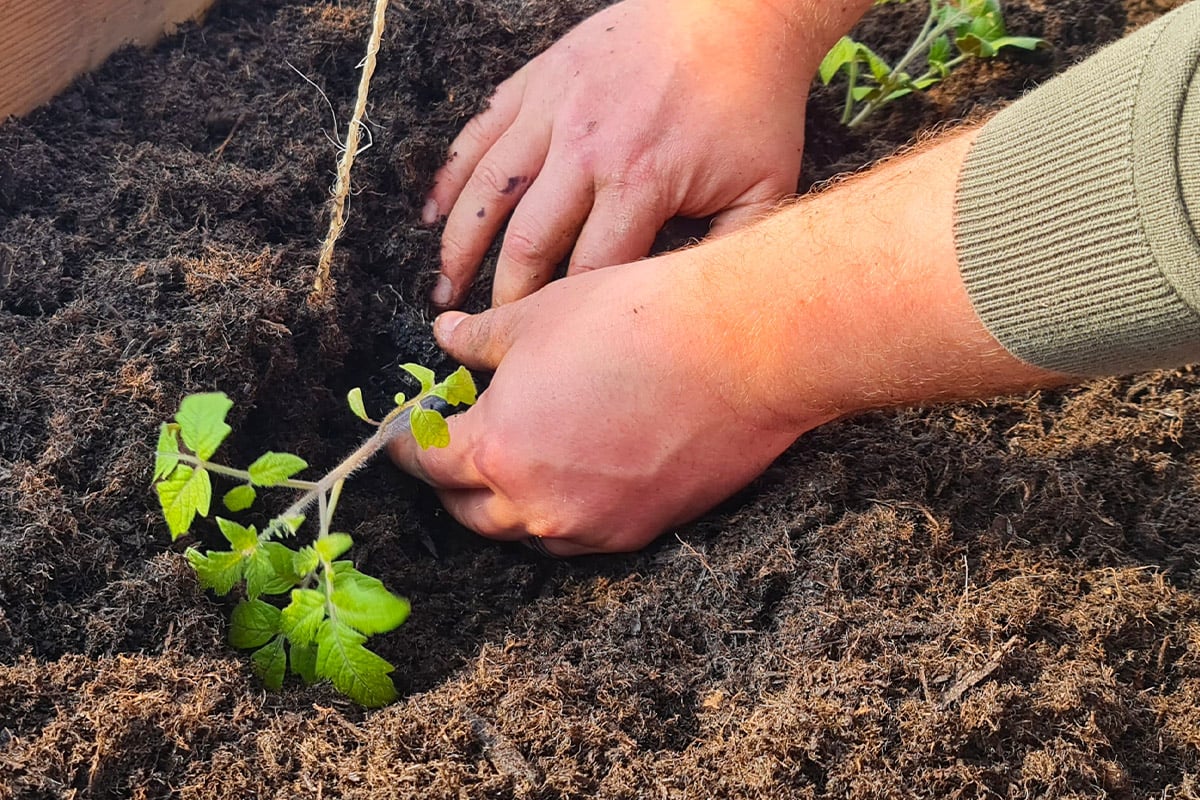
Once planted out, bury leggy stems deeper if needed. Tomatoes root along buried stems, so a stretched cutting can still become a strong transplant.
That’s one of the nice things about tomatoes.
They forgive some ugliness.
Now for the larger question: when is all this effort actually worth it?
Is this worth the bother?
Overwinter tomatoes when the plant has earned the space.
Sometimes yes.
Sometimes absolutely no.
If you grow common hybrid tomatoes and can buy healthy seedlings locally for a few dollars, overwintering may not be worth the indoor hassle. There’s no shame in starting fresh.
For a special variety, overwintering makes sense.
Maybe it was an heirloom from a seed swap. Maybe it was the only plant that shrugged off your weird summer. Maybe it produced the best sauce tomato you’ve ever grown.
That’s worth saving.
Timing is the other reason. Rural Sprout makes the basic case well: overwintering tomato plants can give you earlier tomatoes next year because you aren’t starting from seed again (Rural Sprout).
A rooted cutting or surviving mother plant has a spring head start. While your neighbors wait for seedlings to size up, your plant already has stems, roots, and momentum.
That can mean earlier flowers.
Earlier fruit.
A longer harvest window before fall frost returns.
There isn’t great side-by-side yield data comparing a second-year overwintered plant to a fresh seedling of the same variety in a backyard setting. That gap exists. Gardeners report earlier and heavier starts, but clean comparative data is thin.
Still, the practical logic is solid.
A living plant in March beats a seed in March.
A few questions always come up once gardeners realize tomatoes are perennial in the right conditions. The answers can keep you from chasing the wrong goal.
FAQ
Do tomatoes go dormant?
If you expect tomato dormancy to work like a peony, hosta, or fruit tree, you’ll be disappointed.
Tomatoes don’t go dormant like hostas, peonies, or fruit trees. They slow down when conditions are cool or dim. Below about 55°F, growth can nearly stop, but the plant isn’t in a programmed sleep state.
That’s why some gardeners say tomatoes “don’t go dormant” and can keep growing if they have light, water, nutrients, and warmth (r/gardening).
For overwintering, think “slow growth” or “stasis,” rather than dormancy.
That distinction matters because freezing is an injury, not a rest period.
Can tomatoes overwinter outside?
Your climate decides how realistic this is.
Outdoor overwintering works only in warm climates or protected structures.
In USDA zones 10-11, outdoor overwintering is possible with minor frost protection. In mild zone 9 areas, some gardeners succeed with pruning, frost cloth, walls, tunnels, or greenhouse cover.
In colder zones, you need indoor space or a heated greenhouse.
A hard freeze kills tomato tissue. No pruning trick changes that.
If your winters are too cold, choose between bringing in a clone or bringing in the whole plant.
Should you take cuttings or keep the whole plant?
For most home gardeners, the smaller option is usually smarter.
Cuttings are better for most home gardeners.
They take less space, root easily, and avoid bringing garden soil indoors. They also reduce the risk of importing pests and soil-borne diseases.
Saving the whole mother plant can work, especially if it’s healthy and you have space. It needs a hard prune, root washing, fresh potting mix, good light, and careful watering.
If you’re unsure, take cuttings first.
Then experiment with the mother plant.
Once survival is the main goal, indoor fruit becomes a separate project.
Can tomatoes fruit indoors in winter?
Yes, if you want a winter harvest enough to provide the right setup.
Survival and fruiting are different goals.
To get fruit indoors, you need warm temperatures, strong grow lights, enough plant size, and pollination help. Tomatoes grown for active winter fruit usually want daytime warmth around 70-80°F and much stronger lighting than a basic survival setup.
You may also need to shake flower clusters or use an electric toothbrush to help pollinate flowers indoors.
Most gardeners should aim to keep the plant alive through winter.
Winter fruit is a bonus project.
If you’re aiming for survival, your watering schedule needs to slow way down.
How often should you water an overwintered tomato?
If the plant is cool and slow, your summer watering routine is too much.
Water when the top 1-2 inches of soil are dry. In a cool 60-65°F room, that may be every 10-14 days. Sometimes longer.
Don’t water on a calendar.
Check the soil.
If it’s damp, wait.
Use the same restraint with fertilizer, especially when the plant isn’t actively growing.
Should overwintered tomatoes get fertilizer?
Feeding a sleepy-looking tomato can push weak growth at the worst time of year.
Use very little.
If the plant is in stasis and not growing, skip fertilizer. If it’s actively growing under strong lights, use a very dilute, low-nitrogen feed sparingly.
Restart regular feeding in late winter or spring when you see strong new growth.
Too much feeding on a slow winter plant pushes weak stems and can stress roots.
If leaves yellow anyway, don’t assume fertilizer is the first answer.
Why are the leaves turning yellow?
Yellow leaves are common indoors, and they’re where gardeners often make the wrong fix.
The most common causes are overwatering and low light.
Check soil moisture first. If the mix is wet, stop watering until it dries. Make sure the pot drains well.
If the plant is pale and stretching, add stronger light or move the light closer.
Some lower leaf loss is normal in winter. A green stem and healthy new growth matter more than a few ugly old leaves.
A few ugly leaves don’t mean the plant is finished, though older plants do come with tradeoffs.
How long can a tomato plant live?
A tomato can live longer than one season. That doesn’t mean the same mother plant should stay forever.
Some gardeners report keeping indeterminate tomatoes alive for several years, with claims ranging from 2-3 years to 4-6 years under good care. Older plants can build up pests, viruses, and disease pressure.
For most home gardeners, the smarter long-term plan is to keep cloning your best plant rather than nursing the same aging mother forever.
Same genetics.
Cleaner reset.
Better odds.
That’s why taste and performance matter so much when you choose what to save.
Can you overwinter a tomato from the grocery store?
You might grow something. That doesn’t make it a good use of limited winter space.
Maybe, though it’s rarely the best choice.
Many grocery tomatoes come from hybrids selected for shipping, not backyard flavor. Seeds may not grow true, and plants may not be worth saving.
Overwinter plants you already grew and tasted.
If it earned a spot, keep it.
The last move
Overwintering tomatoes comes down to variables you can control: temperature, light, restraint, and pest checks.
Take cuttings before frost. Keep them above 55°F. Never let them freeze. Give them real light. Water like it’s winter, not July. Watch weekly for spider mites, whiteflies, and aphids. Then harden them off slowly when spring comes back around.
That’s the whole game.
The plant you save in October might be the one giving you your first tomato next June, while everyone else is still waiting on green marbles.


Leave a Reply