
Lavender looks beautiful, smells wonderful, has numerous uses, and is very easy to care for once it is established. One great way to use lavender is to plant it as a hedge. A lavender hedge can edge paths, separate parts of the garden, or provide a visual centerpiece if you want something a bit different. It will bring colour, scent, and wildlife to your garden, and with the proper care, it will last for many years.
Why Plant A Lavender Hedge?
There are many good reasons to plant a lavender hedge. First, lavender is a very low-maintenance plant. Once established, it requires minimal watering and can survive even during prolonged dry spells. It does not require rich soil or frequent feeding, either. In fact, it prefers poorer, well-drained soils where other plants might struggle. This makes it a great choice if you want a hedge that won't require too much of your time.
Another reason to plant a lavender hedge is that it looks wonderful for much of the year. In summer, the hedge will be covered with soft, fragrant flowers in shades of purple, blue, or even white, depending on the variety you choose. In winter, the grey-green leaves still give shape and colour to the garden when other plants have died back. Lavender hedges also smell amazing, filling the air with their calming scent every time you walk past.
Lavender hedges are also perfect for wildlife. Bees, butterflies, and other pollinators love lavender flowers. By planting a hedge, you bring these pollinators into the heart of your garden, from where they will get to work for you, pollinating your crops. You will often hear your lavender buzzing with life on a warm day. Birds may also visit, looking for insects among the flowers.
Lavender is also a natural pest repellent. The strong smell can help repel unwanted insects, such as mosquitoes. Some people even plant lavender near vegetable patches or seating areas for this reason. It is a lovely way to make your garden more comfortable without using chemicals.
The Right Lavender
When considering planting a lavender hedge, it is crucial to select the correct type of lavender. English lavender (Lavandula angustifolia) is a great choice for most parts of the UK. It is hardy, meaning it can survive cold winters, and it stays neat and tidy with just a little pruning. Popular varieties like 'Hidcote' and 'Munstead' are ideal for hedges because they grow into nice, compact shapes and produce many flowers.
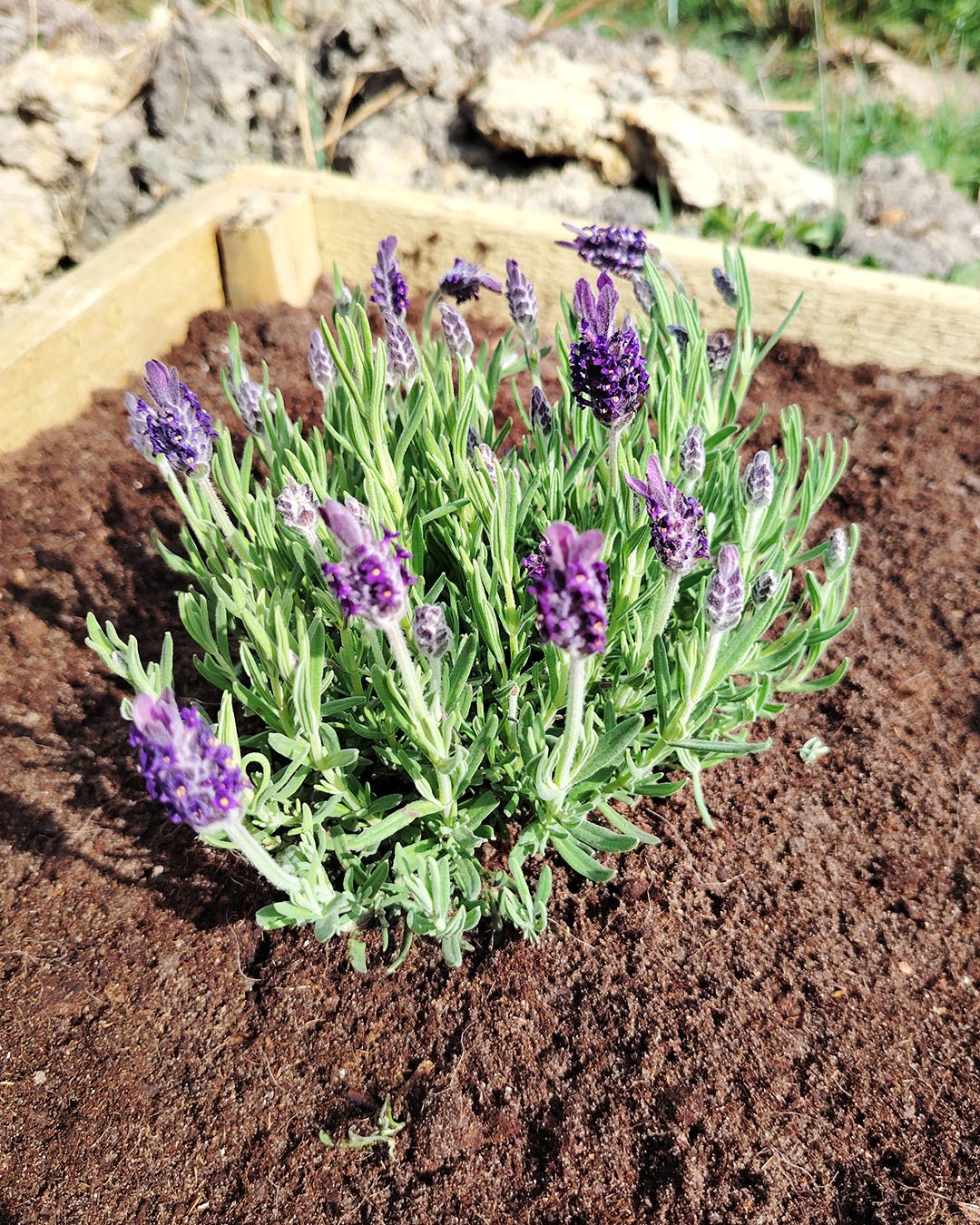
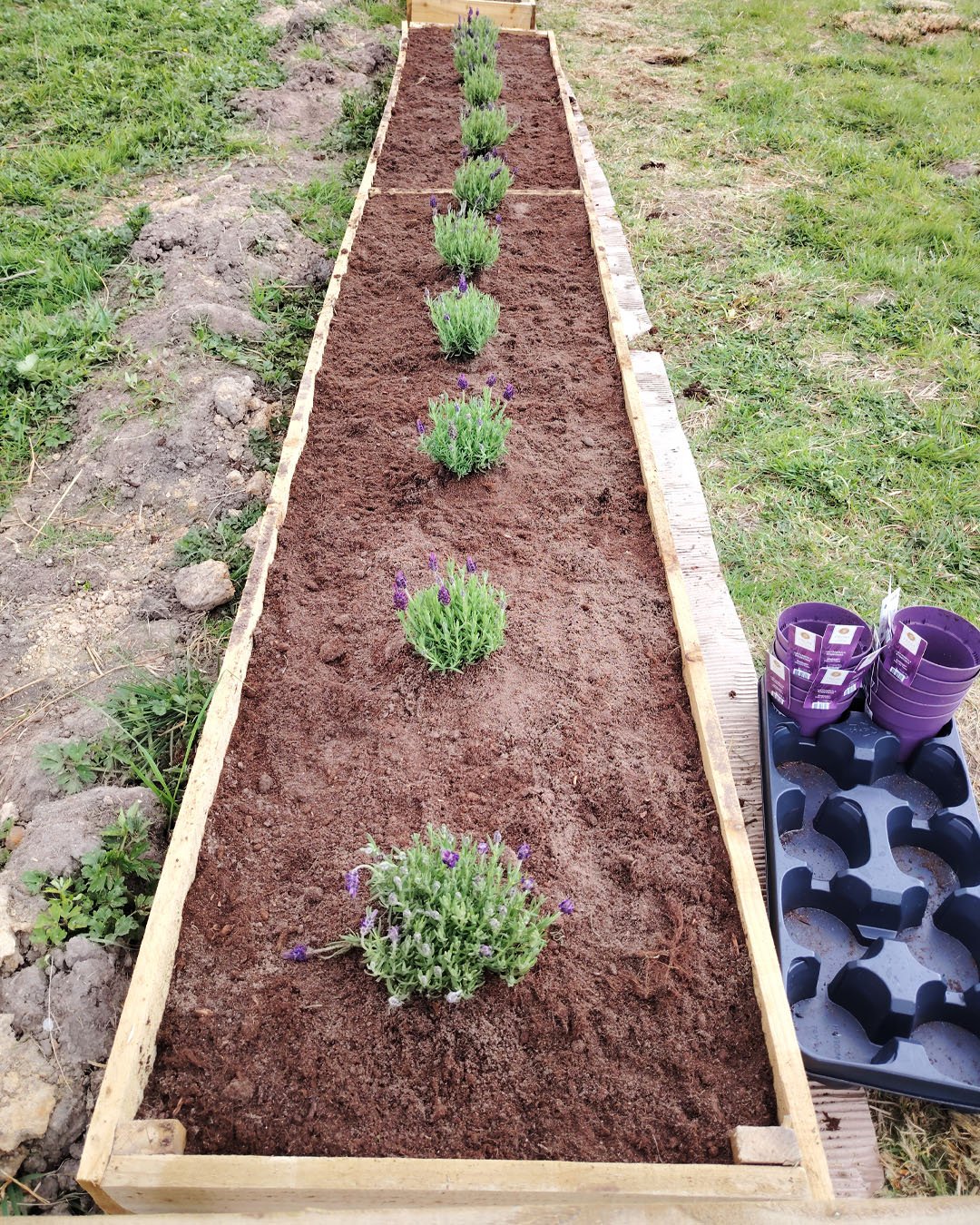
I went with Lavender stoechas Anouk, a French Lavender, another great choice that is perfect for creating a lavender hedge. It is also what was in stock at my local gardening centre...
How To Plant A Lavender Hedge
Planting a lavender hedge is quite simple, but a little preparation will help it grow strong and healthy. First, choose a spot that receives plenty of sunlight. Lavender prefers full sun and will not thrive in shade. Make sure the soil drains well. If your soil is heavy clay, consider raised beds. This is what I did to give lavender the free-draining soil it loves. Lavender roots hate sitting in wet soil, especially in winter.
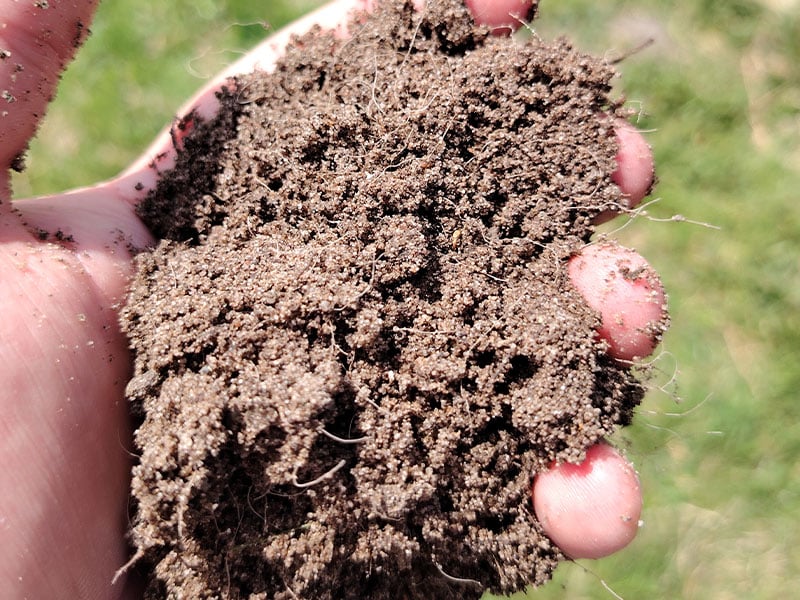
I used a very sandy topsoil mix, which I actually purchased in bulk locally. It used to be a Premier League football pitch, so it is heavy on sand and relatively low in nutrients, making it almost perfect for lavender. To ensure there was a little more goodness in the soil, I added a couple of bags of compost to the entire row, mixing it in by hand.
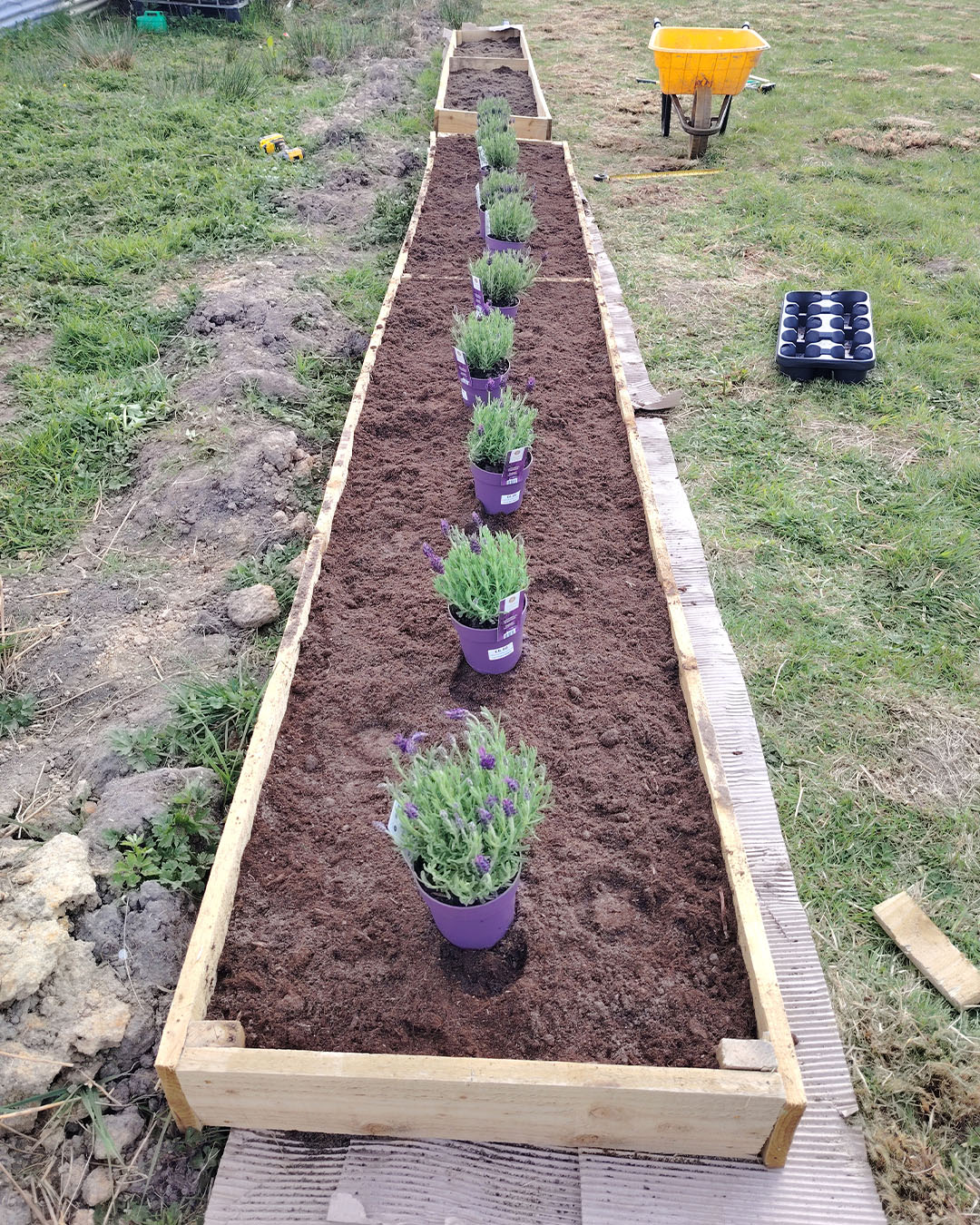
When you are ready to plant, mark out where you want your hedge to go. You can use a string line to help you get a straight edge. Space the plants about 1ft apart, depending on the variety and how quickly you want them to grow together. If you plant them too close, they can become crowded and not get enough air around them, which can lead to disease.
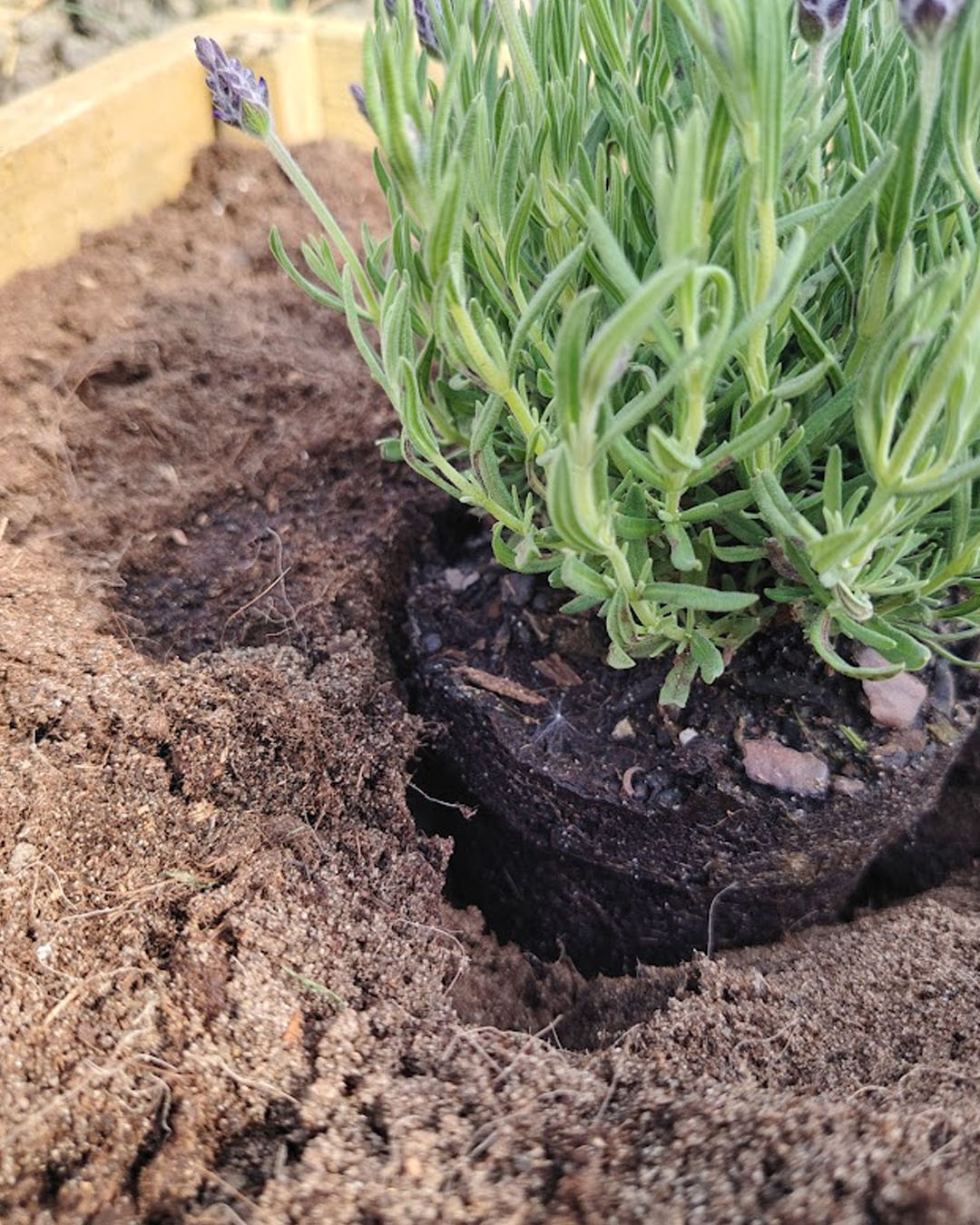
Dig a hole that is a little bigger than the pot your lavender comes in but roughly the same depth. Take the plant out of the pot and gently tease out the roots if they are tightly packed. Place it in the hole so that the top of the root ball is level with the soil surface. Fill in around the plant with soil, firm it down gently, and give it a good watering. Repeat this for each plant along your line.
After planting, it is essential to keep your young lavender hedge well-watered while it establishes itself, especially during dry weather. Once the plants are established, typically after their first full year, they will require very little watering, except during extremely hot and dry spells. Overwatering can do more harm than good, so let the soil dry out between waterings.
One of the most essential tasks for maintaining a lavender hedge is pruning. Lavender needs to be trimmed once a year to stop it getting woody and straggly. The best time to prune is just after it has finished flowering, usually in late summer. Use a pair of sharp shears to cut the plants back by about one-third of their height. Be careful not to cut into the old wood, as lavender may not regrow from bare stems. The aim is to keep the plants in a nice, tidy shape.
In colder parts of the UK, it can be better to prune a little earlier, a good few weeks before the first frosts, so that the plants have time to harden off before winter. Some gardeners also give their lavender a light trim in spring to tidy up any winter damage and encourage fresh new growth.
With the right care, a lavender hedge will last many years and get better with time. It will grow fuller and produce more flowers each season. You can even use the cut flowers for making lavender balms, drying for arrangements, adding a lovely scent to your home or even floral teas!
Planting a lavender hedge is a great project for any gardener, whether you are starting from scratch or looking to add something new to your garden. It is simple, rewarding, and brings so many benefits. From its lovely look and calming scent to the wildlife it attracts, a lavender hedge is a real treasure. Whether edging a path, surrounding a seating area, or simply adding beauty to a sunny spot, a lavender hedge is sure to be a highlight of your garden for many years to come.
Leave a Reply