
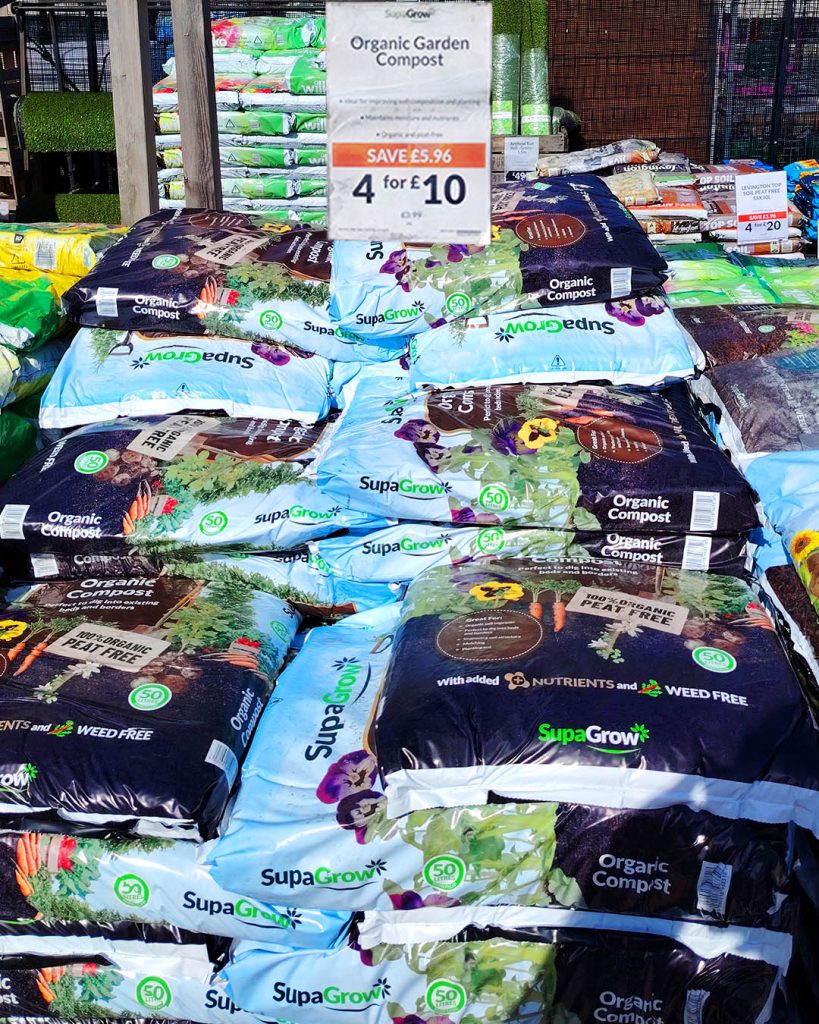
The deal is back, 4 bags of this 50-litre compost for only £10! One thing has changed, though: Homebase has gone! (RIP) So it was off to The Range this time, who I think has bought them out, possibly?
Will anything have changed since last time? What I found before was smaller bags than I had expected, with lots of foreign objects, but the compost looked good, and actually, my tomatoes thrived in this compost!
Smaller Bags
This doesn't look to have changed much; I think the bags still look small for a 50-litre bag. I know this is not an exact science, as the packaging clearly says 50 Litres at the time of packing, not when you buy it.
I'm sure nothing nefarious is going on, as the company behind this compost will have to adhere to many standards, but they do seem smaller.
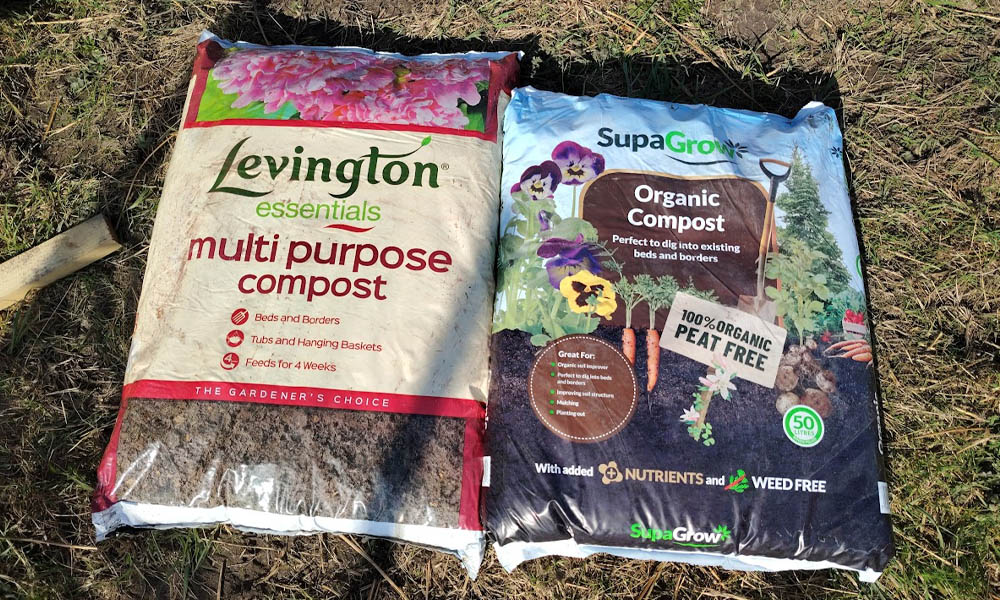
So, while I was at the range, I picked up another bag of compost, also labelled as 50 litres. I then devised a very unscientific test to see if there was any difference.
I got my trusty B&Q buckets and started filling them up; these are 12L buckets.
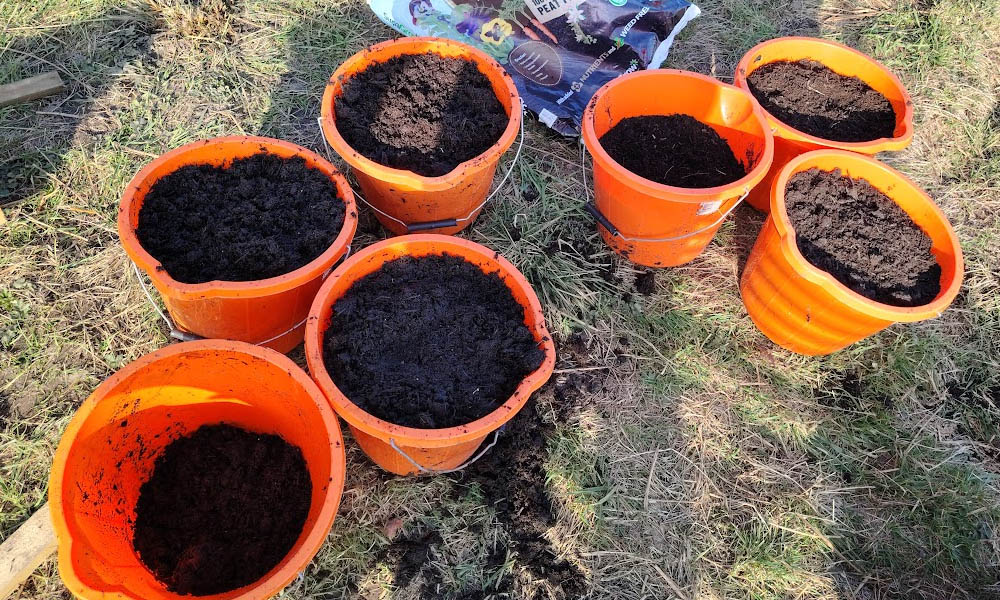
The levingtons are the four on the right, the SupaGrow is the three on the left. Many variables go into this, such as the moisture content of the compost, but in my opinion, there is more in the Levington's bag, even though they are both 50L.
Foreign Objects
The last time I purchased this compost, I found lots of foreign objects in it, including a piece of glass and even part of a string of Christmas lights!
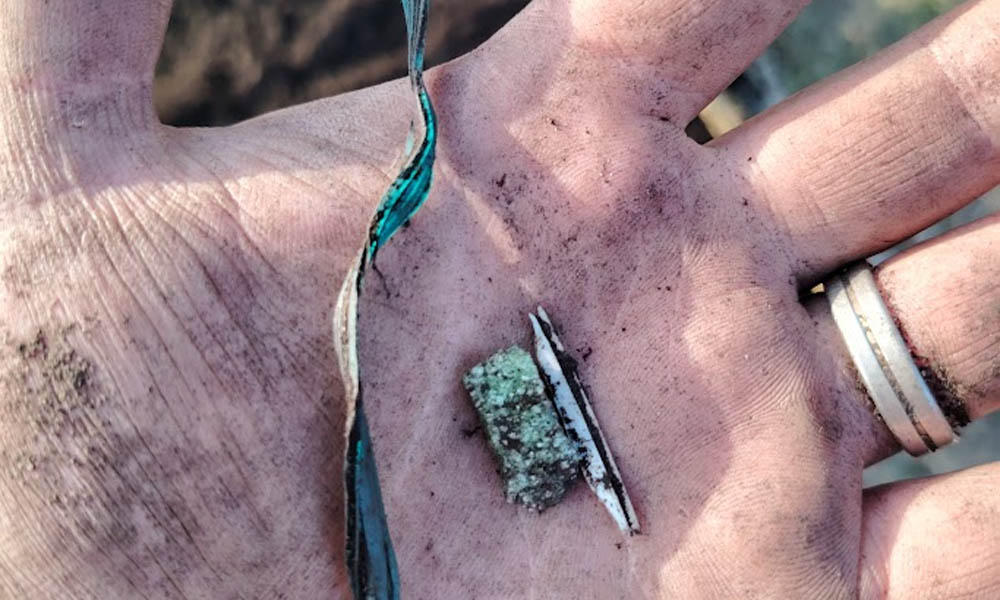
This time, I am happy to say it has much improved. Whether I got lucky or the company behind this compost has improved its screening process, I'm not sure, but all I can tell you is that it was a lot better this time!
I still found a few small bits and pieces, but this is the entire haul from four bags of compost thoroughly searched! It's a big improvement from before.
Compost Quality
The last time I wrote this review, I hadn't had anything actually grow in the compost yet, but now I have. Since then, it has been the foundation of compost in my greenhouse, and it has performed very well.
My tomatoes grew massive in it, and it seems to be a very good compost; no complaints there at all, especially for the price.
Would I recommend it?
"Yes, I would!
For the price, it is a great deal. Stuff grows well in it, and it is very cheap. Watch out for foreign objects, as this is an issue with many cheaper peat-free composts. And the bags appear to be small.
But if you are filling a bed or on a budget, then I recommend it.
There are a few unknowns. In my opinion, this is likely to be people's green bin recycling turned into compost, which can include foreign objects, and this can come with its issues. However, I'm not certain of that, so it's purely speculative on my part.
But with all that said, I have had no issues in my greenhouse with this compost as the cornerstone of my raised beds.
Read the original post below to see what I learned two years ago!"
Soil Testing
Since writing the update above, I have purchased four more bags of the material and decided to put on my lab coat and conduct some soil testing.
Now, before I begin the testing, let me state loud and clear: I am no scientist; I have no scientific background beyond college; I am an amateur in a garden shed - many mistakes could and probably were made in the testing procedure.
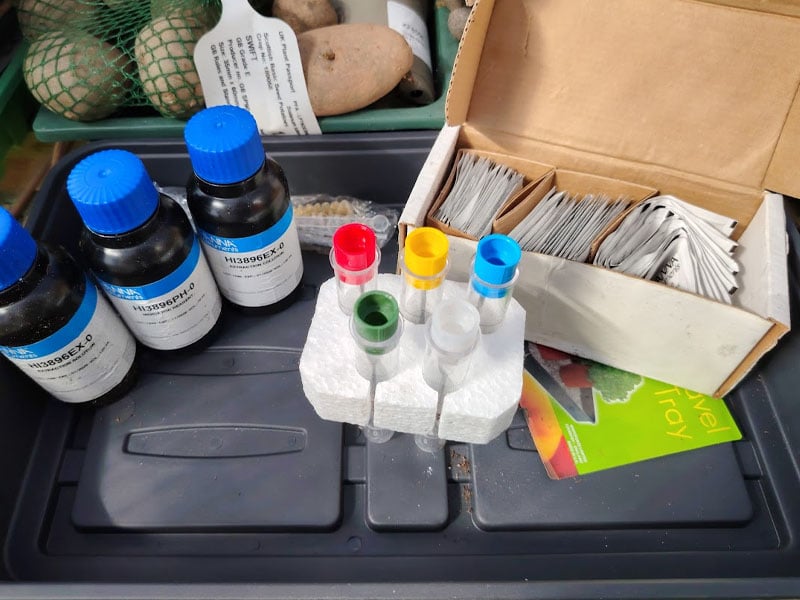
This is the testing kit I am using; it's a professional-level kit from HANNA Instruments. It can test for your soils' NPK and also pH - I will be testing the N and P of this compost.
I began by testing the nitrogen level of the compost. These tests are relatively straightforward to do, but a little time-consuming. You start by adding an extraction formula to a test tube, followed by a small amount of compost. You then shake and let it settle before extracting the liquid (without the soil) and transferring it to another test tube. You then add a reaction powder (there is a different one for each of the tests) this then gives you the result.
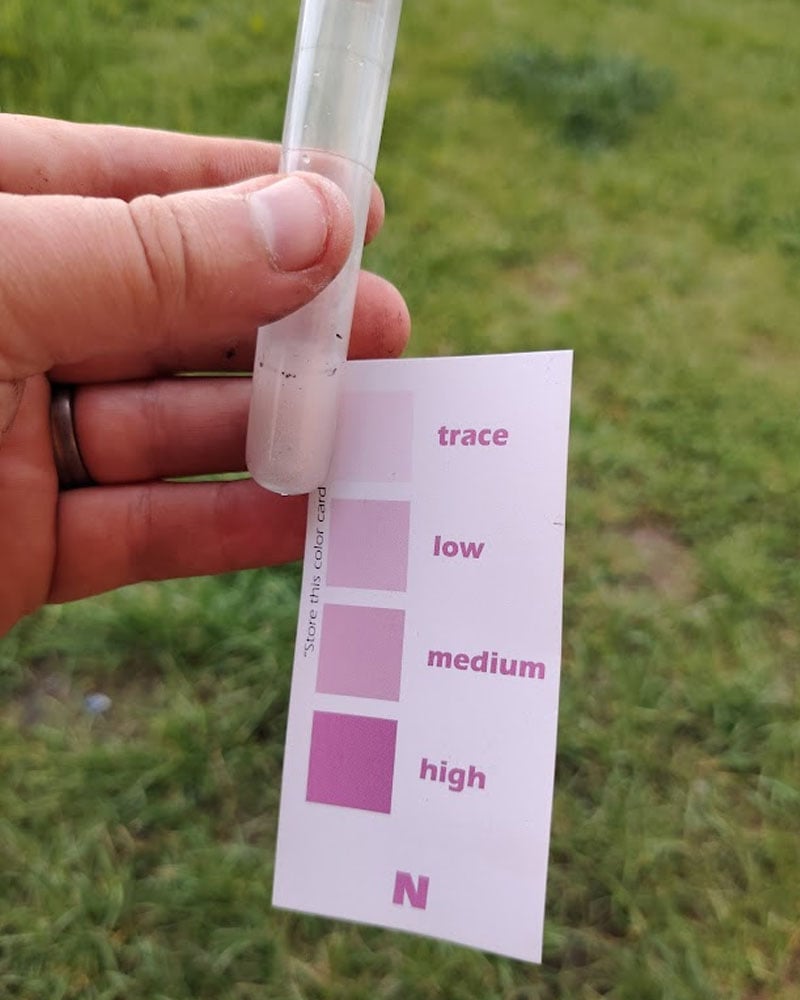
Above, you can see the Nitrogen result for the Supagrow compost, trace at best. I have to admit I am very surprised and even a little confused by this. The compost smells very rich, and since it's made from green waste, you would expect it to have plenty of Nitrogen in it. I was actually a little worried that there was something wrong with my test kit or the procedure I had done to test it.
So I decided that to get any meaningful data and to ensure I wasn't completely messing it up, I needed something to compare against. Luckily, I happened to have a bag of Dalefoot compost on my plot. This is a premium compost and one of my favourites. So I ran the same test on that compost.
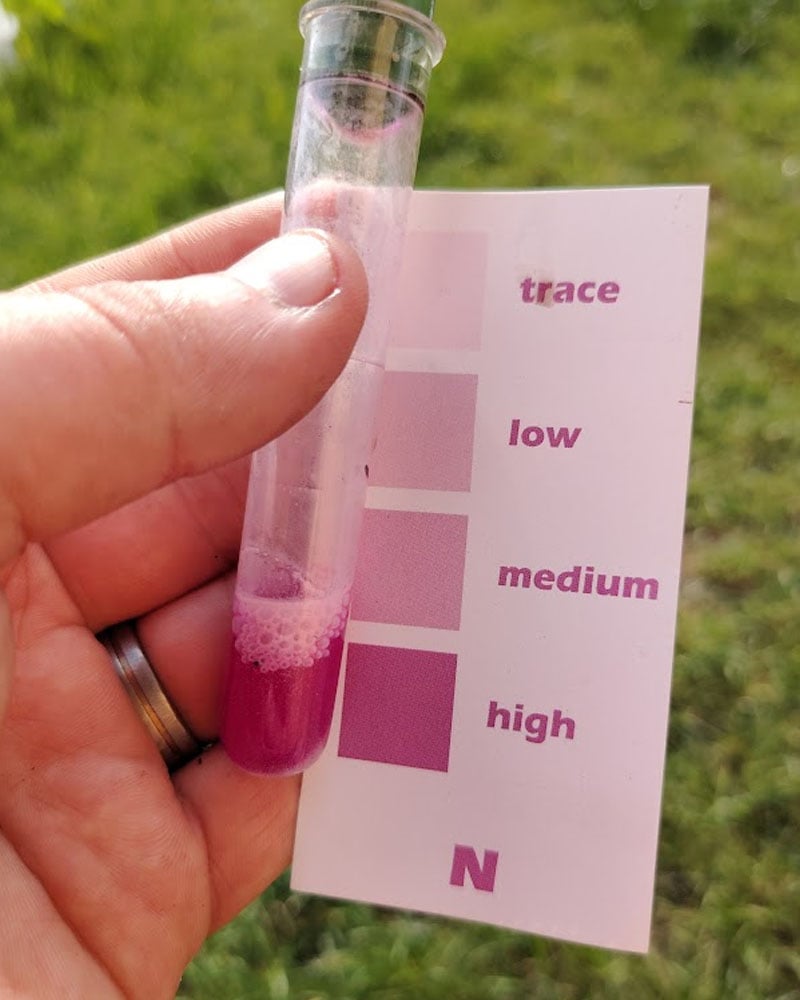
You can clearly see the difference between the two - it's night and day!
With this disappointing result, it is now time to test the phosphorus level in the compost, and I wasn't holding out much hope.
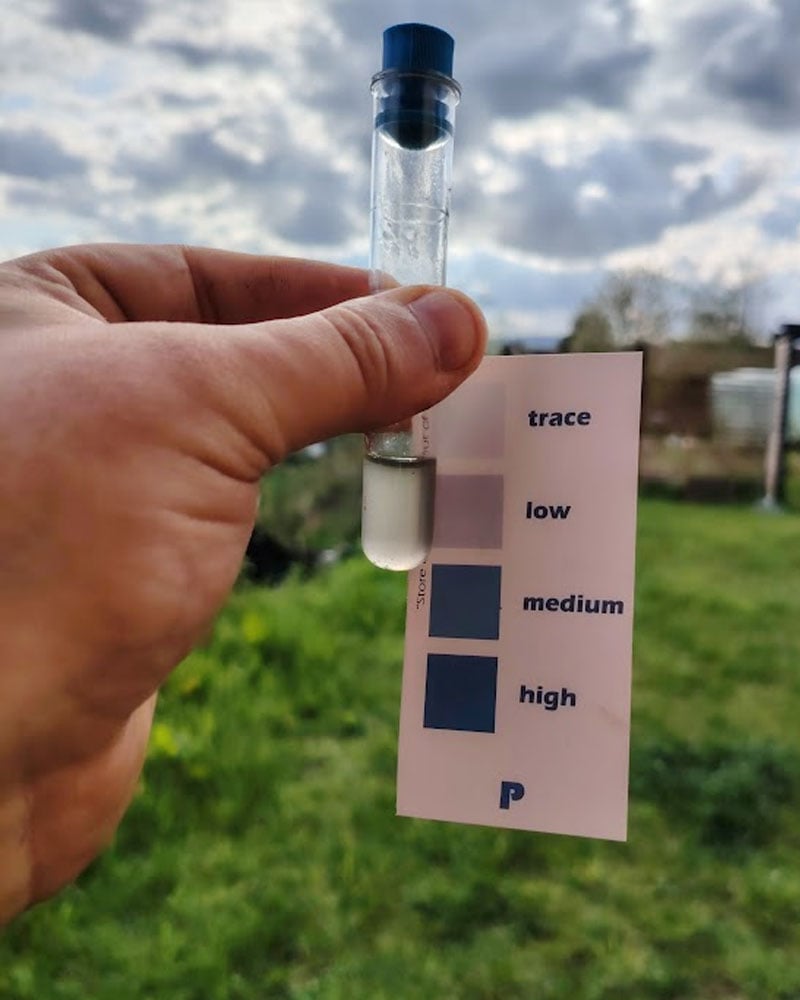
Another disappointing result, somewhere between trace and low, possibly? But what does this mean? How much phosphorus is in a "premium" compost? I reran the test on the bag of Dalefoot wool compost I have.
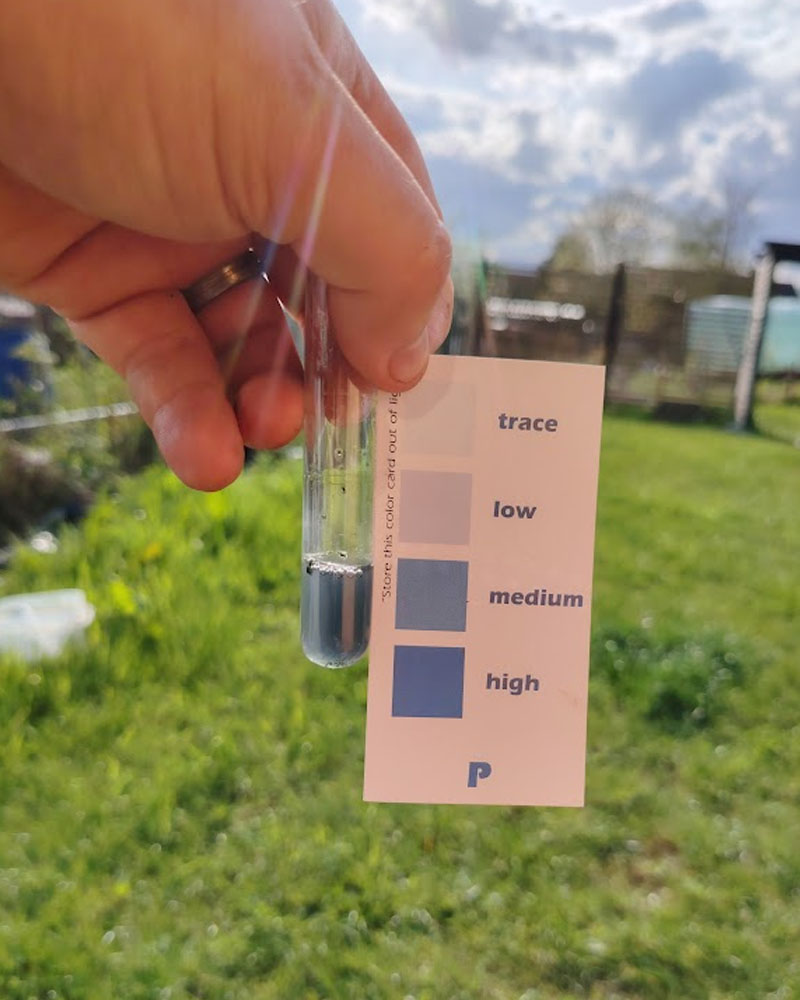
Again, there's a night-and-day difference between the two.
I could have run the potassium test on the two samples, but the procedure for that is a little more involved, and I think the results are clear enough already. The cheap compost is clearly lacking in nutrients when compared to the premium one.
When I was thinking about this, I came to an obvious conclusion: if the Supagrow compost is made from green waste (which many people believe it to be), then it is going to be impossible to control the nutrient levels in the final product, as the inputs are always going to be different.
The Dalefoot compost, on the other hand, is made from Sheep's wool, Bracken, and comfrey. Because they use the same inputs all the time, they can control the output, resulting in a much more consistent compost.
Original Post
There has been a lot of chatter around this compost online recently, thanks to its super low price at Homebase. But is it any good? Is the price actually a bargain, or is it too good to be true? Let's find out.
I have just finished building a new greenhouse on my allotment and need to fill up some raised beds, so this compost seemed just the ticket. Nice and cheap - perfect for filling up large raised beds. So I went and bought 20 bags - here's what I found.
This is cheap compost, so you expect a few issues, but I have never had compost with so many foreign objects in it before. Here are a few of the things I found.


This is just a small selection of what I found. There were also plenty of stones and even bits of pottery. Some bags were perfect, and others had many more objects in them; it was a bit of a lottery.
From the objects I found in the compost, I'm pretty confident that this is municipal waste. Made by the council from the contents of everyone's green bins, which to me at least explains the Christmas lights, glass and apple sticker!
This brings me to my next issue with this compost, the organic label. How can it possibly be organic with this many foreign objects in it. Last time I checked, Christmas lights, plastics, and glass are not organic materials. How is this allowed on the packaging? If these many random objects are making their way in, the materials going in are not being checked. So how can they have any clue whether it is organic or not? Misleading at best and a complete lie at worst.
Bag Size
So after the foreign objects issue, let's look at another big complaint many people have about this compost, the bag size.
The bags are advertised as 50L, but they are not what you would expect from a 50L bag. They are much smaller.
Apparently, they are 50L at the time of packaging, according to the manufacturer. But don't all compost makers measure their bags this way? These are definitely smaller than you would expect for 50L.
To show the differences, I compared it to this 35L bag of John Innes from Growmoor. So the SupaGrow has 15L more in it, according to the packaging.


I will let you make your own mind up here on the size, but for me, this was very disappointing.


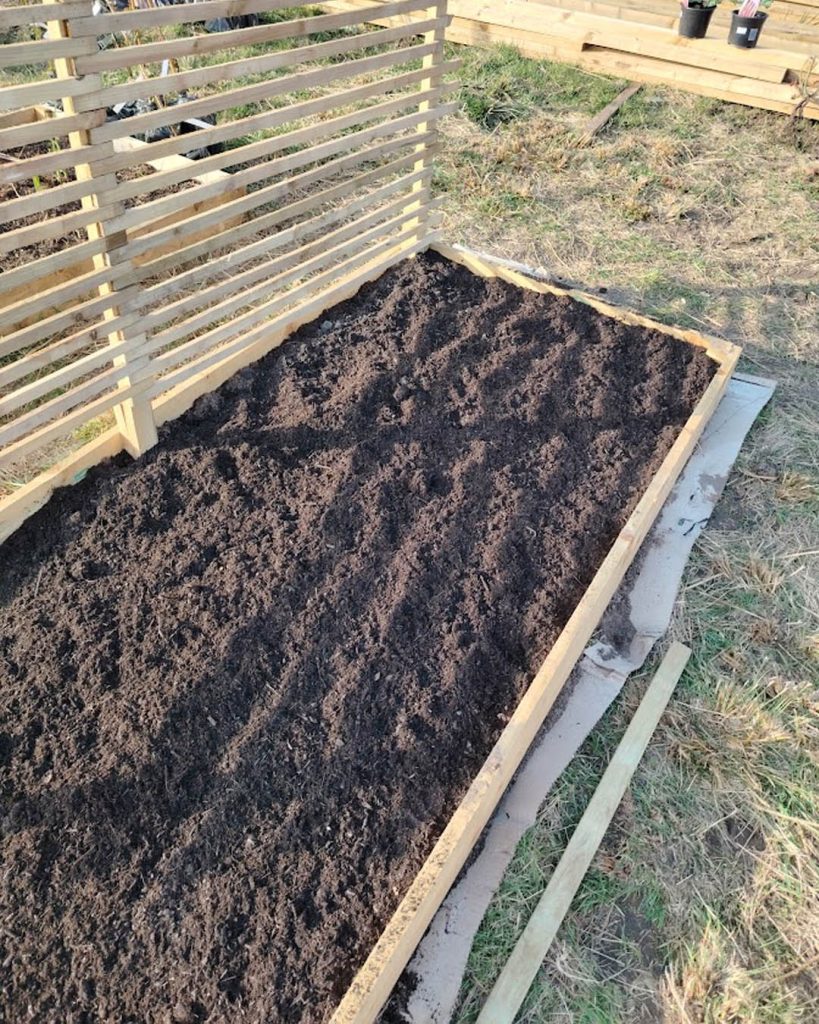
You can see that five bags didn't go far when filling this bed; remember, this is meant to be 250L of compost.
The Compost
Now here's where it starts getting better for this compost, the actual quality of the compost isn't bad at all. It is really dark, smells lovely and is actually quite fine.

While there is the odd stick in it, as you can see above, the compost is much better than other cheap composts I have used.
One common feature of really cheap composts is some weird, white fibrous material. These bags don't have it, and overall I am happy with the quality of the compost, but the proof is in the pudding, and I will need to see how my crops get on before knowing for sure.

My Final Thoughts
So while this compost is not the bargain it appears at first due to the smaller-than-expected bag size, it is still cheap. I got 20 bags for £60, and I believe it has been on sale for even less than this in the past. Compared to other cheap composts, I would actually prefer to use this.
For filling raised beds and for use in bulk, I still think it isn't a bad deal, but give it a good sieve if you can before using it!
Debby C says
Ooh....have you, or are you going to, review any other cheap composts? I would be interested to know. I have used Lidl's with varying degrees of success. I wasn't sure if it was my fault, or my seeds.
Daniel says
Ive got a huge compost trial coming up, going to hopefully be about 30 different types! I will have lots of cheap ones in there too
RGardener says
Great review! The foreign objects still puts me off though. This is one of the reasons why I stopped buying Miracle-Gro. Last year's batch was infested with slugs, had bits of plastic and fabric, and my seeds didn't germinate. I'm trying Hardy's this year. Can you please review it?
Daniel says
will take a look 🙂
Colin Northern says
Thanks Daniel for the excellent heads up on compost. I have bought 60L bags from Asda which is very fibrous like brown straw and 50L bags from Aldi which is far more rotted down more like soil which seems far better for potting on but like you will have to wait and see!
Mr merlott says
I have actually measured the contents of a few bags of this after emptying them by hand and fluffing the compost up as much as possible and it is working out to around 20 litres a bag - so somehow it’s lost 60% of its volume since filling , the unopened bags I have are 60 x 48 x 6 cms (17.3kg in volume) so for the 20 bags that I bought thinking I had 1000 litres I ended up with 400 litres - not such a good bargain then , as 1000 litres I wanted would cost £ 150 not £60 - I’m currently waiting for a response from the supplier
manatou says
As usual people only see the price, and because it is cheap they think they are getting a bargain! The first clue is it does not say multi-purpose, or potting compost and if you look on the bag it says it is:
"perfect to dig into existing beds and borders"
"Organic soil improver"
"Improving soil structure"
"Mulching"
"Planting out"
Nowhere does it say it for starting plants off or growing in pots and containers. I bought this as a soil improver and for that it seems to be very good. Always check what you are buying and not just go by price!