
Most American gardeners spend hours every summer pulling weeds, only to watch them return. They lay mulch year after year and try landscape fabric that fails within two seasons. Some give up and use herbicides that kill the soil along with the weeds.
There’s a smarter way, and it’s been hiding in plain sight in cottage gardens and historic landscapes for over a century.
Plant something the weeds can’t compete with.
Weeds are opportunists. They thrive on bare soil where seeds can land and reach light. Cover that soil with a dense, living plant carpet, and the seeds either fail to germinate or get smothered before they can establish. Done right, a well-chosen groundcover eliminates 80 to 95 percent of weed pressure within two growing seasons. You stop pulling. You stop mulching. You start enjoying the garden.
The catch is that there’s no single “best groundcover.” The right plant depends on your sun exposure, climate, soil, appearance preferences, and whether anyone will walk on it. This guide covers 14 of the most effective groundcovers for American gardens, organized by the situations they solve, plus the science behind why this approach works, common mistakes that ruin plantings, and genuinely invasive species you should never plant, regardless of garden center advice.
By the end, you’ll know exactly which plant fits your specific situation and how to establish it so it actually does its job.
The Science Of Why Groundcovers Stop Weeds
Before we get to specific plants, it’s worth understanding why this works at all. The principle is simple, but the mechanisms are interesting.
Weed seeds need three things to germinate: warm temperatures, moisture, and light. Most weed seeds are inhibited by darkness, which prevents them from wasting energy sprouting underground where seedlings can’t reach the surface. Cover the soil with a dense plant canopy and light reaching the seeds drops by 90 percent or more. Germination rates plummet.
Even when weed seeds do manage to germinate under a groundcover, the seedlings face brutal competition. Established groundcover plants have claimed the available water and nutrients in the top 6 inches of soil. A new weed seedling pushing through that root mat tries to grow in soil already stripped of resources. Most seedlings die within days of emergence. Some groundcovers release compounds from their roots that actively suppress the growth of nearby plants, a phenomenon called allelopathy. Sedums, certain thymes, and several juniper species all show measurable allelopathic effects on common garden weeds. The plant isn’t just outcompeting the weeds; it’s chemically discouraging them from growing nearby.
The result is a self-maintaining system. Once a groundcover is established (typically 1 to 2 growing seasons), weed pressure drops dramatically and stays low for years. You’ll still need to pull occasional weeds, but the constant battle becomes an occasional inspection.
Before You Plant: Match The Plant To The Site
The biggest mistake in groundcover gardening is choosing a plant based on photos rather than how it performs in your conditions. A plant that thrives in dry, sunny Colorado will die in shady, humid Atlanta. A groundcover that fills in beautifully in moist Minnesota soil will struggle in sandy Texas soil.
Before you choose anything, answer four questions about the site:
Sun exposure. Full sun (6+ hours direct), partial sun (4 to 6 hours), partial shade (2 to 4 hours), or full shade (less than 2 hours)?
Soil moisture. Is your soil wet, average, or dry? Does the area drain quickly after rain, hold water for days, or stay consistently damp?
Soil type. Clay (heavy, holds water, slow to drain), loam (the ideal middle ground), or sandy (drains fast, dries quickly)?
Foot traffic. Will anyone walk on this area, occasionally or regularly?
Once you have those four answers, narrow your plant list to those that thrive in those conditions. A plant that almost matches will need years of extra work to establish and may never look quite right.
The next sections are organized by use case, so you can skip to the situation that matches yours.
For Full Sun And Dry Conditions
These are common situations American homeowners face: a sunny strip along the driveway, a hot bank against the house, or a patch where lawn won’t grow because the soil is too thin or dry.
1. Creeping Thyme (Thymus serpyllum)
This is the classic American sunny-site groundcover for a reason. Forms a dense mat 2 to 4 inches tall, covered in tiny pink, purple, or white flowers in early summer. Drought-tolerant once established, hardy in zones 4 to 9, and one of the few groundcovers genuinely safe to walk on. The leaves release a fragrance when crushed underfoot, and the pollinators love it!
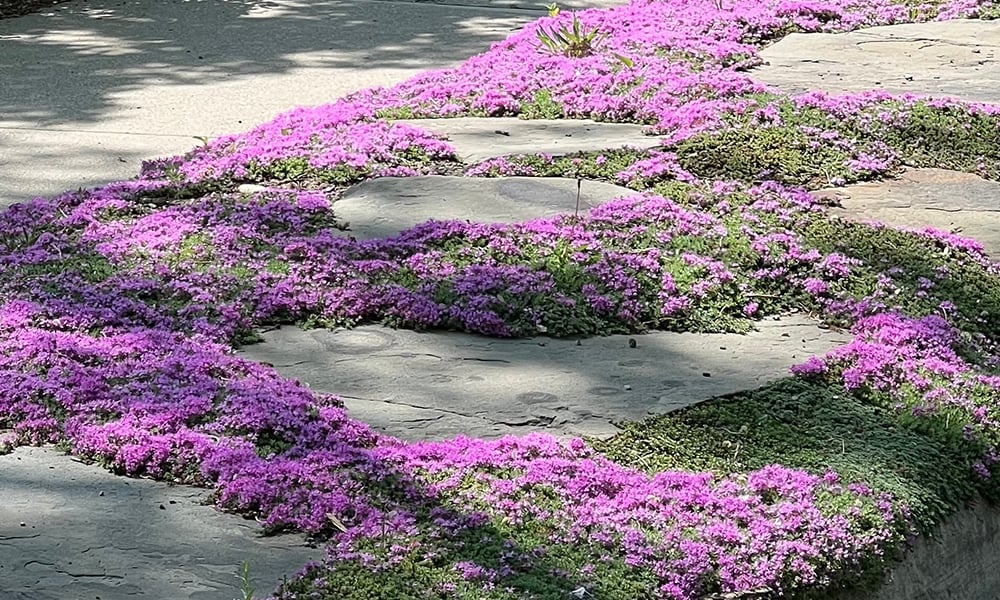
Best varieties: ‘Magic Carpet’ (compact, bright pink flowers), ‘Elfin’ (one of the most miniature, perfect for stepping stones), ‘Coccineus’ (deep red flowers, slightly taller), and ‘Pink Chintz’ (rosy pink, vigorous spreader). For mowable lawn alternatives, ‘Mother of Thyme’ is the standard.
Establishment time: 2 to 3 years to full coverage. Patient gardeners are rewarded.
2. Sedum / Stonecrop (Sedum spp.)
Succulent groundcovers that thrive on neglect. Many species exist, but low-growing carpet varieties are best for weed suppression. They store water in fleshy leaves, so they tolerate drought but dislike wet feet.
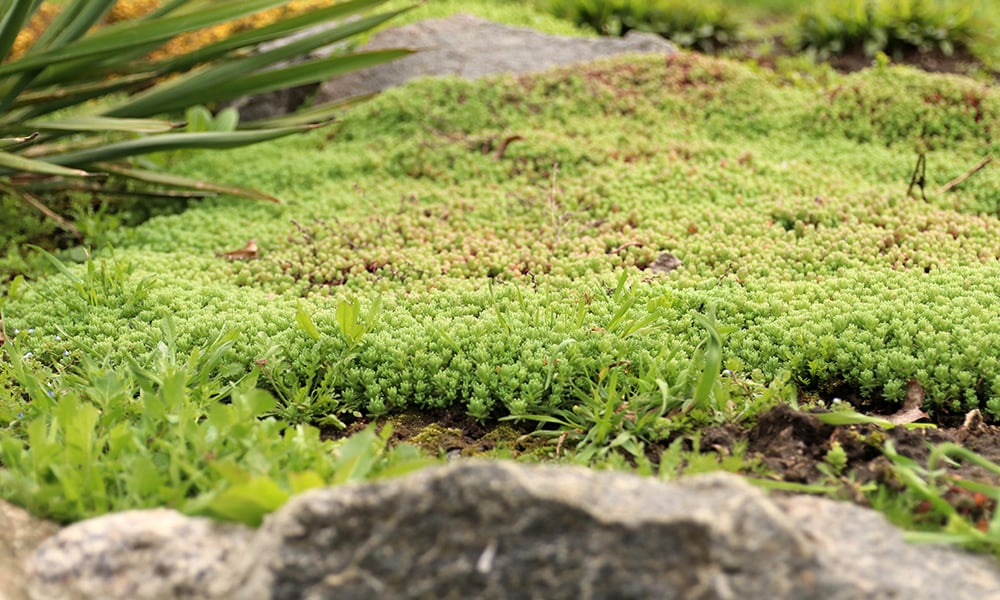
Best varieties for groundcover use: ‘Angelina’ (golden yellow foliage, turns coppery in fall, 4 inches tall), ‘Dragon’s Blood’ (red-tinged green leaves, pink flowers), ‘John Creech’ (low, dense, with pink summer flowers), and ‘Blue Spruce’ (silvery blue needle-like foliage). For larger areas, consider mixing several sedum varieties for a colorful tapestry effect.
Zones 3 to 9. Establishment time: 1 to 2 years.
3. Lamb’s Ears (Stachys byzantina)
Famous for its soft, silvery-grey, fuzzy leaves that feel like velvet. Less aggressive than some other sunny-site options, which makes it a good choice for smaller areas. Spreads to form a soft silver carpet 6 to 12 inches tall. Drought-tolerant once established and largely deer-resistant (the fuzzy leaves are unpleasant to deer mouths).
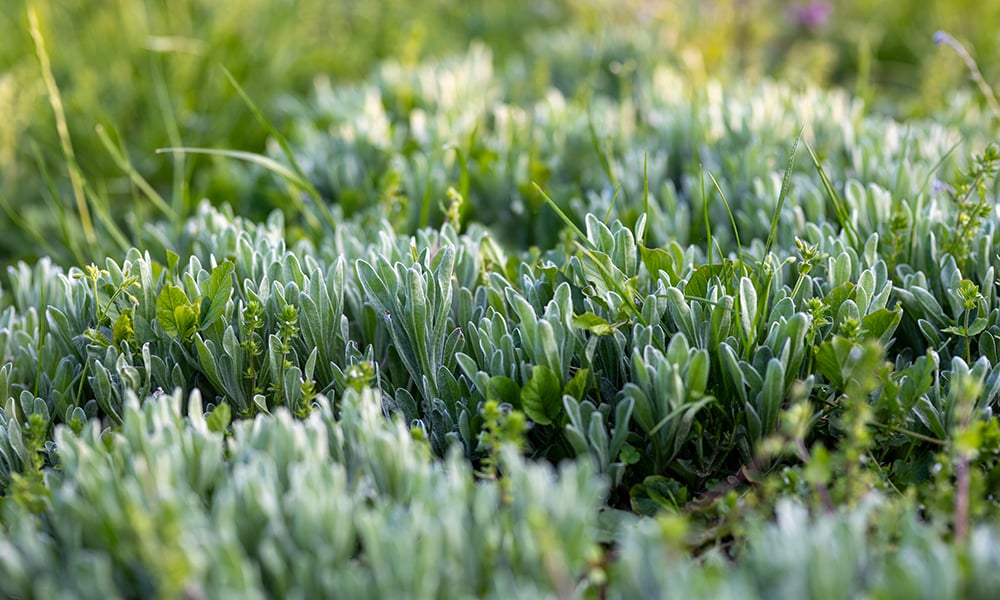
Best variety for groundcover use: ‘Helene Von Stein’ (sometimes sold as ‘Big Ears’) has larger leaves and rarely flowers, which means the foliage stays neat all season instead of dying back after the flower spikes finish.
Zones 4 to 9. Establishment time: 2 years.
4. Ice Plant (Delosperma cooperi)
A succulent groundcover with absolutely vivid daisy-like flowers in shocking pinks, oranges, and yellows. Native to South Africa but well-adapted to the American Southwest, the Mountain West, and California. Tolerates extreme heat and dry conditions that would kill most plants.
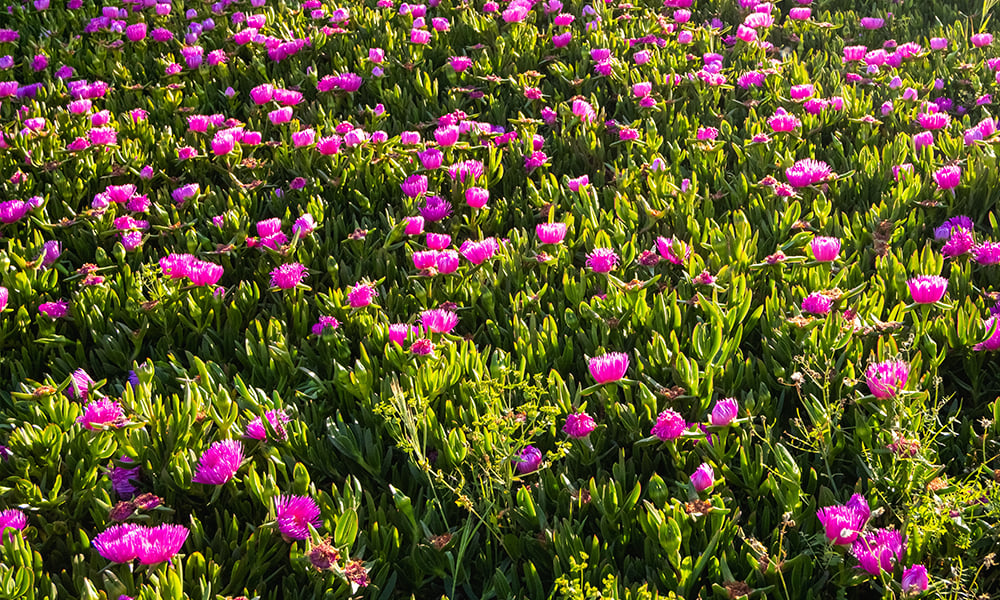
Best varieties: ‘Cooper’s Ice Plant’ (hot pink), ‘Fire Spinner’ (orange and pink bicolor), ‘Mesa Verde’ (salmon pink, very compact), and ‘Jewel of the Desert’ series (multiple colors).
Zones 5 to 10, but performs best in zones 7 to 10. Establishment time: 1 to 2 years. Note that ice plant doesn’t tolerate humid summers well; it’s a Western and Southwestern plant, not a Southeastern one.
For Partial Shade To Full Shade
Shade is where most homeowners struggle. Lawn won’t grow, mulch looks bare, and weeds still find a way in. These plants thrive in conditions where most flowering perennials fail.
5. Pachysandra (Pachysandra terminalis)
The classic American shade groundcover for properties with mature trees. Forms a dense, glossy green carpet 6 to 10 inches tall that excludes virtually all weeds once established. Tolerates dry shade better than almost anything else, which is the hardest situation in gardening.
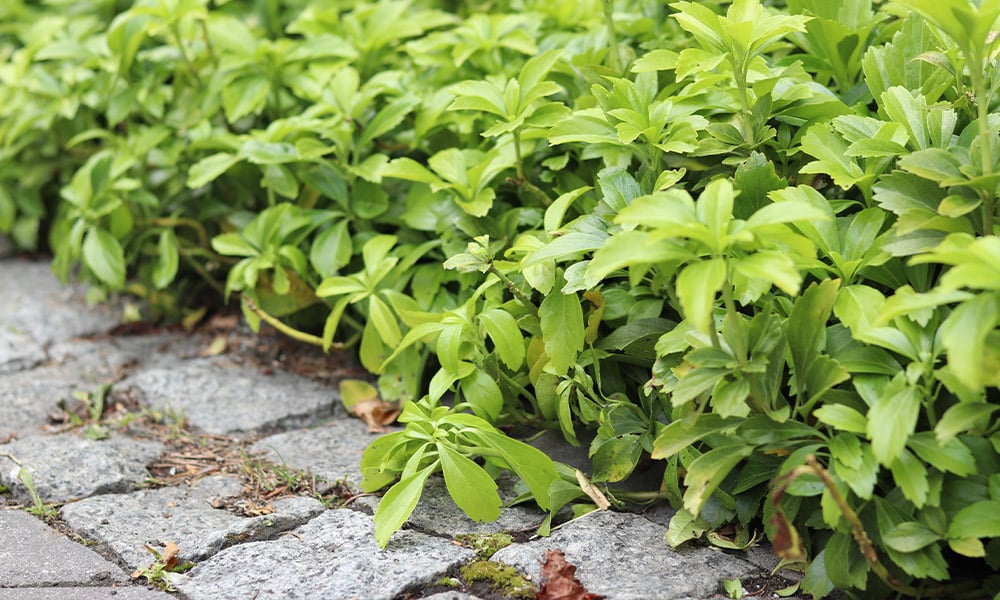
Best varieties: ‘Green Carpet’ (slightly smaller and denser than the species), ‘Variegata’ (cream and green leaves for brighter color in deep shade), and ‘Silver Edge’ (subtle white edging on the leaves).
Zones 4 to 8. Establishment time: 2 to 3 years.
Important caveat: traditional Japanese pachysandra (P. terminalis) can spread aggressively in some Eastern states. For a native alternative, choose Allegheny spurge (Pachysandra procumbens), an underused native that performs similarly but spreads less aggressively.
6. Sweet Woodruff (Galium odoratum)
A delicate-looking but tough European native that thrives in moist, shady spots. Star-shaped white flowers in spring, fragrant foliage that smells like fresh hay when dried. Forms a knee-low carpet 6 to 8 inches tall.
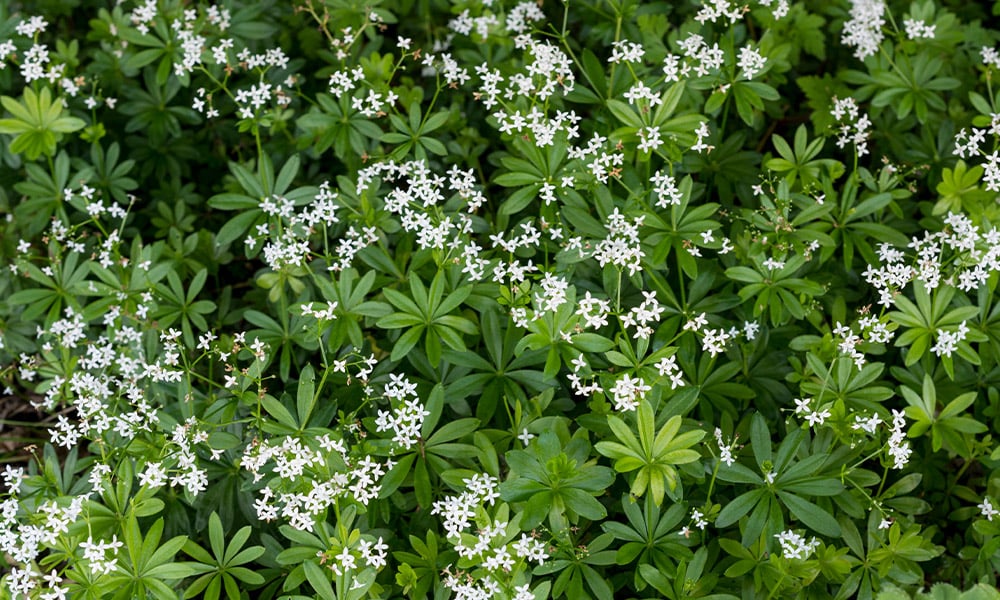
The best feature is its tolerance for woodland conditions: deciduous tree shade, fall leaf litter, and slightly acidic soil. Many other shade groundcovers struggle with autumn leaf accumulation; sweet woodruff thrives in it.
Zones 4 to 8. Establishment time: 2 years.
7. Foamflower (Tiarella cordifolia)
A North American native with maple-shaped leaves and frothy spikes of white or pink flowers in spring. Stays around 6 inches tall, spreads steadily by runners (called stolons), and excludes weeds once established. Highly attractive to native pollinators, including specialty bees.
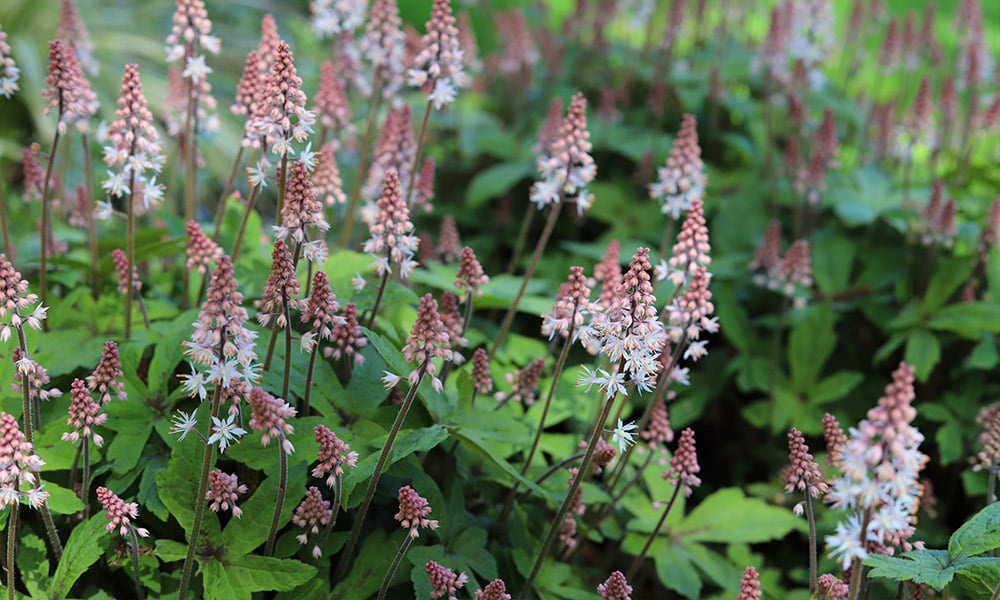
Best varieties: ‘Pink Skyrocket’ (taller, hot pink flower spikes), ‘Sugar and Spice’ (white flowers, attractive dark-veined foliage), and ‘Brandywine’ (compact, soft pink flowers).
Native to eastern and central North America. Zones 4 to 9. Establishment time: 2 years.
8. Wild Ginger (Asarum canadense)
An underused native woodland groundcover with heart-shaped leaves up to 6 inches across. The deep green, glossy foliage forms a dense carpet 4 to 6 inches tall that completely smothers weeds. Tolerates deep shade better than most groundcovers.
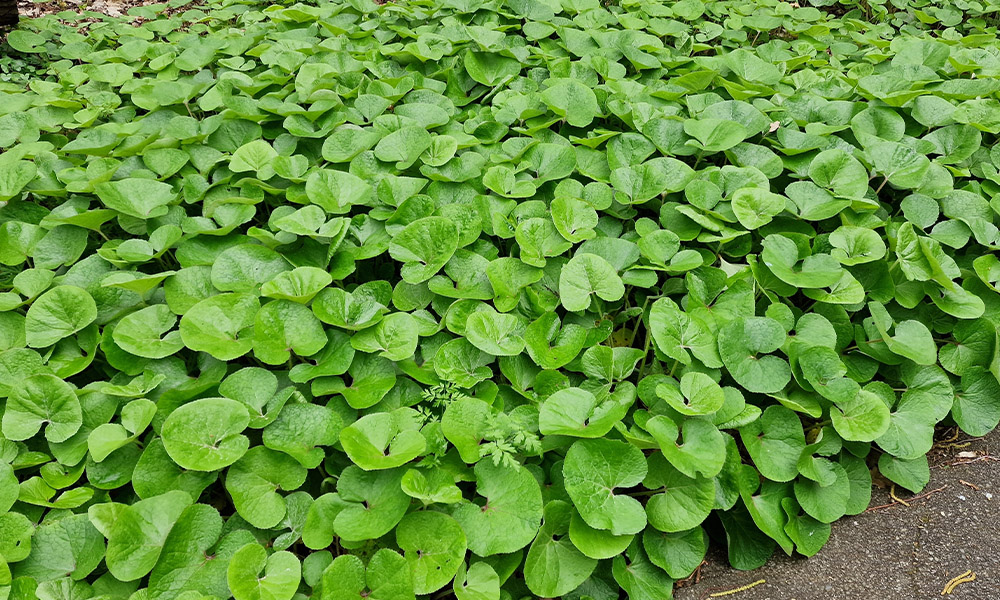
The “ginger” name comes from the slightly spicy aroma of the crushed roots; it isn’t related to culinary ginger and shouldn’t be eaten.
Native to eastern North American forests. Zones 3 to 8. Establishment time: 2 to 3 years. Worth the wait for the most elegant shade groundcover in American gardens.
For Slopes And Erosion Control
Steep slopes are a maintenance nightmare. The lawn won’t survive the angle, the lack of moisture retention, and the bare slopes erode every time it rains. The right groundcover both stabilizes the soil and eliminates weed pressure.
9. Creeping Juniper (Juniperus horizontalis)
A spreading evergreen native to North America that anchors slopes with its tough root system. Foliage ranges from blue-green to silver-grey depending on variety. Stays low (6 to 18 inches, depending on variety) and spreads steadily outward, eventually forming a solid evergreen mat that prevents erosion year-round.
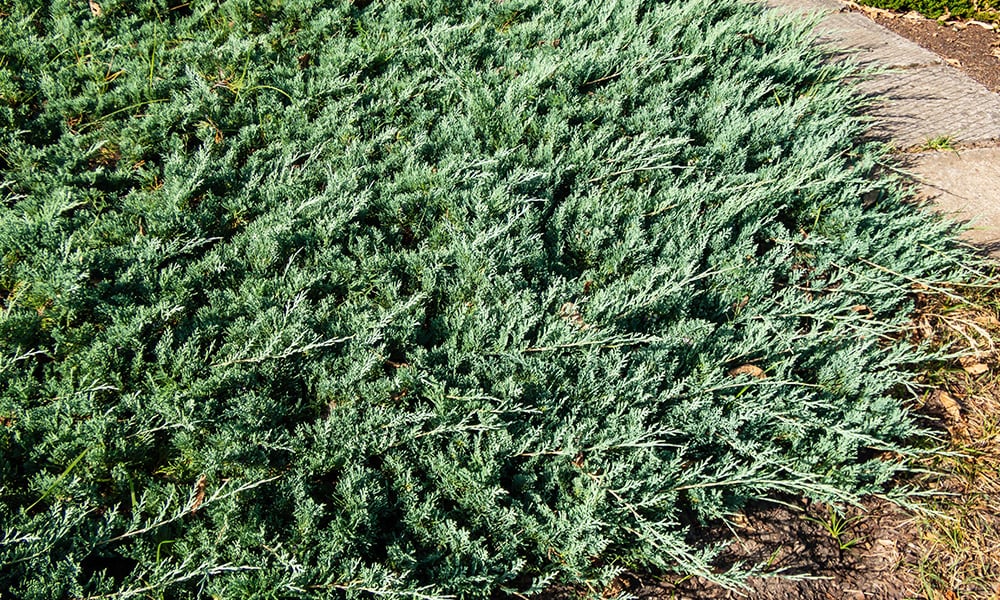
Best varieties for slopes: ‘Blue Rug’ (the gold standard, 6 inches tall, intensely blue-grey), ‘Wiltonii’ (silver-blue, very low growing), ‘Bar Harbor’ (more vigorous spreader), and ‘Andorra’ (compact, with bronze winter color).
Zones 3 to 9. Establishment time: 2 to 3 years for full coverage.
10. Ajuga / Bugleweed (Ajuga reptans)
Forms a dense mat of glossy, often colored foliage with striking blue-purple flower spikes in spring. Spreads aggressively by runners, which makes it perfect for slopes where you need fast coverage, but a problem near lawns or formal beds, where it will invade.
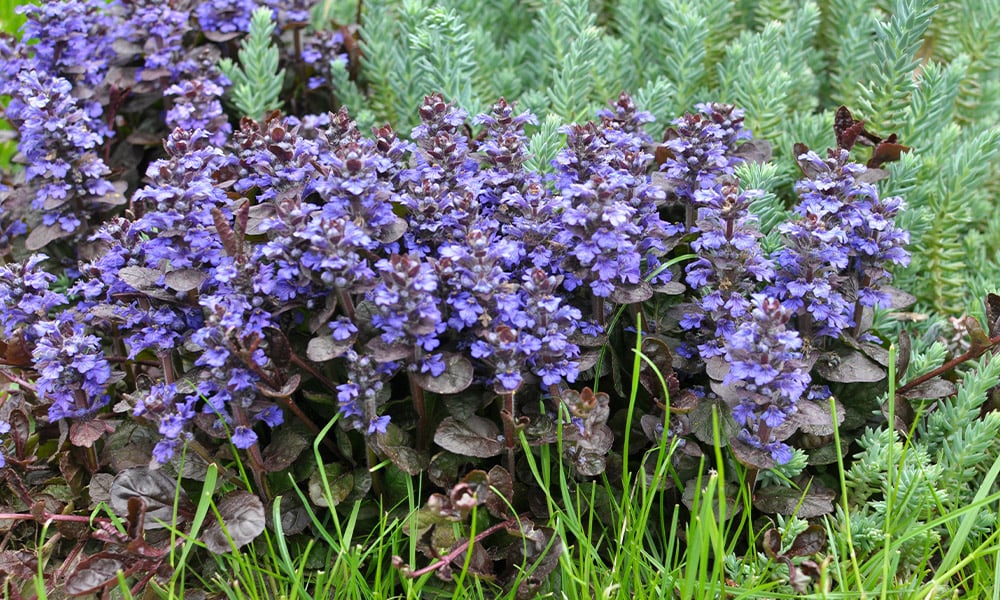
Best varieties: ‘Black Scallop’ (very dark purple-black leaves, the most popular variety), ‘Burgundy Glow’ (variegated cream, pink, and green), ‘Chocolate Chip’ (compact, bronze-tinged), and ‘Catlin’s Giant’ (largest leaves, most dramatic effect).
Zones 3 to 9. Establishment time: 1 year (genuinely fast).
Containment caution: install metal edging or a brick border to prevent ajuga from invading lawn areas. Once it reaches grass, removal is extremely difficult.
11. Wild Strawberry (Fragaria virginiana)
A native American groundcover that combines erosion control, weed suppression, and edible fruit. Forms a dense, attractive carpet of three-leafed plants 4 to 6 inches tall, with white flowers in spring and small but flavorful red strawberries in early summer.
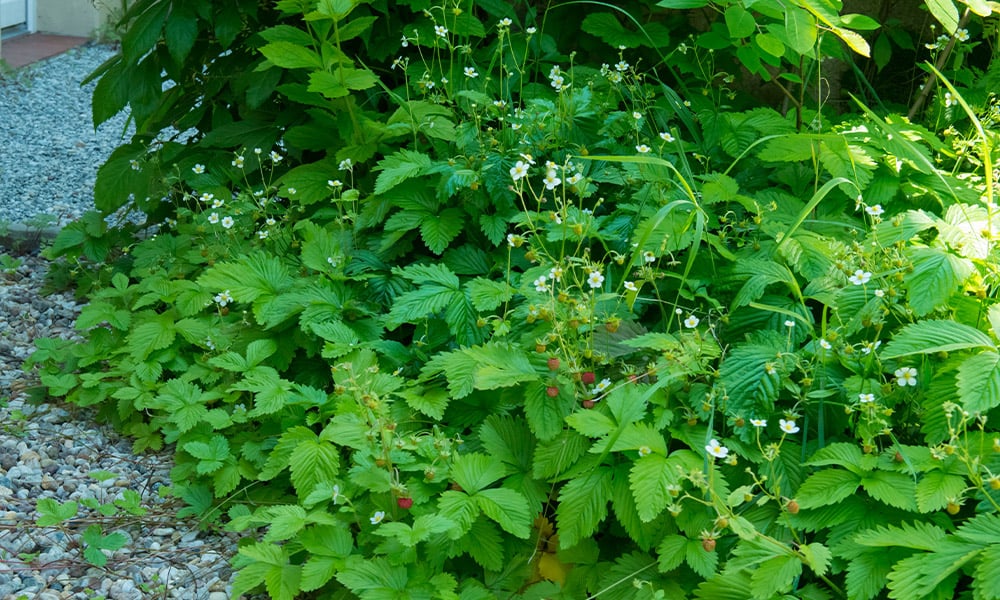
This is the wild ancestor of cultivated strawberries, so the fruit is smaller (think raisin-sized) but more intensely flavored. The plant spreads by runners and can fill a sunny slope within two seasons. Much sweeter and better tatsing than regular strawberries.
Native to most of North America. Zones 3 to 8. Establishment time: 1 to 2 years.
For Areas You Need To Walk On
Most groundcovers can’t tolerate foot traffic. These can.
12. Mazus (Mazus reptans)
A tough, low-growing groundcover only 1 to 2 inches tall that handles light to moderate foot traffic well. Produces masses of small lavender flowers in late spring through early summer. Often used between flagstones and stepping stones as a “living grout.”
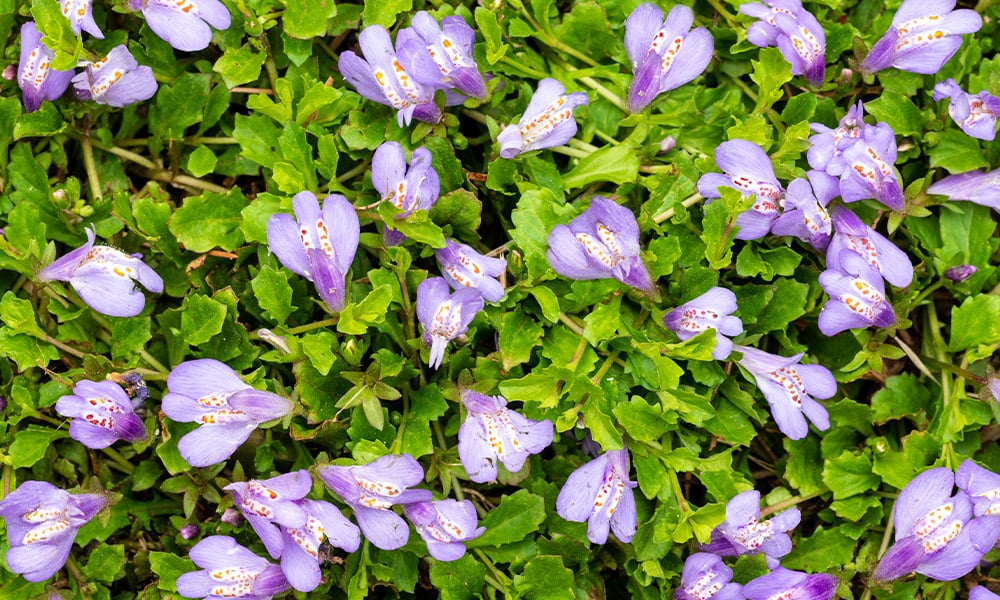
Best varieties: ‘Albus’ (white-flowered variety, slightly less vigorous), and the species itself with its lavender flowers.
Zones 5 to 8. Establishment time: 1 year.
Best in moist, partial shade conditions, which makes it complementary to creeping thyme (better for dry sun) when planning a walkable garden.
13. Irish Moss / Scotch Moss (Sagina subulata / Arenaria verna)
Not actually mosses but tiny carpet-forming perennials that look exactly like fine moss. Stay around 1 inch tall, produce tiny white flowers in summer, and tolerate light foot traffic. Bright green (Irish moss) or golden-yellow (Scotch moss) carpets between stepping stones.
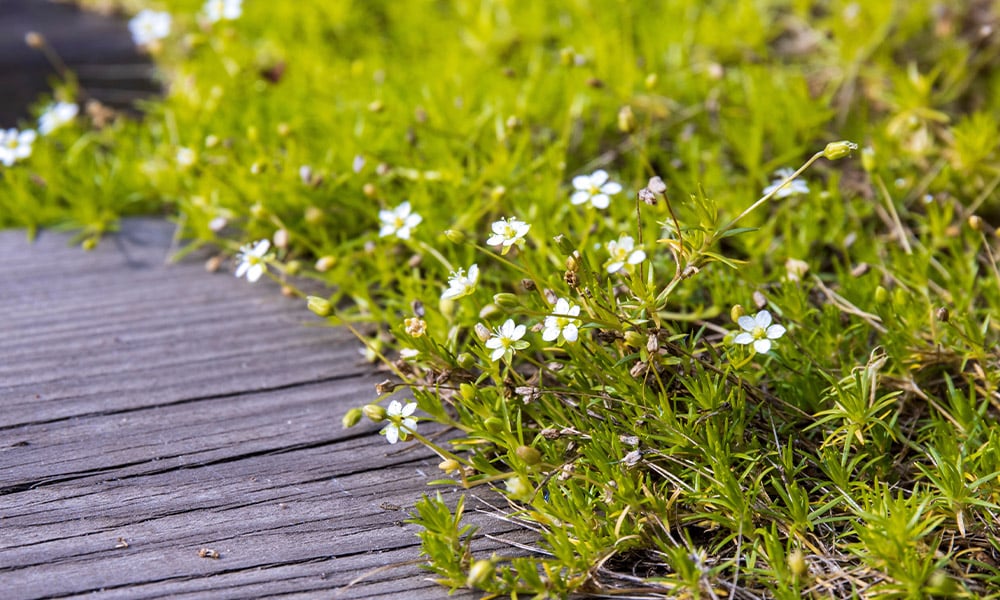
Zones 4 to 8. Establishment time: 1 to 2 years.
Best in moist conditions with morning sun and afternoon shade. Will brown out in full hot sun and recover slowly.
14. Dwarf Mondo Grass (Ophiopogon japonicus ‘Nanus’)
Looks like a tiny ornamental grass but is actually a member of the lily family. Forms a dense, dark green, fountain-like clump 2 to 4 inches tall. Highly tolerant of foot traffic, drought once established, deer-resistant, and effectively evergreen in mild zones.
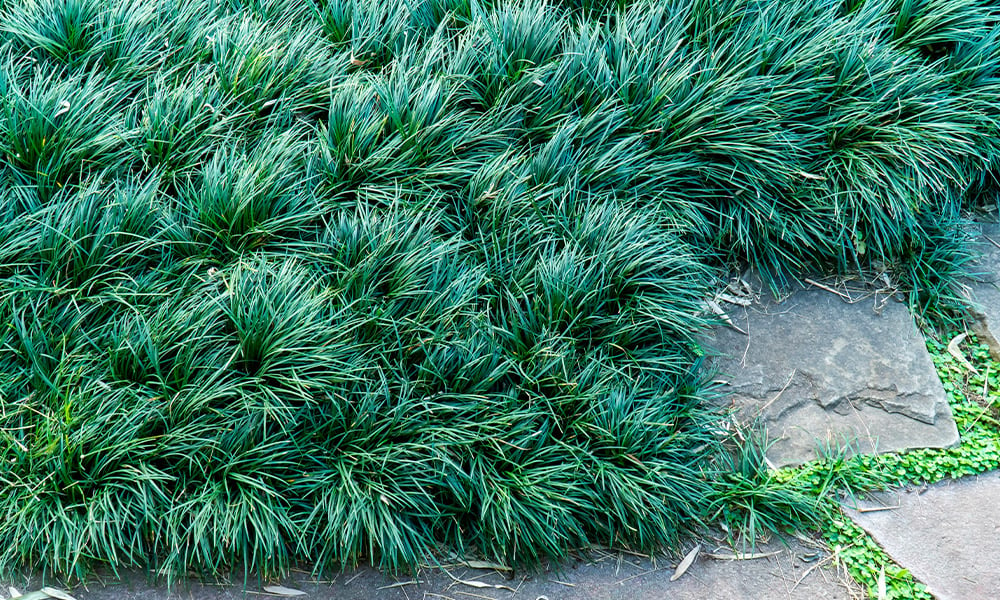
Best for paths, between stepping stones, around the base of trees, and as a lawn alternative in shaded areas where grass won’t grow.
Zones 6 to 11. Establishment time: 2 to 3 years for full coverage (slow but worth it).
The Groundcovers To Avoid (No Matter What The Garden Center Says)
This is the section most groundcover articles skip, which is a disservice to readers. Several extremely popular groundcovers are genuinely invasive in much of the United States, and they’ll cause serious problems for years if you plant them.
English Ivy (Hedera helix). Listed as invasive or noxious in over a dozen US states. Climbs trees and eventually kills them by smothering the bark. Forms dense mats that exclude all other plants and can damage building foundations. Once established, it is almost impossible to remove without years of work.
Vinca / Periwinkle (Vinca minor and Vinca major). Listed as invasive in many Eastern, Midwestern, and Pacific Northwest states. Spreads aggressively into woodlands, displacing native ground flora. The pretty blue flowers are deceptive; this plant causes real ecological damage when it escapes gardens.
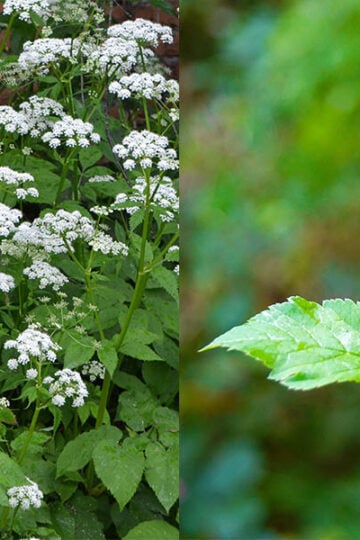
Goutweed / Bishop’s Weed (Aegopodium podagraria). Often sold as ‘Variegata.’ One of the worst invasive groundcovers in American gardens. Spreads by rhizomes that can survive any amount of digging. Roundup doesn’t fully kill it. Reader after reader in gardening forums describes years-long battles to remove it. Don’t plant it under any circumstances.
Creeping Charlie / Ground Ivy (Glechoma hederacea). Sometimes sold as a groundcover, but it’s a lawn weed in disguise. It will invade adjacent lawn areas and cause significant problems.
Houttuynia / Chameleon Plant (Houttuynia cordata). Pretty variegated foliage hides one of the most aggressive spreaders in the gardening world. Smells faintly of fish when crushed, which is the first warning sign.
Japanese Stiltgrass (Microstegium vimineum). Sometimes confused with ornamental grasses. Now invading native forests across the eastern US. Never plant intentionally.
Pachysandra (caveat). Traditional Japanese pachysandra (P. terminalis) is borderline invasive in some Eastern states. If you want pachysandra, choose the native Allegheny spurge (P. procumbens) instead, which performs similarly without the invasive potential.
Creeping Jenny (Lysimachia nummularia). Aggressive in moist conditions, especially near water features and wetland edges. Native to Europe and listed as invasive in many Eastern and Midwestern states. The golden-leaved variety ‘Aurea’ is slightly less aggressive but still problematic in many regions.
The general principle: before planting any groundcover, search “[plant name] invasive [your state]” and read your state agricultural extension office’s advice. If there’s a warning, choose a different plant. A few hours of research saves years of regret.
How To Actually Establish A Groundcover
Choosing the right plant is half the job. The other half is establishing it properly so it actually does its weed-suppression work within a reasonable timeframe.
Step 1: Eliminate existing weeds first
Most homeowners skip this step, which causes most groundcover plantings to fail. Planting groundcover on existing weeds doesn’t eliminate them; it gives weeds a head start. They will outpace your new plants, and you’ll be hand-weeding for years.
Options for clearing the area first:
Mechanical removal: Pull or dig out all existing weeds, including roots. Best for small areas and for situations where you have time to do it right.
Solarization: Cover the area with clear plastic during the hottest months (June through August in most zones), sealed at the edges. The heat under the plastic reaches 140°F+ and kills most weed seeds and roots in the top 4 inches of soil. Takes 4 to 6 weeks but is highly effective.
Cardboard smothering: Lay overlapping, flattened cardboard over the entire area, soak it with water, and cover it with 4 to 6 inches of mulch or compost. Leave for one full season. The cardboard kills weeds beneath it as it breaks down, adding organic matter to the soil.
Sheet mulching: Similar to cardboard smothering, but combined with compost layers. Excellent for converting lawn to groundcover bed.
Complete whichever method you choose before planting. Removing weeds after the groundcover is in place is much harder.
Step 2: Prepare the soil properly
Most gMost groundcovers benefit from a 2 to 4 inch layer of compost worked into the top 6 inches of soil before planting. This improves drainage in clay soils, water retention in sandy soils, and adds organic matter that supports beneficial soil biology. most groundcovers, you don’t need to add fertilizer at planting time. Compost provides enough initial nutrients. Excessive fertilizer can actually slow groundcover establishment by encouraging weak, lush growth that’s vulnerable to disease.
Step 3: Plant at the right density
Patience pays off here. The two strategies are:
Tight planting for fast coverage: Place plants 8 to 12 inches apart. Full coverage in 1 year for vigorous species. Costs more upfront, but minimizes the weed window.
Standard planting for budget approach: Place plants 18 to 24 inches apart, following the nursery’s recommended spacing. Full coverage in 2 to 3 years. Costs less but requires more patience and more weeding during the establishment phase.
Either approach works. The mistake is planting too far apart and then being disappointed when plants take 4 to 5 years to fill in.
Step 4: Mulch between plants during establishment
A 2 to 3 inch layer of shredded leaf or fine bark mulch around (but not against) new plants does several things. It retains soil moisture, moderates temperature, suppresses weed germination during establishment, and breaks down to feed the soil.
Replenish the mulch as it decomposes during the first growing season. Once the groundcover fills in, you can stop mulching; the plants will do the job themselves.ear
Newly planted groundcovers need consistent moisture during their first growing season. Aim for 1 inch of water per week (from rain or irrigation), applied as deep, slow watering rather than light frequent sprinkles. After the first year, most groundcovers in the right location need supplemental water only during severe drought.
Step 6: Pull occasional weeds during the establishment phase
For the first 1 to 2 years, walk the area weekly during the growing season and pull any weeds that emerge between plants. This small ongoing task prevents weeds from establishing seed banks. Once the groundcover closes in, this job ends.
The Most Common Groundcover Mistakes
A few mistakes cause most groundcover failures. Knowing them in advance saves seasons of frustration.
Planting before clearing existing weeds is the single most common mistake. Already covered but worth repeating.
Choosing a plant that doesn’t match the site causes problems. Creeping thyme in shade. Pachysandra in full sun. Sedum in wet soil. Every plant has conditions it tolerates and conditions it can’t survive. Match the plant to the site, not the other way around.
Planting too sparsely leads to disappointment. Spacing plants 24 inches apart leaves 24-inch gaps for weeds. Plant tighter (12 to 18 inches for most species) and accept the higher upfront cost.
Ignoring local invasive warnings causes problems. Some commonly sold groundcovers are problematic in many regions. Always check your state’s invasive plant list before buying.
Mowing or trimming too aggressively harms groundcovers. Most don’t need maintenance trimming. Some benefit from light shearing once a year (creeping thyme, sedum), but aggressive mowing can damage or kill many.
Walking on plants not designed for traffic causes damage. Only a few groundcovers tolerate foot traffic. Walking repeatedly on creeping phlox, sedum, or pachysandra will harm them. For walkable surfaces, choose mazus, creeping thyme, Irish moss, or dwarf mondo grass.
Not protecting young plants from deer. Many groundcovers are deer-resistant once established, but deer will sample anything new. A temporary deer-resistant spray or physical barrier through the first 6 months is worth the effort in deer-pressured areas.
Expecting instant results. Groundcovers take 1 to 3 years to fully fill in. The first season often looks underwhelming. Patience is part of the process. The payoff is years of low-maintenance, weed-free beauty.
Not edging the area. Most groundcovers spread, and they don’t stop at the edge of your bed. Install metal edging, brick borders, or stone edging to define the edge of the groundcover. Without an edge, you’ll be constantly trimming or weeding the boundary.
Skipping the mulch phase during establishment. Mulching while the groundcover fills in is essential. Skip this, and weeds will outpace your new plants.
Frequently Asked Questions
How long does it take groundcover to fill in completely?
Depends on the species and planting density. Fast spreaders like ajuga, creeping thyme, and creeping juniper can fill in within 1 to 2 years. Slower species like pachysandra, wild ginger, and dwarf mondo grass take 2 to 3 years to establish. Standard nursery spacing (18 to 24 inches) doubles those timeframes compared to tight planting (8 to 12 inches).
Can I plant groundcover over the existing lawn?
You can, but it’s not recommended. The grass will compete with the groundcover for years, preventing proper establishment. Better to kill the grass first (solarization, cardboard smothering, or mechanical removal) and then plant into clean soil.
Will groundcovers eliminate ALL weeds?
No. Some weeds will still find their way through, especially tough perennial weeds with deep root systems or runners (bindweed, nutsedge, Bermuda grass). Groundcovers reduce weed pressure by 80 to 95 percent, but you’ll still need occasional spot-weeding. The goal is “manageable” rather than “perfect.”
Do groundcovers attract pests or rodents?
Some dense groundcovers can provide cover for voles and mice, particularly in colder climates. If you have rodent concerns, choose less dense options (creeping thyme, sedum, or dwarf mondo grass) rather than thick mats like pachysandra or wild ginger near building foundations.
What’s the best groundcover for under trees?
For dry, shady areas under deciduous trees, pachysandra and wild ginger excel. For moist shade, sweet woodruff or foamflower works well. Avoid plants that need full sun under any kind of tree canopy.
Can I mix multiple groundcover species in one area?
Yes, and it often produces the most attractive results. Mixed sedum plantings are particularly stunning. Pair groundcovers with similar light and moisture needs but different colors, textures, and heights. Avoid mixing very aggressive species with less vigorous ones (the aggressive ones will outcompete and dominate).
Will groundcovers survive winter?
Most groundcovers on this list are hardy perennials in their listed zones. Some are evergreen (pachysandra, creeping juniper, dwarf mondo grass), some are semi-evergreen (creeping thyme, vinca alternatives), and some die back to the ground in winter and regrow in spring (ajuga, foamflower, hostas). Check the hardiness zone before planting.
How do I keep groundcover from spreading into the lawn?
Install a physical edge: metal landscape edging, brick or stone borders, or a deep trench cut and maintained between groundcover and lawn. For especially aggressive spreaders like ajuga and creeping juniper, also plan to trim runners back twice a year.
Are groundcovers a better investment than mulch?
Long term, yes. Mulch needs to be replaced every 1 to 2 years (an ongoing cost forever). Groundcovers cost more upfront but become self-sustaining after establishment. Over 10 years, groundcovers typically cost half what comparable mulch coverage costs, while providing visual interest, pollinator habitat, and erosion control that mulch can’t match.
What about chemical weed killers under the groundcovers?
Generally not recommended. Many herbicides damage groundcover itself, and chemical use disrupts the beneficial soil biology that helps groundcovers thrive. If you have specific weeds you can’t pull (Bermuda grass, bindweed), use spot treatment with a brush applicator rather than spraying.
Can groundcovers grow on slopes?
Yes, and they’re often the best solution for slopes that can’t be mowed safely. Creeping juniper, wild strawberry, and pachysandra all excel on slopes once established. Plant on contour (in rows that follow the slope’s elevation rather than running up and down) and use erosion control fabric during establishment if the slope is steep.
Will deer eat my groundcover?
Some are highly deer-resistant: lamb’s ears, dwarf mondo grass, sedum, creeping juniper, and Irish moss. Others are sometimes browsed: hostas (heavily preferred by deer), wild strawberry (the fruit), and foamflower. In high deer areas, lean toward the resistant options.
What’s the most pet-friendly groundcover?
Creeping thyme, Irish moss, mazus, and dwarf mondo grass tolerate light pet traffic well. Avoid ice plant (the leaves are fragile), creeping phlox (resents being walked on), and any aggressive spreader near pet potty areas (the chemicals in urine can damage many groundcovers).
Final Thoughts
The work you put into choosing and establishing the right groundcover pays back compound interest for years afterward. The first season looks underwhelming. The second season looks promising. By the third season, the area essentially maintains itself, with weed pressure dropping by 80 percent or more.
You stop weeding the front bed every weekend. You stop laying down fresh mulch every spring. You stop calling the landscaper to deal with the slope by the driveway. The garden becomes lower-maintenance every year, not higher.
If you’re going to plant only one this year, choose based on the situation that frustrates you most. If it’s a sunny, dry strip that always looks weedy, plant creeping thyme or sedum. If it’s a shaded patch where nothing grows, plant pachysandra or sweet woodruff. If it’s a slope, plant creeping juniper. If it’s a path that needs softening, plant mazus or dwarf mondo grass.
The principles are the same regardless of which plant you choose. Match the plant to the site. Clear weeds before planting. Plant tightly enough that coverage happens in 1 to 2 years. Mulch through the establishment phase. Water consistently for the first year. After that, the plant does the work, and you do less of it every year.
Two years from now, you’ll be the gardener who somehow has time to enjoy the garden instead of constantly maintaining it. Three years from now, you’ll be wondering why you didn’t do this a decade ago.
Leave a Reply