
Zinnias are about as easy as it gets. Plant the seeds and you get flowers from July until the first frost. They are bright, they last, and they keep going when most other annuals have packed it in. If you have never tried them, now is a good time.
Here is what I have learned about growing zinnias in my own garden. No fuss. No fancy tricks. Just what actually works.
Why Bother Growing Zinnias?
A few good reasons:
- They flower for months. Once they start in July, they keep going until October.
- They are brilliant cut flowers. The more you cut, the more they produce.
- Bees and butterflies love them, especially the single-flowered types.
- They are happy in dry weather, so you do not need to water them all the time.
- They come in pretty much every colour you can imagine.
- They are dead easy to grow from seed.
If you only grow one new flower this year, make it a zinnia.
When To Sow Zinnia Seeds
Zinnias hate the cold. One frost and they are done. So timing matters.
If you want to start indoors, wait until late April or early May. Start earlier and you get leggy, floppy seedlings with nowhere to go. I did this my first year. Started in February. Ended up with a tray of sad, gangly plants.
If you want to sow outside, wait until late May or early June. The soil needs to be warm. If you can sit outside in the evening without a jumper, you are good. If you are still shivering, wait.
Both ways work. Starting indoors gets you flowers a bit earlier. Sowing outside is less hassle and the plants often grow better. Zinnias hate having their roots messed with.
What You Need
Nothing fancy. Here is the full list:
- A packet of zinnia seeds (more on which to choose below)
- Module trays or small pots if sowing indoors
- A bag of multipurpose or seed compost
- A windowsill, greenhouse, or warm spot
- A watering can
That is it. No need for a heated propagator. Zinnias pop up fine at room temperature.
Choosing Your Zinnia Seeds
There are loads of zinnia types. It can get a bit much. Here is how I keep it simple.
First, pick how tall you want them. Some stay at 30cm, some hit a metre. Tall ones are good for cutting and the back of the border. Short ones work in pots or at the front.
Some good choices to start with:
- Benary's Giant series. Very tall, big flowers, brilliant for cutting.
- Queen series (Queen Lime, Queen Red Lime). Soft, unusual colours, lovely in mixed bouquets.
- Profusion series. Compact, ideal for pots, less prone to mildew.
- Zahara series. Another good compact choice, very tough.
- California Giants. Old-fashioned tall variety, classic bright colours.
If you have never grown zinnias, just grab a packet of mixed seeds. You get all the colours and can pick your favourites for next year.
How To Sow Zinnias Indoors
I like this way best. You get flowers earlier and you can keep an eye on the seedlings.
Step 1
Fill your trays or pots with compost. Tap them to settle it. Do not squash it down.
Step 2
Water the compost before you sow the seeds. This helps prevent the seeds from floating around or washing away. Let the excess water drain out. Place two seeds in each module as a backup in case one doesn't sprout. If both seeds come up, snip off the weaker seedling with scissors.
Step 4
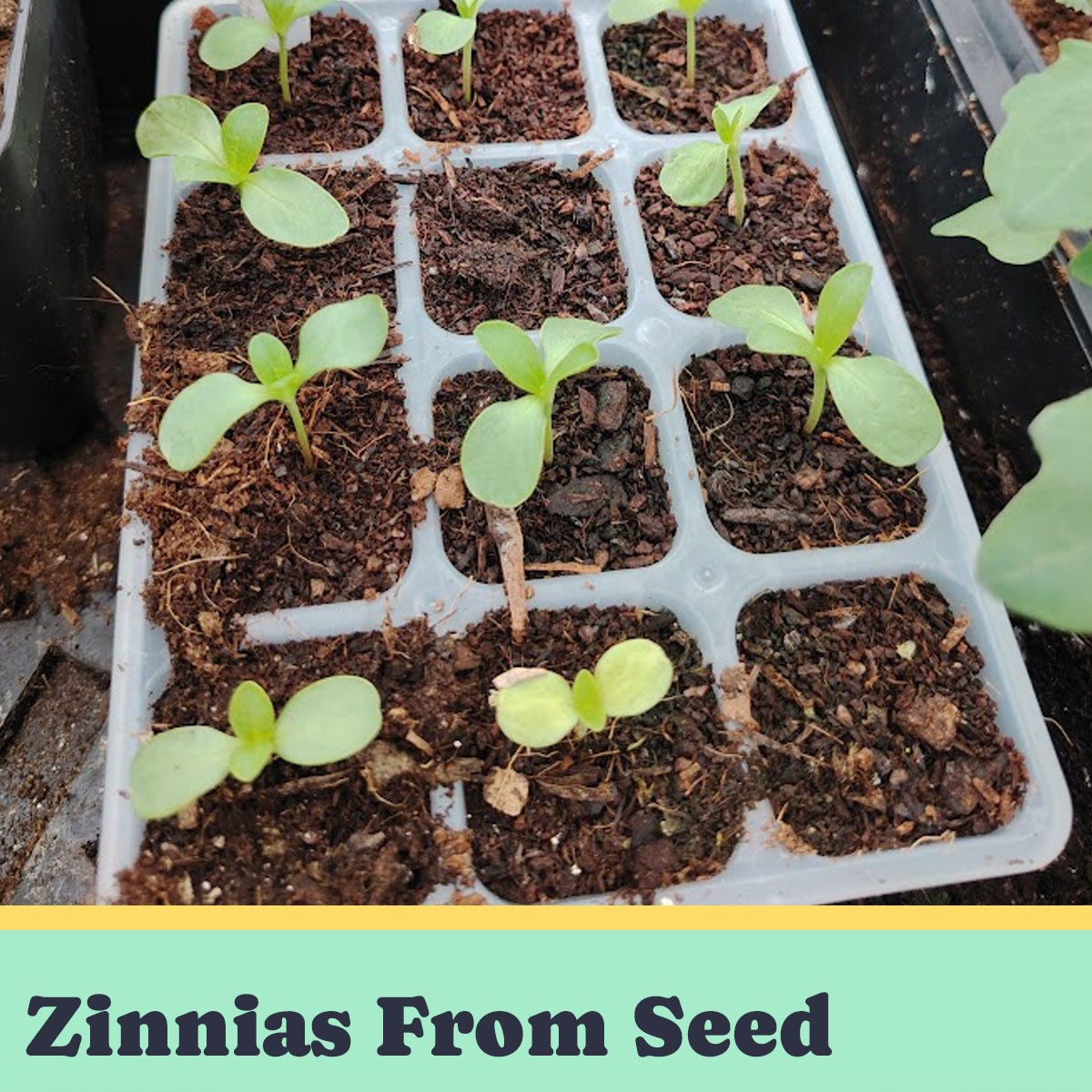
Stick the tray on a warm windowsill or in the greenhouse. Zinnias pop up fast, usually in 5 to 10 days.
Step 5
Once they have their second set of leaves (the proper ones, not the first round ones), they are ready to be moved into bigger pots or even planted outside. Just make sure the frost is gone.
I tend to grow really big, strong plants before I move them outdoors to help them stand up to the slugs, but your mileage may vary, depending on how much of a problem slugs are in your garden.
How To Sow Zinnias Direct Outside
This way is easier. Wait until late May or early June, when the soil is warm and the frosts are done.
Pick a sunny spot with soil that drains well. Zinnias sulk in soggy ground.
Rake the soil so it is crumbly. Pull out the weeds. Make a shallow groove about 1cm deep, or just scatter the seeds where you want them.
Sow the seeds about 10cm apart. Cover lightly with soil. Water gently.
They should pop up in 7 to 14 days. When they hit 5cm tall, thin them so the strongest are 30cm apart.
Planting Out Indoor-Grown Seedlings
Before you plant indoor seedlings outside, you need to toughen them up. Get them used to the outdoors slowly or they will sulk and die.
Put the tray outside during the day for a week or two. Bring it in at night. After that, plant them out.
Plant tall zinnias 30cm apart, short ones 20cm apart. They like sun and a bit of shelter from wind. A fence, hedge, or even a group of sturdy shrubs or other tall plants can give them some protection from strong gusts, without putting them in shade.
Looking After Your Zinnias
Watering
Water at the base, not over the leaves. Wet leaves mean mildew. Once settled, zinnias handle dry weather fine. A soak once a week in dry spells is enough.
Feeding
Zinnias are not greedy. A handful of compost before planting is usually enough. If your soil is rubbish (very sandy, or lacking in organic matter), give them a weekly feed. Do not overdo it or you will get leaves instead of flowers.
Pinching Out
This is the one trick that actually works. When your zinnias hit 20cm, pinch off the top inch with your fingers. It makes them branch out and gives you more flowers instead of one tall stem.
It feels wrong to chop the top off a healthy plant. Do it anyway. You will thank yourself in August.
Staking
Tall zinnias flop in summer storms. The easy fix is to stretch pea netting over them at 15cm tall, held up by canes. The plants grow through and the netting keeps them upright.
Deadheading
Cut off old flowers as they fade. This stops the plant wasting energy on seeds and keeps new flowers coming. Same goes for cutting flowers for the house. The more you cut, the more you get.
Common Problems And How To Fix Them
Powdery Mildew
White, powdery leaves. Shows up late in summer when it is humid. It looks bad but the plant keeps flowering. Stop it by spacing plants out and watering at the base.
Slugs And Snails
Young zinnias are slug snacks. If slugs are a problem, start seedlings indoors and only plant them out when they are big enough to take a hit. Crushed eggshells, wool pellets, or copper tape around each plant helps. You can also pick slugs off by hand in the evening or set up a beer trap (a shallow container filled with beer sunk into the soil) to catch them. Having a few different tactics in place gives your seedlings a better chance.
Leggy Seedlings
Tall, weak, floppy seedlings. Usually from sowing too early or not enough light. Sow later (late April at the earliest) and give them as much sun as you can. South-facing windowsills will work but under a grow light is best.
No Flowers
If your zinnias look healthy but do not flower, it is usually too much shade or too much high-nitrogen feed. Move them to a sunnier spot next year and go easy on the fertiliser.
Zinnias As Cut Flowers
If you want zinnias for a vase, here is the bit most people mess up. Do not cut them too soon.
A zinnia stem only firms up when the flower is fully open. Cut a bud and it will flop in the vase by tomorrow. Wait until the flower is open and do the wiggle test. Hold the stem about 20cm down and give it a shake. If the flower wobbles like a bobblehead, it is not ready. If it stays firm, cut it.
Cut early in the morning when the plants are full of water. Stick the stems straight into a bucket of cold water. They should last a week or more in a vase.
Saving Zinnia Seeds For Next Year
Saving zinnia seeds is easy. Leave a few good flowers on the plant at the end of summer and let them dry out. The heads will go brown and crispy.
Snap off the dried heads and pull them apart over some paper. The seeds are at the base of each petal. Let them dry a few more days, then store in a paper envelope somewhere cool and dry until spring.
One thing: if your zinnias were a hybrid (F1 on the packet), the seeds might not look like the parent. You will still get zinnias, just maybe not the same colour or size. If they were open-pollinated, they should come true. To know which you have, check the seed packet: F1 or Hybrid will usually be clearly marked somewhere on the front or in the variety name (for example, 'Benary's Giant F1'). If you see wording like "open-pollinated" or if there is no F1 or Hybrid label, the seeds are likely open-pollinated and more reliable for saving year after year.
Final Thoughts
Zinnias pay you back for very little effort. Sow a packet in May, water them, pinch them, and you get flowers all summer.
If you have a sunny spot and have not grown zinnias before, give it a go this year. Grab a packet of mixed seeds, follow the steps, and you will be cutting flowers for the kitchen by August.
Leave a Reply