
Zinnias are one of my absolute favourite flowers to grow. They’re bright, cheerful, and add a wonderful splash of colour to the garden throughout the summer. What’s more, they’re incredibly easy to grow from seed. Whether you have a big garden, a small border, or just a few pots on a patio, zinnias will fit in perfectly.
One of the best things about zinnias is their ease of growth. You don't need to be an expert gardener to achieve success with them. You can easily grow them from seed, and they do not require special soil or complicated care. All they really need is a sunny spot and soil that drains well. Once they are established, they will continue to flower and provide colour for months with minimal extra effort.
In this article, I’ll take you through exactly how I grow zinnias from seed here in the UK, step by step.
When To Sow
Because zinnias are native to warmer climates, they’re not frost hardy. I start mine in the greenhouse around April, giving them a head start before planting out once all danger of frost has passed (usually mid-to-late May, where I am).
You can also sow them directly into the ground in May if you’d rather skip the indoor sowing. (I always prefer starting seedlings in the greenhouse, however!)
What You Need
- Zinnia Seeds
- A module tray or small pots
- Seed or Multi-purpose compost
- A greenhouse or a sunny windowsill
- Seed labels & pen!
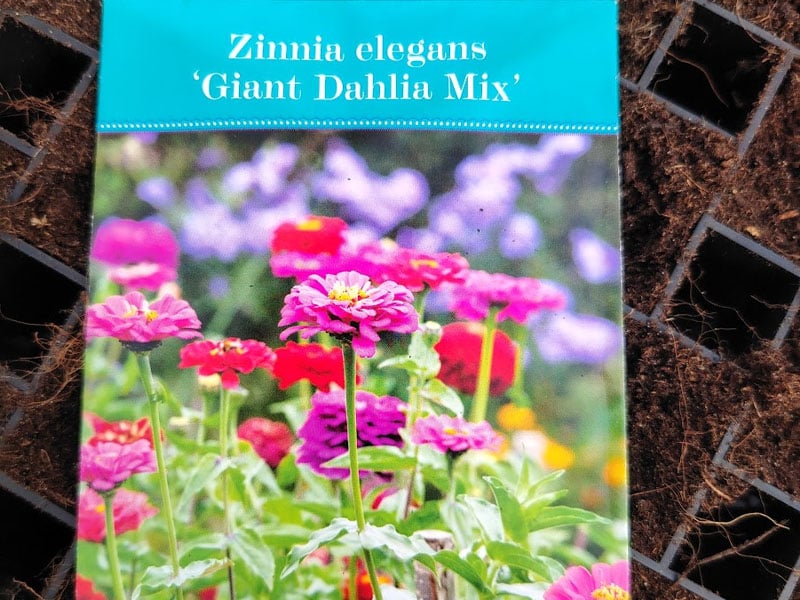
Sowing Zinnias Step by Step
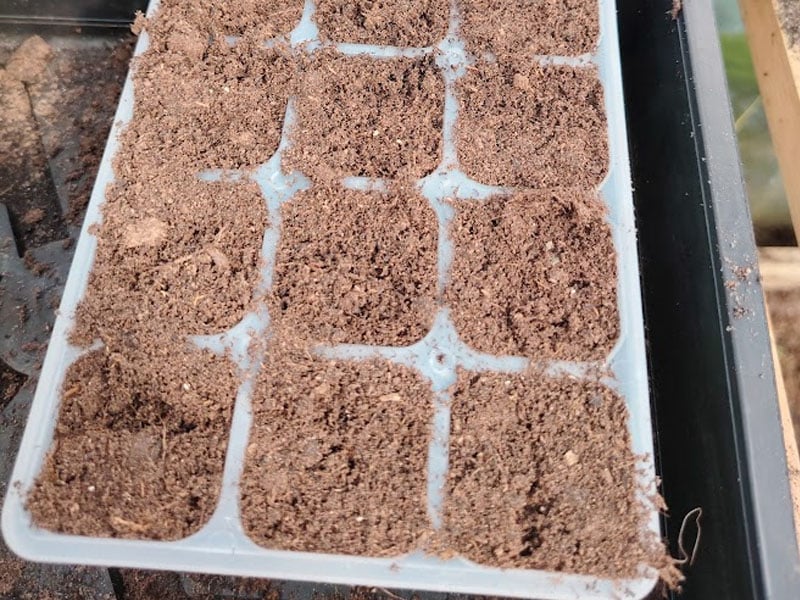
- Step 1: Fill a module tray with seed or general-purpose compost. I use the two interchangeably and have found little difference,
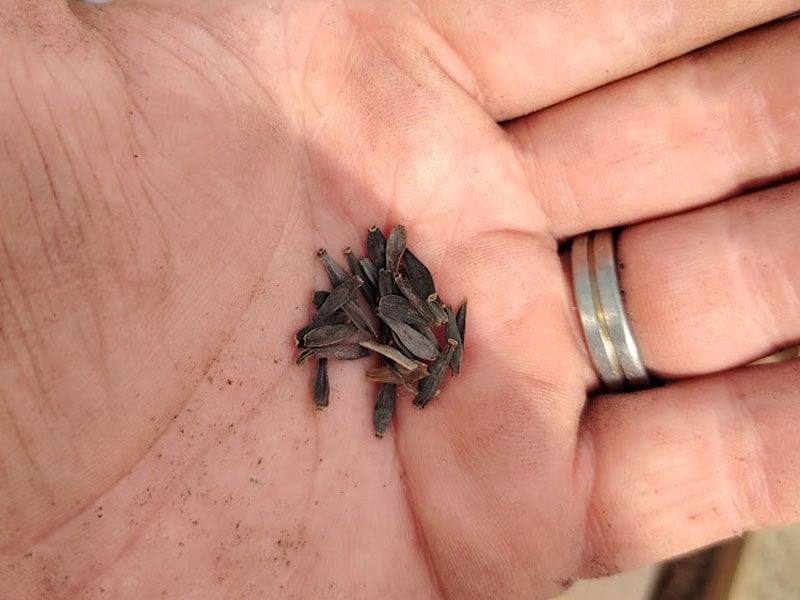
- Step 2: Prepare your Zinnia seeds for planting. They are pretty large and easy to handle.
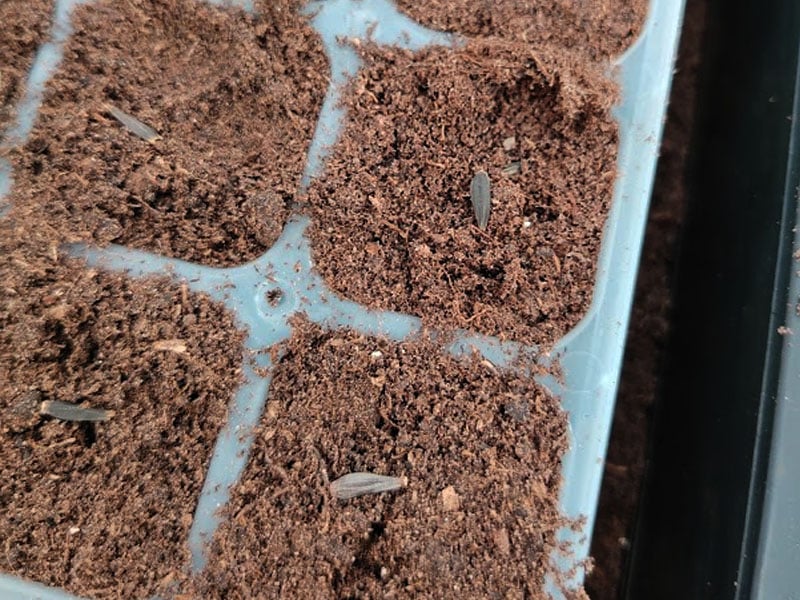
- Step 3: Place one seed per module on the surface. Don't bury them yet; this lets us see which modules have seeds and which don't.
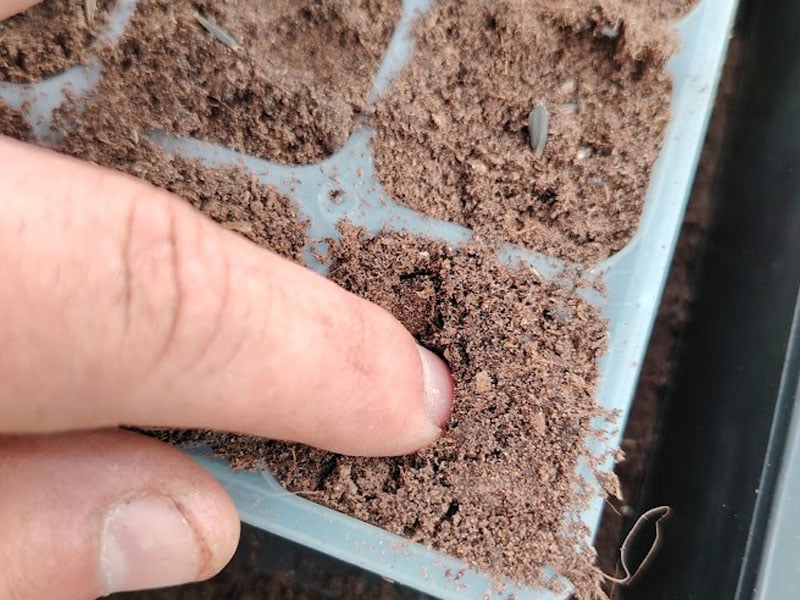
- Step 4: Once every module has a seed, go around and gently push them below the surface, roughly 1 cm deep.
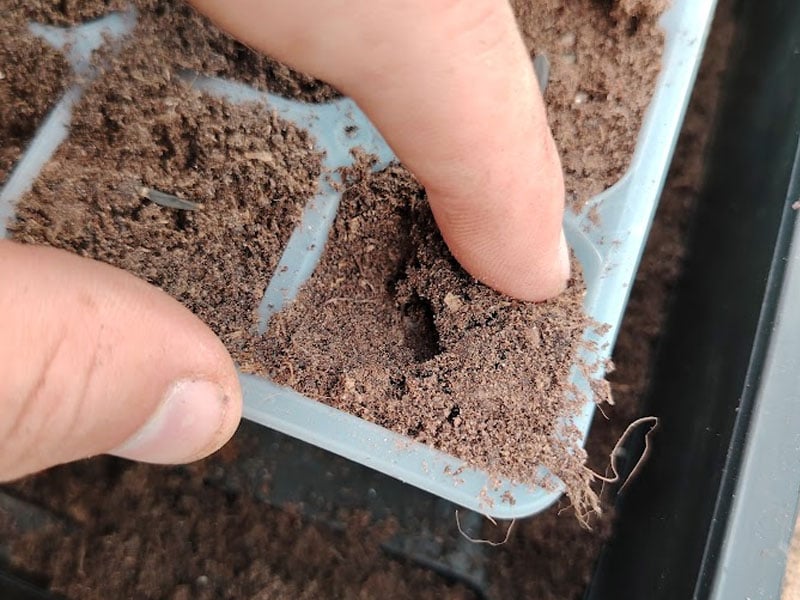
- Step 5: Then cover the seed with a little compost.
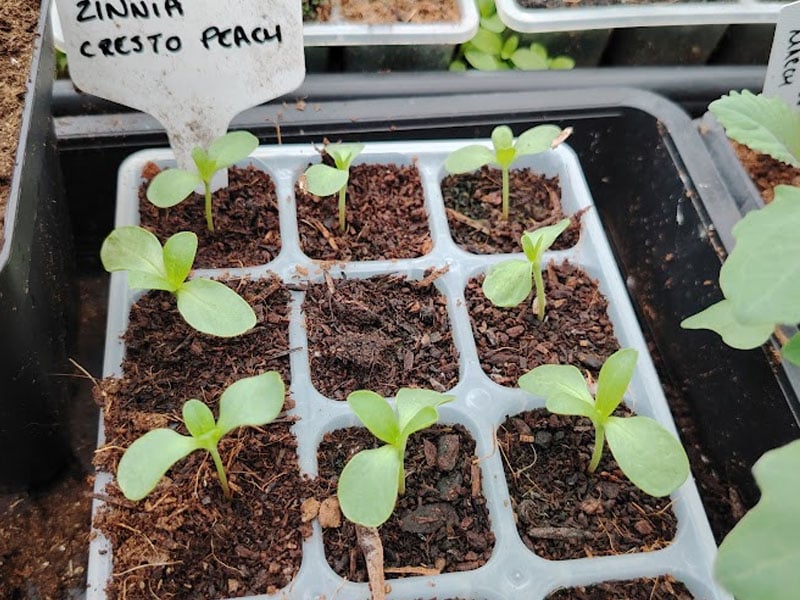
- Step 6: Keep the seeds moist but not soaking and they will germinate in a couple of weeks.
Potting Up Your Zinnias
Once your Zinnias have started to out grow their modules it is time to plant them up. But how do you know when they are ready? Two simple things to look for are these: roots appearing out of the bottom of the module, and true leaves have grown.
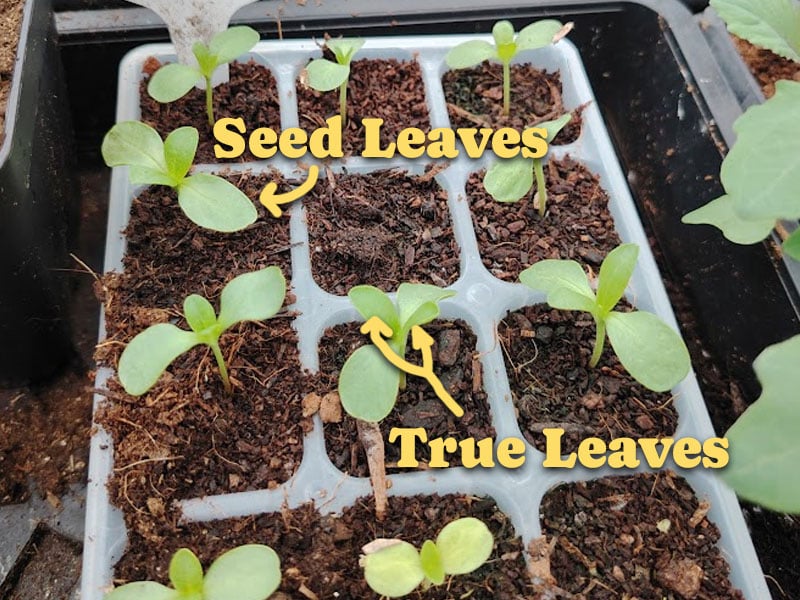
In the photo above, I have labeled the seed leaves and the true leaves. The seed leaves are the first set of leaves every seedling has, and they are actually formed while the plant is in the seed shell. The true leaves are the ones that follow after; on some plants (like tomatoes), they are very easy to distinguish as they look very different from the seed leaves, not so on zinnias, though, as they look pretty similar.
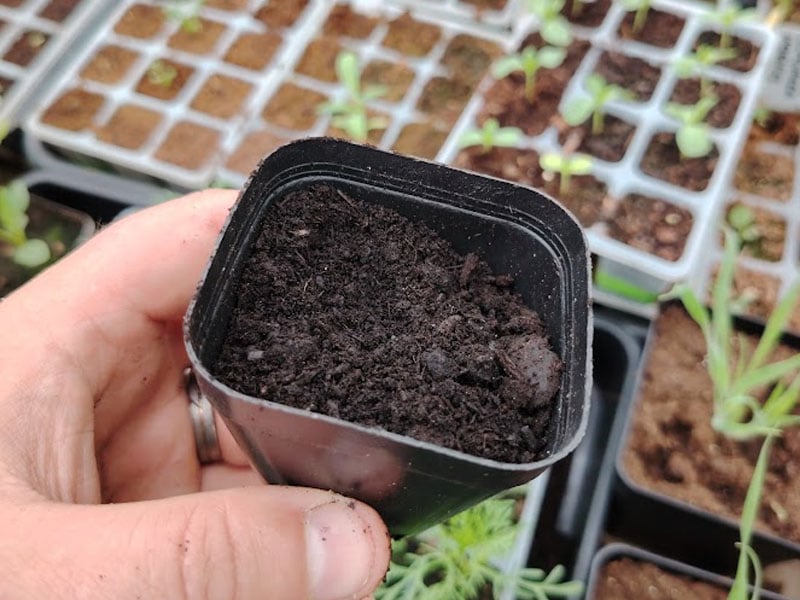
- Step 1: Half fill your new pot with a multi-purpose compost.
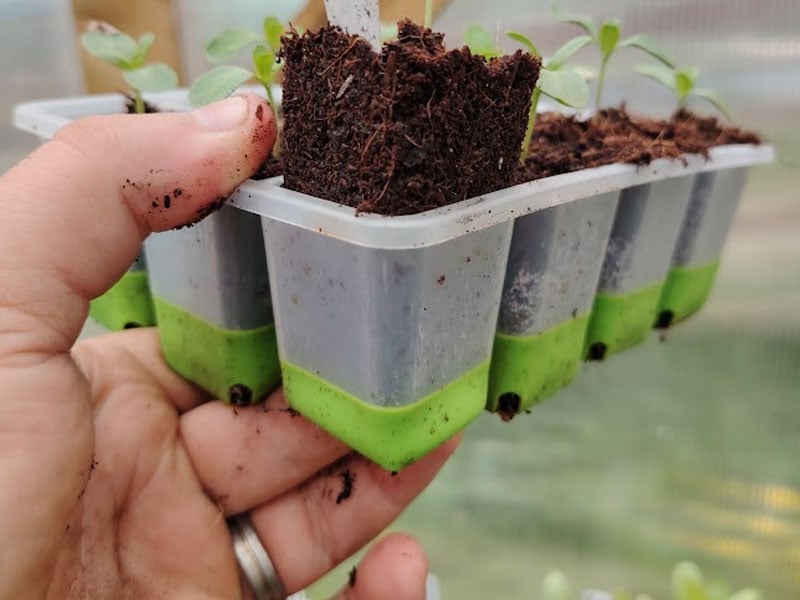
- Step 2: Gently push the seedling out of its module, which is made very simple with these silicone-bottomed seed trays.
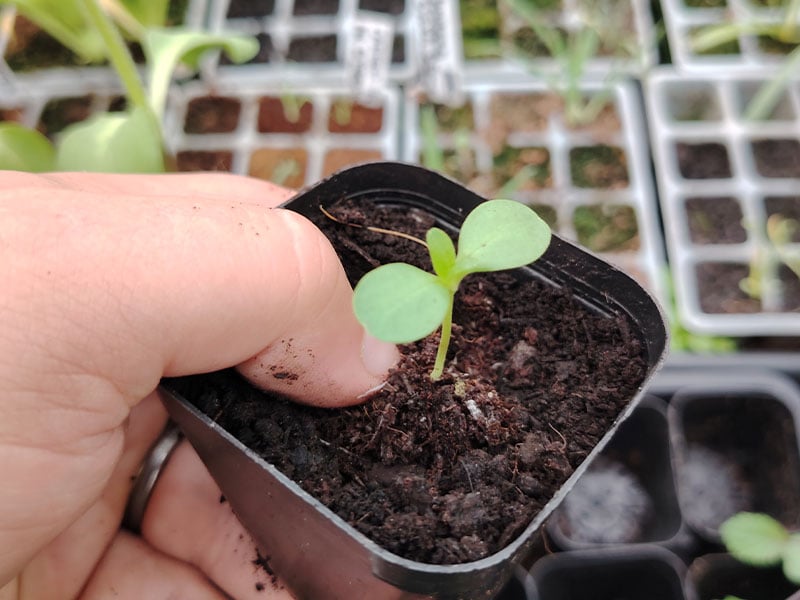
- Step 3: Make a small hole in the compost and push your seedling into it. Always try and handle by the soil around the roots rather than the stem or leaves.
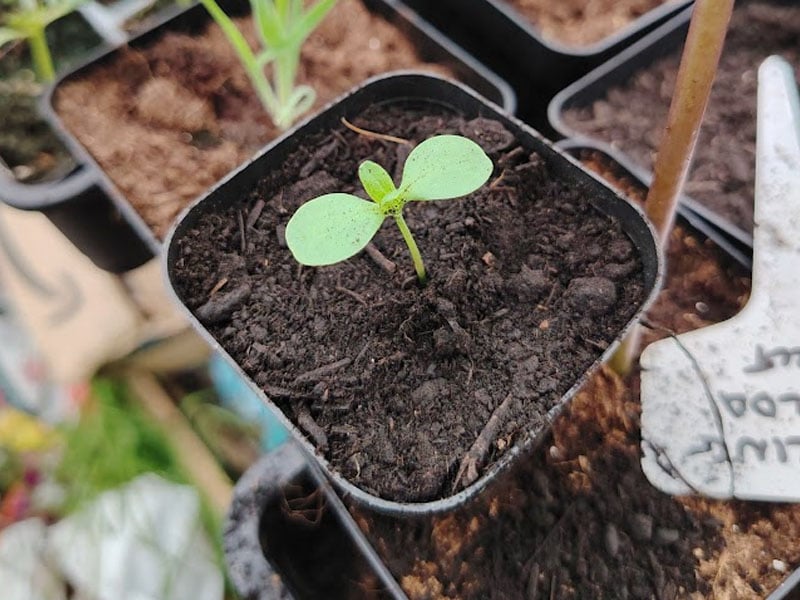
- Step 4: Add more compost and firm the seedling in well by pushing down all around. Then water well.
Why I Love Growing Zinnias
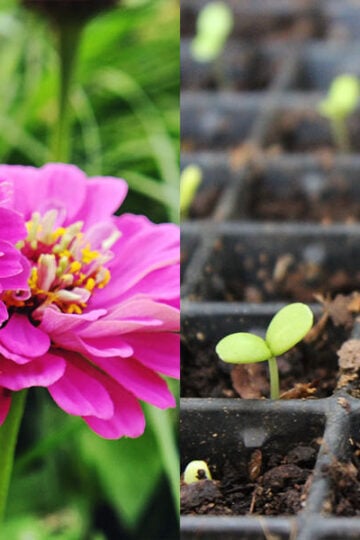
Zinnias come in a huge range of colours and shapes. You can find them in red, pink, orange, yellow, purple, white, and even green. Some zinnias have big, bold flowers, while others have smaller, more delicate blooms. Some types have flowers that look like daisies, and others have fuller, almost dahlia-like shapes. This means you can find a zinnia to match any style of garden, whether you like bright and bold or soft and pretty.
Another reason to grow zinnias is that they are brilliant for bees, butterflies, and other pollinators. Their open flowers make it easy for insects to get to the nectar and pollen. By planting zinnias, you are not just making your garden more beautiful, you are also helping important wildlife. A garden full of buzzing bees and fluttering butterflies always feels full of life and joy.
Zinnias also make excellent cut flowers. They have strong stems and long-lasting blooms, so they are perfect for picking and bringing indoors. A vase of fresh zinnias can brighten up any room. The more you cut the flowers, the more the plants will bloom, so you can enjoy them both in the garden and inside your home. Some gardeners grow a whole patch of zinnias just for cutting.
In the UK, the best way to grow zinnias is to start them from seed after the last frost. You can sow them directly into the ground where you want them to grow, or you can start them off in small pots under cover if you want to get a head start. They grow quickly, and you should see flowers in just a few weeks. They love warm weather, so they really take off once the days get longer and sunnier.
Zinnias are also very good at coping with hot, dry weather. Once they are settled in, they do not need much watering. They are happier in drier soil than many other flowers, which makes them a great choice for gardens that get a lot of sun or for gardeners who want low-maintenance plants. Just be careful not to water them from above, as wet leaves can sometimes lead to mildew. It is better to water at the base of the plant if you need to.
One thing that makes zinnias even more appealing is that they come in different heights. Some are short and neat, perfect for pots or the front of a border. Others grow tall and strong, making a big impact at the back of a bed or along a fence. You can mix and match different types to create layers of colour and texture in your garden. Whatever space you have, there is a zinnia that will fit it.
Growing zinnias can also be a great project for children or beginner gardeners. Because they grow quickly and bloom so generously, they give fast results, which can be very encouraging. Watching a tiny seed turn into a tall, colourful plant is one of the real joys of gardening, and zinnias are one of the best flowers for showing how easy and rewarding that can be.
In short, there are so many reasons to grow zinnias. They are easy, colourful, good for wildlife, and perfect for cutting. They need very little fuss and will reward you with months of bright blooms. Whether you plant a few among your vegetables, grow them along a path, or fill a whole flower bed with them, zinnias will bring joy to your garden and smiles to your face.
If you have not tried growing zinnias before, this year is the perfect time to start. Find a sunny spot, sow some seeds, and soon you will be enjoying one of the most cheerful and hardworking flowers you can grow. Once you see how easy and beautiful they are, you will wonder why you didn’t plant them sooner.
Leave a Reply