
March is the start of the busy season for us gardeners. As things start to warm up and for some the snow starts to melt it feels like gardening can finally begin. With that in mind here are a whole heap of things you can be doing in march!
Veg Seeds To Sow
Indoor
If you have the proper setup (grow lights, seed mats, propagators etc.), you can get many seeds indoors now.
These are usually plants from warmer climates that need a long growing season.
Aubergines
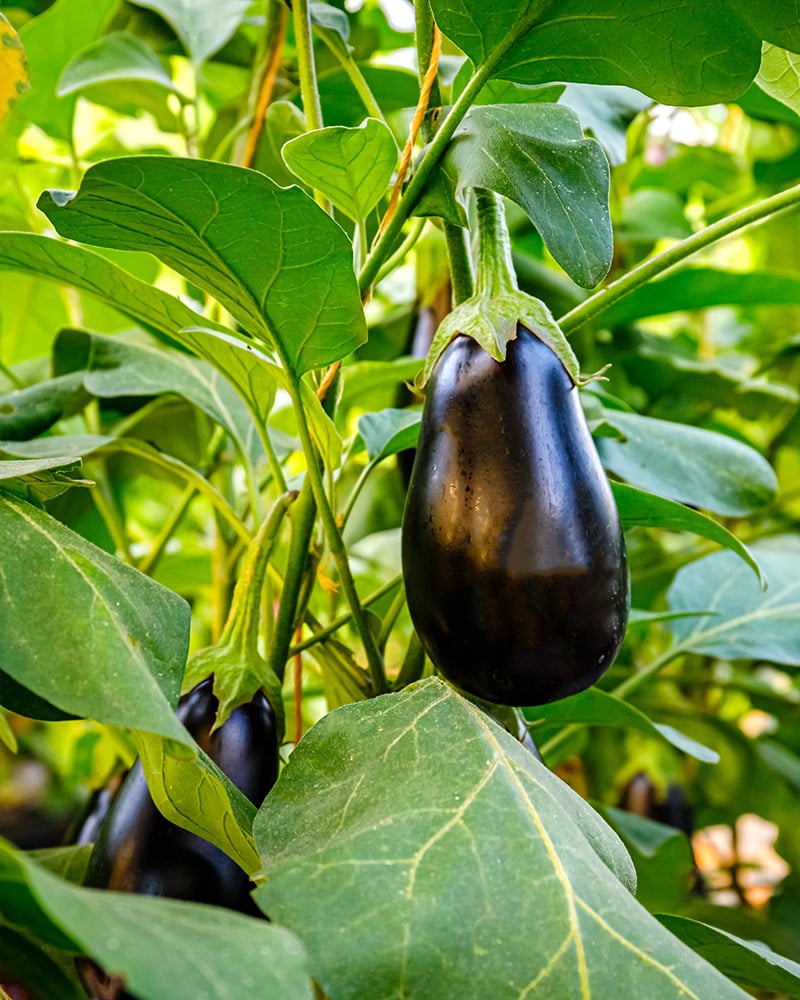
Sow indoors in a module tray before potting on when the first true leaves appear.
Aubergines are a warm climate plant and have a long growing season, as such, starting them early can lead to better harvests.
Peppers

Peppers, both sweet and spicy, can be sown now.
Sow into a module tray and cover to help aid germination. A propagator is advised as pepper seeds need high humidity to germinate.
Move into pots as the seeds develop true leaves.
You want to keep peppers indoors until all risk of frost has passed.
Tomatoes

Tomatoes require a long growing season, so starting them off early indoors is advised. This way, you will get a bigger crop before autumn frosts arrive and kill the plants.
Use a module tray to sow your tomatoes.
Move them on into pots when the first true leaves start to form on the seedlings.
Cucumbers

Again like all the plants above, cucumbers benefit from a longer growing season and starting them off early indoors is one way to achieve this.
Cucumbers have big seeds that form big seedlings, so don't start them off in module trays.
Instead, start them off straight away in small pots.
You will need to pot them on as they grow before moving them to their final growing spot once the risk of frost has passed.
Outdoor Undercover
By outdoor undercover, I mean sowing in an unheated greenhouse, polytunnel or cold frame.
Peas

Peas can be started in a greenhouse, cold frame or polytunnel right now.
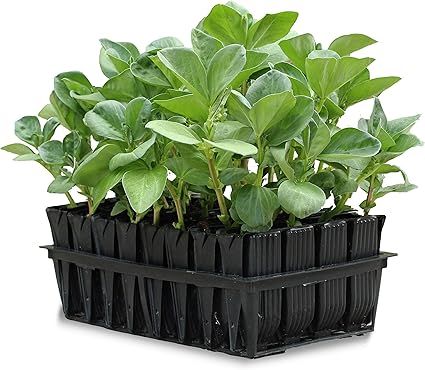
I sow mine into a root trainer in the greenhouse. This allows for easy transplantation and also allows large roots to develop.
Carrots

Again like the peas above, I sow my carrots now in a root trainer in my greenhouse.
Carrots really don't like their roots being disturbed so something like a root trainer is essential if you want to start these in seed trays.
Alternatively, you can sow them outside under a cloche or plastic.
Turnips

Turnips can be sown undercover in a root trainer or something similar.
Alternatively, you can sow them outside under a cloche or plastic.
Onions

I like to sow my onion seeds in module trays and grow them as a cluster or 3 or 4 plants rather than individually.
You can use a regular module tray for this, but again, I recommend a root trainer to keep root disturbance to a minimum.
Shallots

Shallots can be sown the exact same way as onions. Sow multiple per module in a root trainer.
They actually do better this way as if they have too much room, the bulb can split into clusters which is not ideal.
So by cramming them in, you avoid this problem.
Lettuce

Lettuce covers a wide range of different varieties, some of these can be sown outside now and some still require a little more protection.
I sow all of my lettuce in the greenhouse in modules no matter the time of year.
You get better germination this way, and it also protects young, vulnerable plants from slugs.
Outdoor
Some seeds are hardy enough to be sown outdoors even now. All these seeds will benefit from a cloche or plastic to warm the soil.
Broad Beans

Broad beans can be sown outdoors now, but they will still benefit from a cloche or plastic covering to help warm the soil up.
Lettuce

Hardier lettuce varieties can be sown outdoors directly in march.
A lot of lettuce can be sown as soon as the soil is workable and not frozen.
They will benefit from warmer soil given by a cloche or plastic covering.
Onions

Onions can be sown direct to ground in march in warmer areas.
If the weather is poor, or you are in a colder area, then use a cloche or plastic cover to warm the soil and give the seedlings a helping hand.
Peas

Peas are tough plants and can be sown direct outdoors now.
I would advise you start them under cover, though, and move them outdoors later to give them a little headstart.
Spinach

Spinach is a tough plant and can be sown outdoors.
I like to sow in closely packed rows and thin when the plants have 6-8 leaves, these thinned plants are then perfect as baby spinach leaves.
Cabbages

Flower Seeds To Sow
Coneflower / Echinacea
This tough, drought-resistant beauty is a pollinator magnet, drawing in bees and butterflies throughout summer. Sow seeds in well-draining soil, and once they take off, they’ll keep coming back year after year.

Phlox
Phlox bursts into clusters of delicate, starry blooms in shades of pink, purple, and white. It’s a fantastic choice for adding soft texture to garden borders and will keep going strong well into autumn.
Cornflower
If you’re after a classic cottage garden look, Cornflower is a must. These vibrant blue blooms are easy to grow and look stunning in wildflower meadows or mixed with other summer flowers.

Salvia
Salvia is another fantastic option, adding bold spikes of color to your beds while being adored by bees and hummingbirds. Whether you go for deep blues, purples, or fiery reds, Salvia always makes a statement.
Bishop’s Flower
For something a little more delicate, Bishop’s Flower is a lovely addition. It has airy, white umbels that resemble Queen Anne’s Lace, making it perfect for softening flower borders or adding to cut flower arrangements.
Calendula
Calendula, the golden, cheerful flower, is as useful as it is beautiful. Its petals are edible, and it’s known for its medicinal properties, making it a great multipurpose plant.

Verbena
Verbena is another must-sow flower this month. Whether you go for the tall, graceful varieties like Verbena bonariensis or the lower-growing types, they’ll add a burst of color that lasts through summer.
Snapdragons
Snapdragons are great to start now, offering vibrant blooms in nearly every color imaginable. They’re tough, resilient, and can even handle a bit of frost, making them perfect for early spring sowing.
Papaver (Poppy)
If you love poppies, then Papaver (or the classic poppy) should be on your list. These delicate yet striking flowers are easy to grow and will self-seed freely, ensuring a new crop every year.
Love-in-a-Mist
Love-in-a-Mist is another charming addition, with its intricate, feathery foliage and enchanting blue or white flowers. It’s a fantastic filler plant and looks stunning both fresh and dried.

More Flowers to Consider
If you’re looking for even more variety, consider sowing Sweet Peas for their incredible fragrance, Larkspur for its elegant spires, or Scabiosa for its pincushion-like blooms that are adored by pollinators. Dianthus, also known as pinks, are another great option, bringing their clove-scented, frilled petals to your garden.
March is an exciting time to sow flowers, with so many options to choose from. Whether you're looking for bold colors, delicate textures, or bee-friendly blooms, getting started now will ensure a vibrant, flower-filled garden throughout spring and summer. So grab your seed packets, find a sunny spot, and start sowing!
Herbs To Sow
Anise
This liquorice-flavoured herb needs a decent amount of heat to germinate, so it is best started indoors if sown in March.
They are simple to sow, just sow into a module tray and lightly cover with a thin layer of compost. Germination can take 3 or more weeks so be patient!

Basil
In March, Basil needs to be sown indoors as it only germinates in warm temperatures. Sow into module trays, press firmly into the compost and then cover with a very fine layer of compost.
Sown in early March, these seeds should be ready to go into the garden in early May.

Chervil
Chervil is a tough plant and can be directly sown outdoors even in March. As long as your soil is workable, then sow where you want it to grow and cover with a thin layer of soil.
If your ground is still frozen, then sow undercover in a greenhouse or coldframe.

Chives
Chives like a little bit of heat to germinate but they don't need tonnes. So, depending where you are in the world, you could sow them in an unheated greenhouse, but to be extra cautious you can just sow them indoors.
Most often they are sown as they are to grow, in a big clump. You can do this by surface sowing them into a seed tray and then lightly covering with compost.

Cilantro/Corriander
Cilantro (or Corriander if you are British like me) doesn't like to be transplanted. So it needs to be sown where it is to grow. For most people it will be too cold to sow Cilantro outside in March.
So, if you want to sow it now, then that usually means sowing into a pot which you can then move outside later in the year.
Choose a pot that is at least 6" deep (preferably more), keep seeds at least 1" apart but 2" is better.

Dill
Dill is another plant that doesn't like its roots being messed with. For this reason it is better to be sown in pots with the plan of keeping it there.
Dill grows quite large, so you will probably only want one plant per pot, sow roughly three seeds per pot and then thin to the strongest seedling.
Your pot will also need to be quite large, at least 9" deep. You can move it outside once the risk of frost has passed, usually around May. Ensure you keep it well watered or it will bolt and go to seed.

Parsley
Parsley likes to be warm to germinate, which is why I advise sowing indoors or in a heated greenhouse in March. You can sow into pots or a module tray and soaking the seeds overnight is also a good idea to speed up germiantion.

Sage
Sow indoors, one seed per small pot (sage gets large!), then pot on into larger pots once your seedlings are established. Sage can be moved outside once the risk of frost has passed.

Lemon Balm
Again, Lemon Balm needs heat to germinate, so is better sown indoors this early in the year. Can be sown in module trays or individual pots.
Remember that lemon balm can quickly spread and become invasive, just like mint, so it is normally grown in pots and not in the ground.

Garden Jobs For March
Mulch Beds

Now is the time to bring your allotment beds back to life. Mulch them with some compost or well-rotted manure to give them a much-needed boost ahead of spring.
Think of it this way, your soil worked hard last year and is in need of a little TLC!
Make Runner Bean Trenches

If runner bean trenches are something you do, then you need to get started with yours now. This way all the food scraps you put in will have plenty of time to rot down when you plant your runner beans.
If you don't know what a runner bean trench is, then let me explain. It is a fairly shallow trench in which you pile a load of food scraps and other compostable material/
You then cover it with soil and leave it to rot down. When the time comes to plant your runner beans, you plant them above this trench. Then as they grow, they use all the nutrition created by the rotting food scraps.
Fertilise Your Soil

Adding organic feed like fish blood and bone to your soil is a great idea. This helps to rejuvenate tired soil, ready for a tough year of growing!
- Use Fish, Blood and Bone to provide your plants with a natural food source that feeds plants nutrients slowly
- Fish, Blood and Bone can be used to feed flowers, fruit, trees, shrubs and vegetables
- Apply fish, blood and bone every 4 -6 weeks to sustain good soil fertility
- Fish Blood and Bone has an NPK fertiliser of 3 - 9 - 3

Finish Cleaning

With not much going on in the garden or allotment, it gives you plenty of access to see what needs cleaning.
It would be best to give your greenhouse and/or polytunnel a good clean-down to reduce the chance of viral and fungal diseases.
Plant Seed potatoes

You can start to plant your early potatoes now.
First earlies are commonly planted in march, with second earlies following in April.
Build A Dead Hedge
A dead hedge is a simple yet effective way to utilize garden waste while providing habitat and shelter for wildlife. This eco-friendly structure is made from cut branches, twigs, and other natural debris stacked between wooden stakes, forming a barrier that mimics a living hedge but with additional benefits.
If you're looking for a sustainable, low-maintenance feature for your garden, a dead hedge might be the perfect choice.
What Is a Dead Hedge?
A dead hedge is essentially a fence-like structure made from dead wood and garden trimmings. Unlike a traditional hedge that consists of living plants, a dead hedge is built by stacking cut branches, pruned twigs, and other organic materials between upright stakes.
Over time, as more organic matter is added, it becomes a robust and natural barrier that slowly decomposes, providing a vital habitat for many creatures.
The Benefits of a Dead Hedge
1. Provides a Haven for Wildlife
One of the most significant benefits of a dead hedge is its role in supporting biodiversity. Birds, insects, and small mammals can use it as shelter, nesting sites, or a food source. Hedgehogs, in particular, thrive in dead hedges, finding refuge and protection from predators.
Amphibians such as frogs and toads may also use the hedge as a damp hiding place, while insects like beetles, bees, and butterflies can benefit from the decaying wood and sheltering branches.
Dead hedges are particularly beneficial for birds, offering them multiple advantages. Many bird species use dead hedges as nesting sites, taking advantage of the dense twigs and branches for protection from predators. The hedge also serves as a rich feeding ground, attracting insects that birds rely on for food.
2. Natural Recycling of Garden Waste
Instead of sending pruned branches and twigs to the landfill or burning them, you can repurpose them into a dead hedge. This reduces waste and promotes a circular approach to garden maintenance, where organic matter stays within the ecosystem.
3. Acts as a Windbreak and Privacy Screen
A well-constructed dead hedge serves as a natural windbreak, helping to shield delicate plants from strong winds. Additionally, it can act as a privacy screen, creating a secluded and peaceful garden space without the need for artificial fencing.
4. Improves Soil Health
As the materials in the dead hedge break down, they slowly release nutrients into the soil. This process enhances soil fertility, supporting plant growth and overall garden health. Plus, the decomposing wood retains moisture, helping to improve soil hydration.
5. Aesthetic and Rustic Appeal
Dead hedges bring a charming, rustic look to your garden. They blend seamlessly with natural surroundings and can complement a variety of garden styles, from wildflower meadows to cottage gardens.
How To Build A Dead Hedge
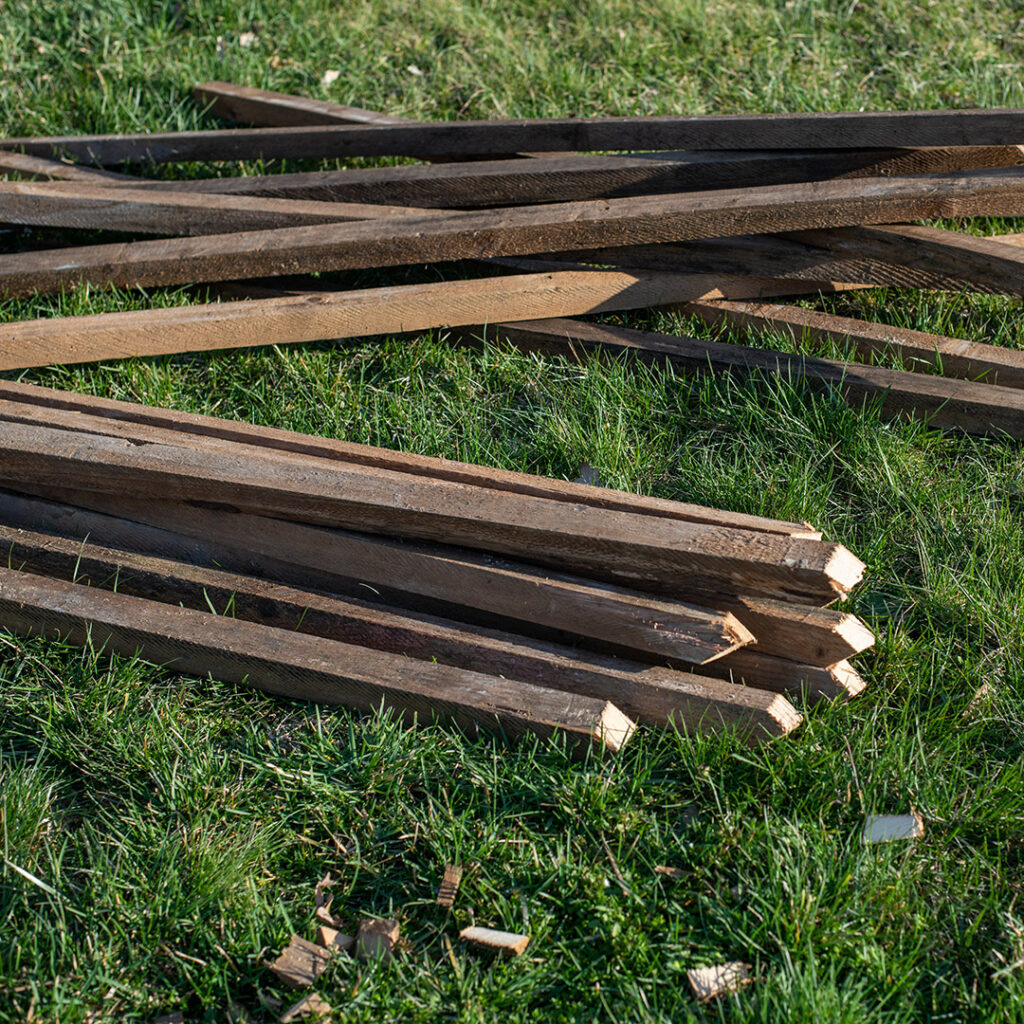
You want to start by selecting some stakes. You can use square posts like this or round fencing posts - it really doesn't matter. To make your life easier though I strongly advise adding a point to the end. This makes them much easier to drive into the soil. If yours aren't already pointed then you can easily add one with a hand or circular saw.
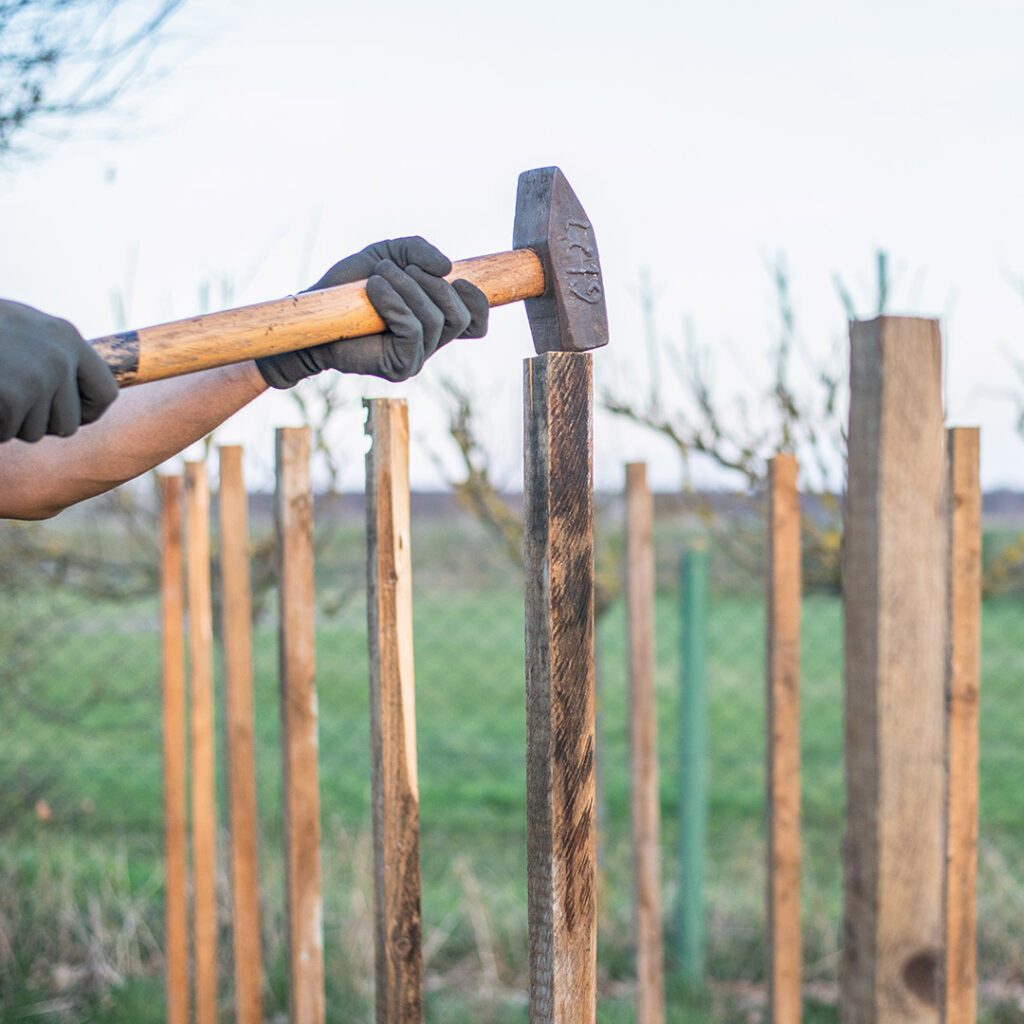
Once your stakes are sharpened drive them into the soil. You want a good couple of feet to be below the surface as it is these stakes that will keep your dead hedge upright.
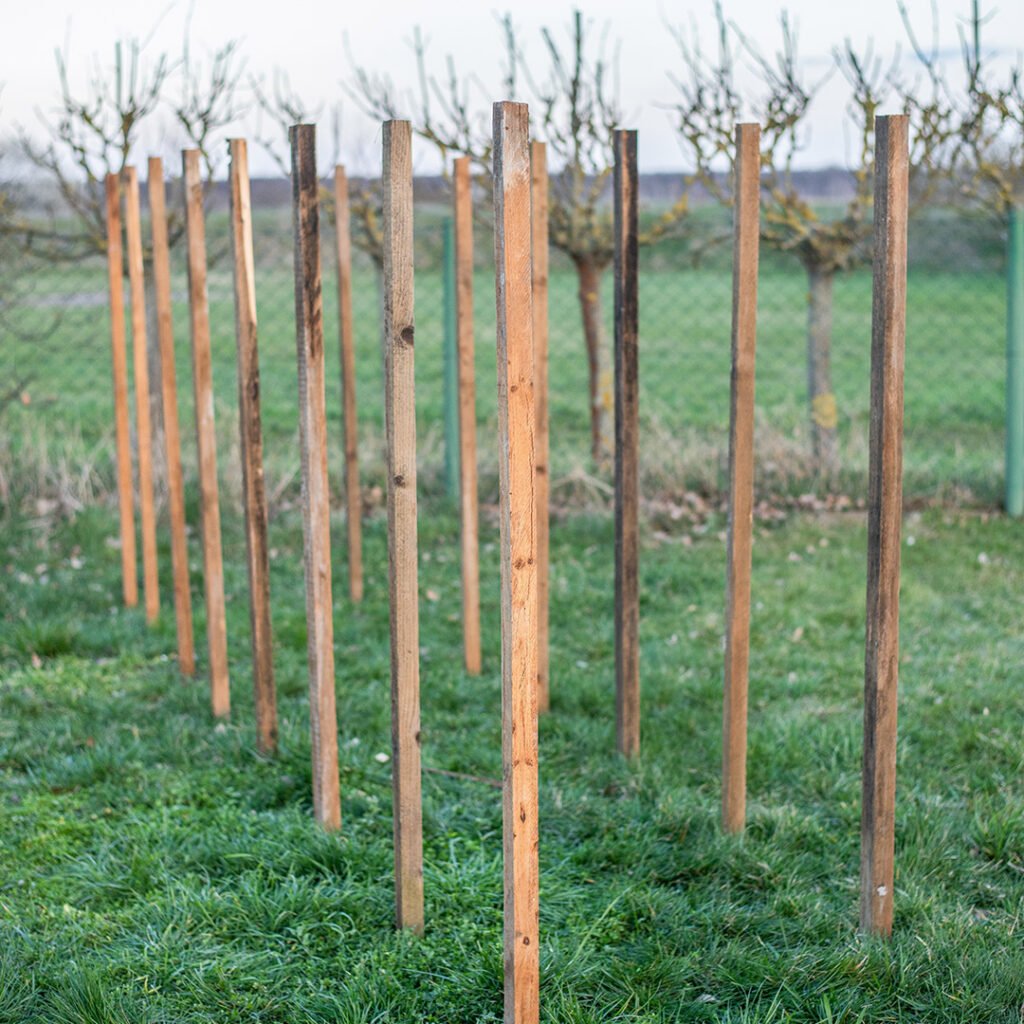
Line your stakes up in two parallel rows. The width can be whatever you like but just be aware that you have enough material to fill it up to the desired height.
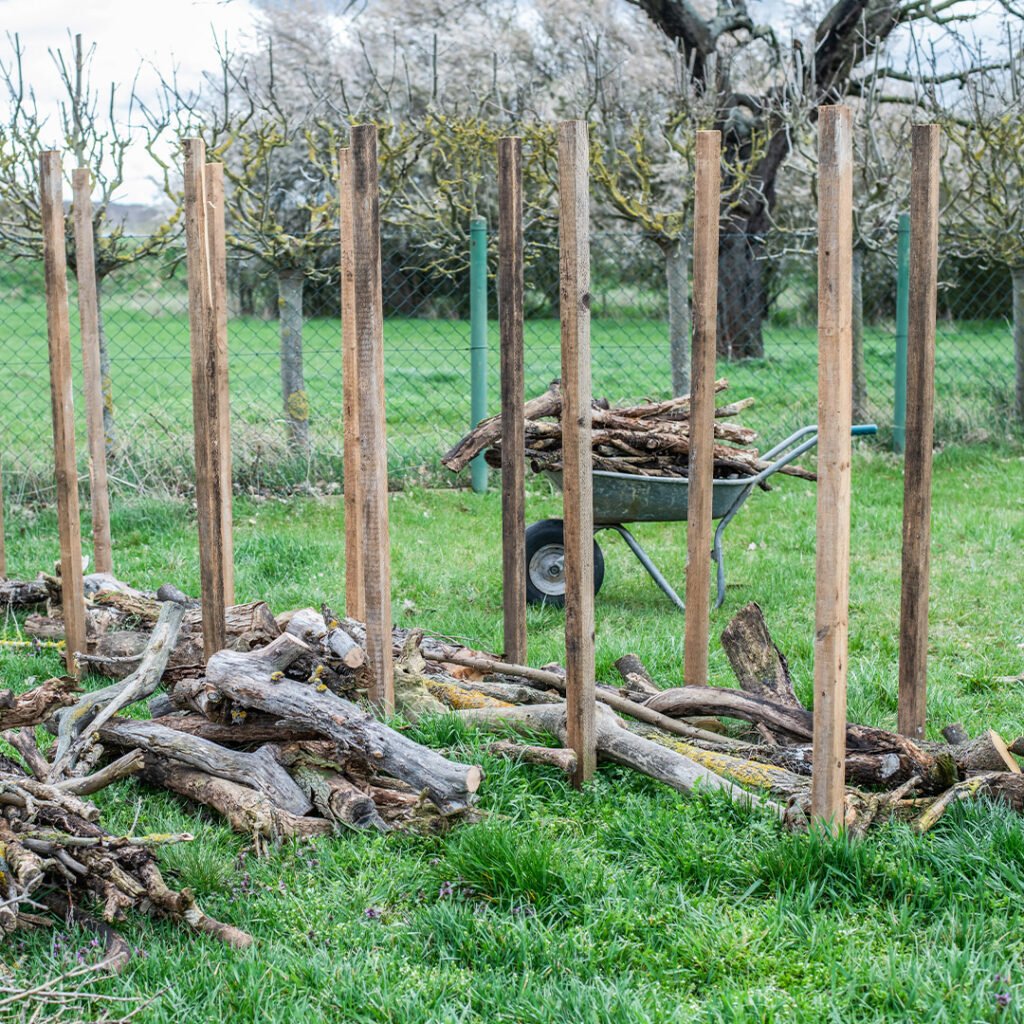
Start by adding large logs to the bottom.
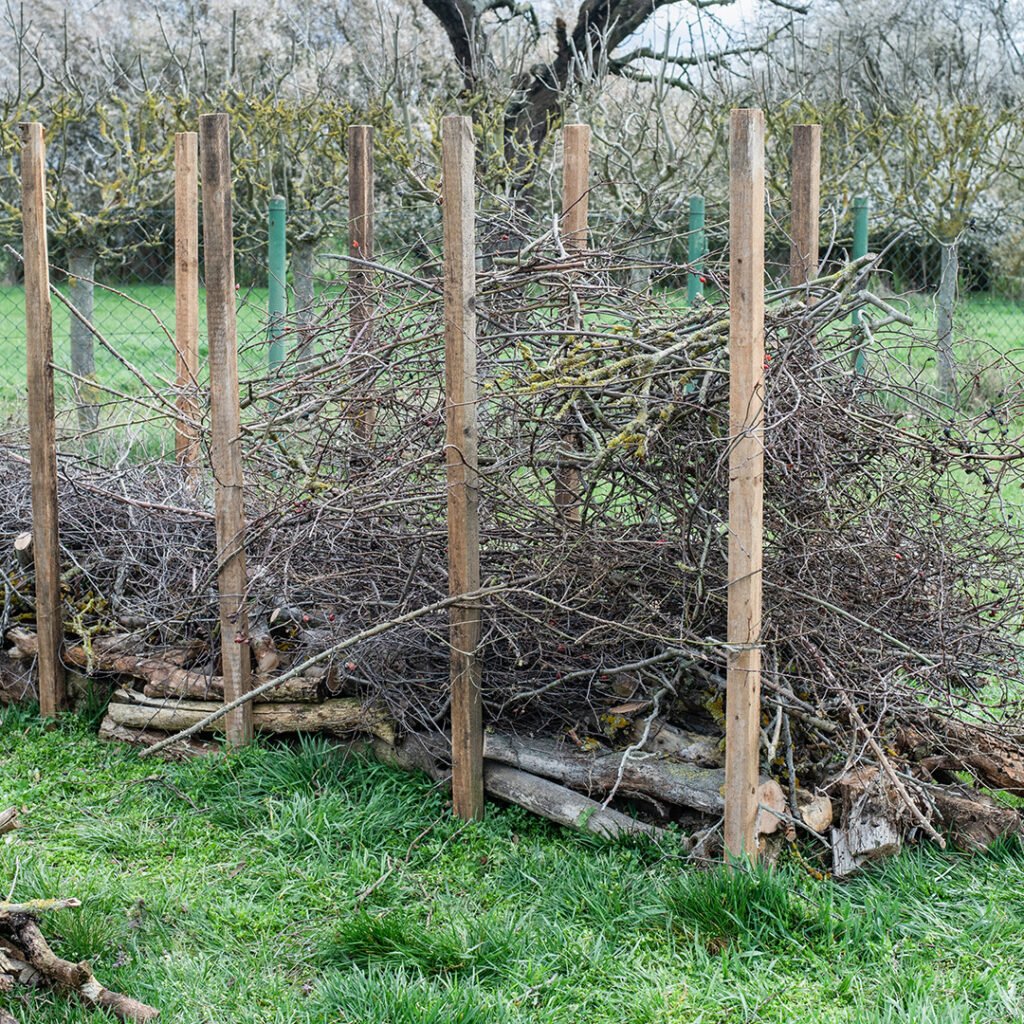
then add smaller twigs and branches on top of this.
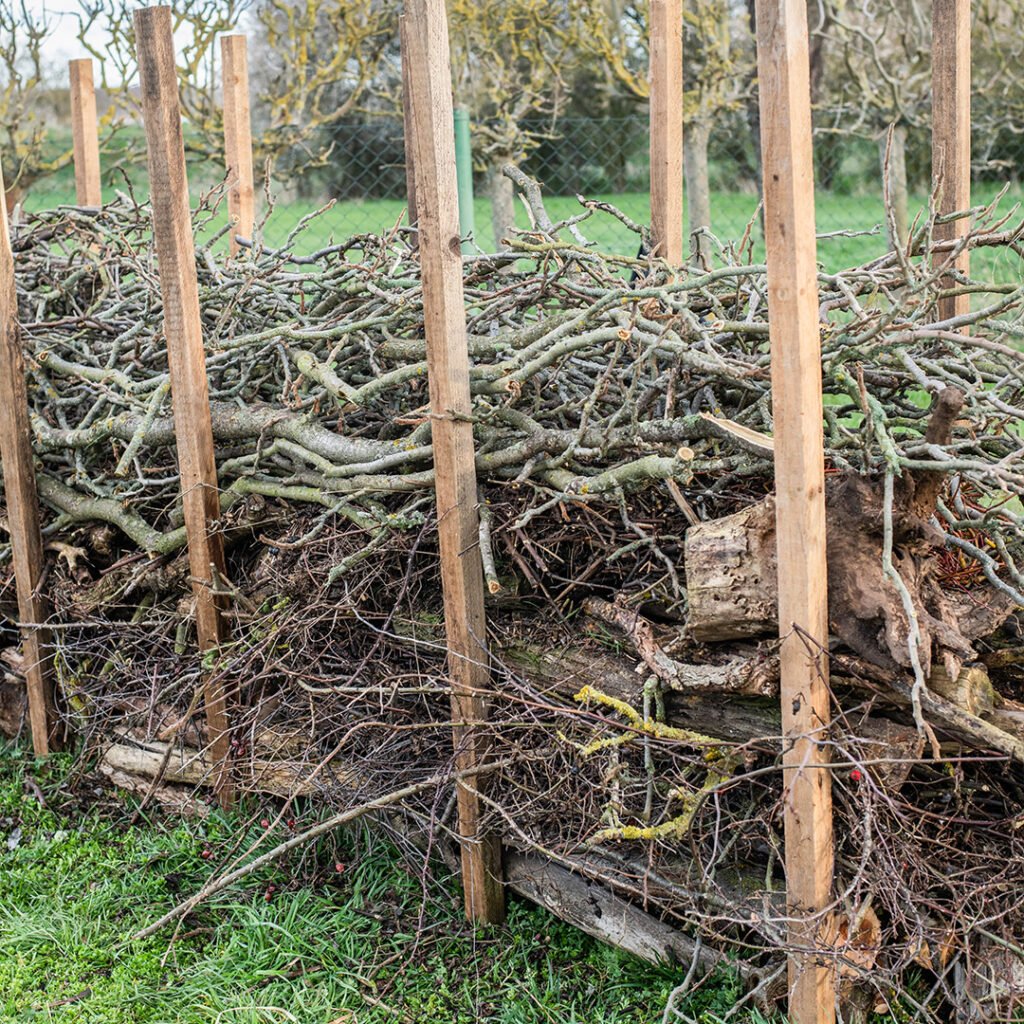
Then go back and add more big logs and sticks. These will push the smaller branches down, compacting your dead hedge. It is this compacting of twigs and sticks that provides so many brilliant hidey holes for all kinds of wildlife.
As the hedge settles, continue adding new materials to keep it dense and effective.
Dead hedges are a fantastic way to make your garden more sustainable, wildlife-friendly, and visually appealing. By repurposing natural waste, you can create a functional and beautiful feature that benefits both your garden and the local ecosystem. Consider incorporating a dead hedge into your outdoor space and enjoy the many advantages it offers!



Leave a Reply